
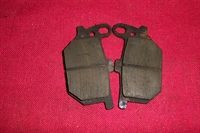
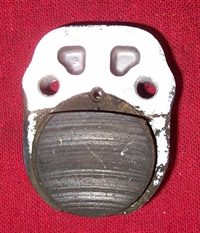
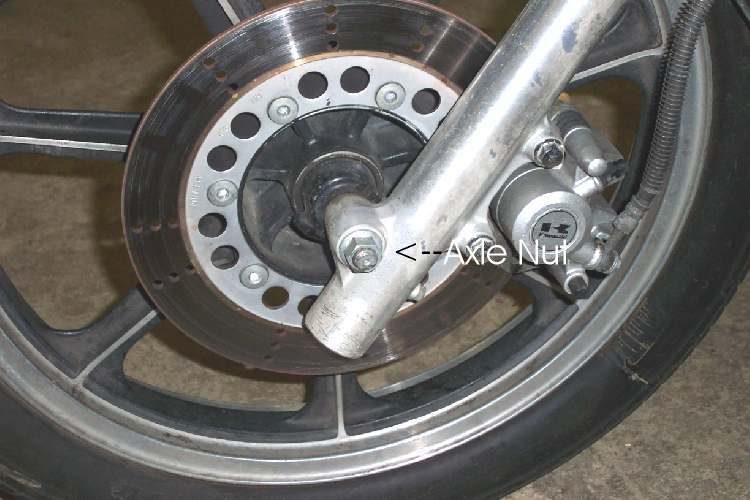
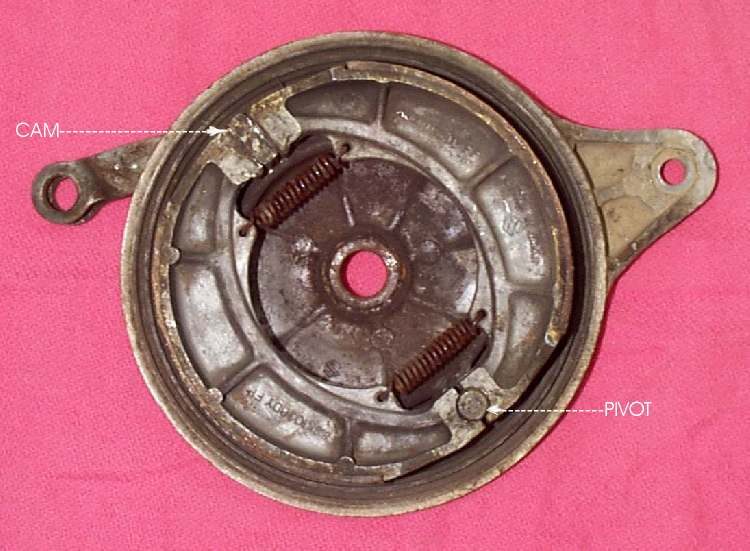
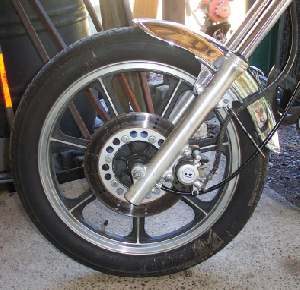
The lever or pedal feels hard and does not travel far, yet the bike slows down poorly. This is different from a spongy brake. A firm but weak brake means the hydraulics push well, but the friction between pad and disc (or shoe and drum) is poor: the pads may be glazed (polished hard and shiny by heat), soaked in oil, the wrong type, or not touching fully, or some caliper pistons may be stuck.
Is it safe to ride?
No, not in traffic. Ride only slowly to a safe place to work on it, using both brakes early.
Quick checks first
- Are you using both brakes? The front brake does most of the stopping on most bikes.
- Is there oil on the disc, pads, or fork leg above the caliper? Chain lube or polish spray on the disc?
- Were the pads just changed? New pads need bedding in.
- Is the brake wet? Brakes are weak for the first moment after riding through water.
- Is the bike carrying much more load than normal?
Diagnose it step by step
1Does the lever or pedal feel soft or travel far?
- Yes: this is a spongy brake. Go to Brake lever or pedal feels spongy.
- No, it is firm: go to step 2.
2Is it a drum brake?
- Yes: go to Drum brake is weak.
- No: go to step 3.
3Is there oil or fluid on the disc or pads?
- Yes: find the source. Fork seal leak: Inspect the front forks. Brake fluid: Brake fluid is leaking. Clean the disc with brake cleaner and replace the pads: oily pads cannot be cleaned.
- No: go to step 4.
4Are the pads worn near the limit, glazed, cracked, or of unknown make?
- Yes: Replace disc brake pads with pads listed for your bike. Bed them in.
- No: go to step 5.
5Is the disc glazed, deeply grooved, blue, or below its thickness limit?
- Yes: Check a brake disc. A worn disc is replaced with new pads.
- No: go to step 6.
6Do both pads wear evenly, and do all pistons move?
- No: some pistons are stuck, so only part of the pad presses. Clean a brake caliper and free the pistons; see also Brake pads wear unevenly.
- Yes: go to step 7.
7Are the pads fitted the right way round (friction side to the disc) and the right part for this bike?
- No: refit correctly. A pad fitted backwards gives metal on disc and almost no braking.
- Yes: ask a workshop to check the master cylinder and caliper sizes match the bike's parts list; a wrong part after earlier repairs gives a hard but weak brake.
Causes, most likely first
| Cause | How to confirm | Fix |
|---|---|---|
| Oil or grease on pads or disc | Wet or shiny dark patches; fork leak | Clean disc, new pads, fix leak |
| New pads not bedded in | Pads just fitted | Several gentle stops to bed in |
| Glazed or worn pads | Shiny hard surface; thin | Replace disc brake pads |
| Worn or glazed disc | Below limit, grooved, blue | Check a brake disc |
| Stuck caliper pistons | One pad worn more; piston will not move | Clean a brake caliper and free the pistons |
| Wrong or reversed pads | Check part number and fitting | Fit correct pads correctly |
Reference values (K-Light 125)
| Item | Value | Source |
|---|---|---|
| Pad service limit | 3 mm (new 6.0 mm) | K-Light 125 manual, PDF p. 66 |
| Disc thickness limit, front / rear | 3.0 mm / 4.0 mm | K-Light 125 manual, PDF p. 109 |