
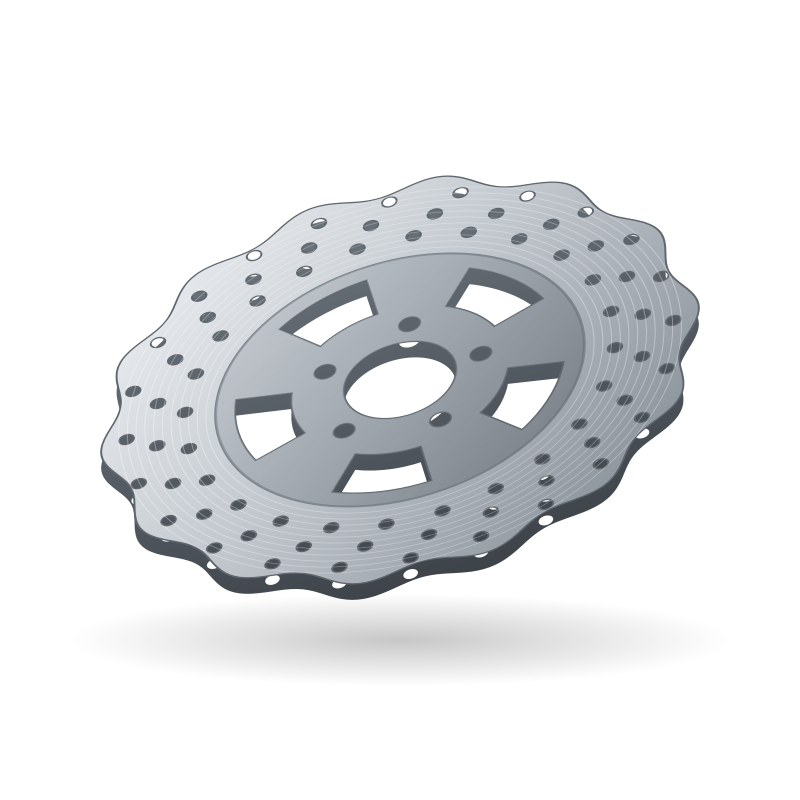
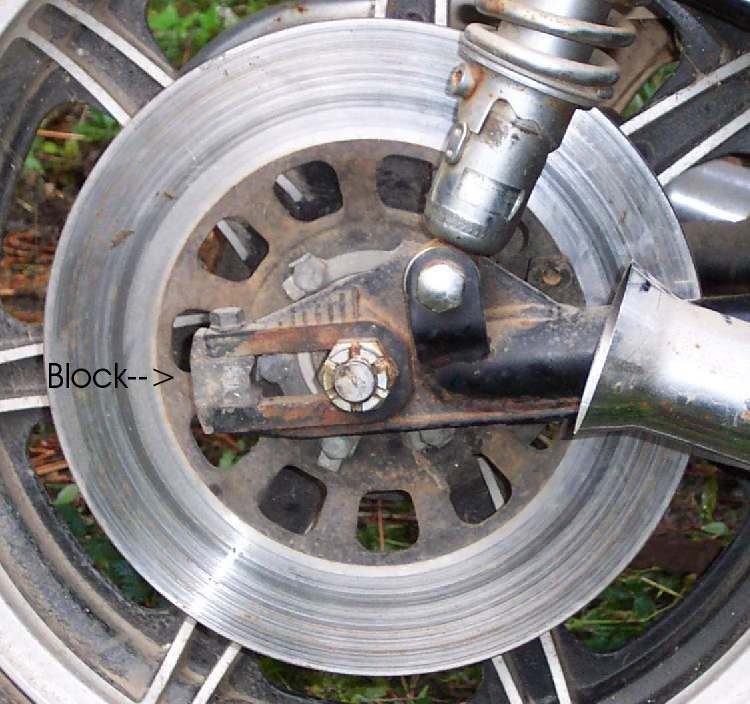
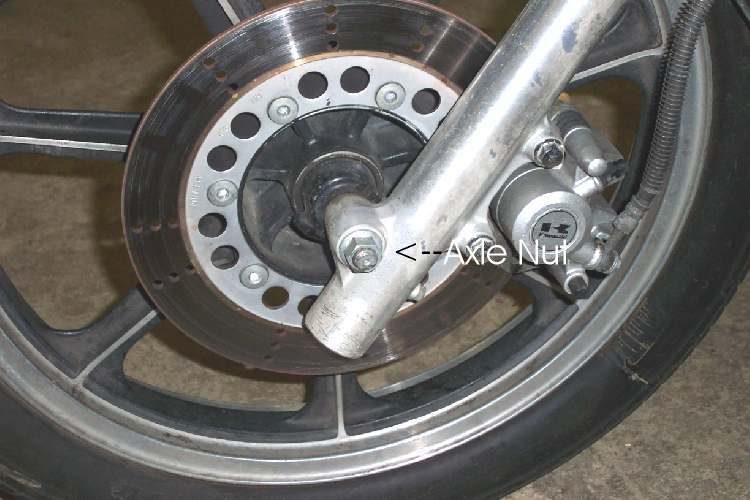
The brake disc is the flat steel plate bolted to the side of the wheel hub. The caliper pads squeeze it to stop the wheel.
What it does
The disc turns with the wheel. When the pads clamp it, friction turns motion into heat, and the disc spreads and loses that heat to the air. Every stop wears a little metal off the disc as well as the pads. A disc gets thinner, can be scored by worn-out pads, and can warp or get uneven deposits from heat.
Signs it is worn or failing
- Pulsing lever or pedal, wobbling bars when braking: Brakes pulse or judder.
- Deep grooves or a sharp lip at the outer edge: Brakes grind.
- Squeal: Brakes squeal.
- Blue colour, cracks between holes, loose bolts. A cracked disc: stop riding.
When to replace it
Measure the thickness at the thinnest point with a micrometer. Replace the disc if it is below the minimum stamped on the disc or given in your manual, if it is cracked, or if it is warped beyond the manual's limit. Fit new pads with a new disc.
What to match when buying
- Make, model, year and front or rear. Outer diameter, thickness, centre bore, bolt count and bolt circle must match.
- Many discs have the minimum thickness stamped on them ("MIN TH" followed by a number).
- Check whether your bike uses a fixed or a floating disc.
- Buy from a known maker; a cheap disc of soft or uneven steel wears pads fast and can crack.
Fitting notes
- Clean the hub face; dirt behind the disc causes runout.
- Use thread-locker on disc bolts if the manual says so and tighten in a cross pattern.
- Clean a new disc with brake cleaner to remove the protective oil.
- See Check a brake disc (home job).
Reference (K-Light 125)
| Item | Standard | Limit | PDF page |
|---|---|---|---|
| Front disc | 280 mm, 4.0 mm thick | 3.0 mm thick | 109 |
| Rear disc | 240 mm, 5.0 mm thick | 4.0 mm thick | 109 |
| Disc bolts | 6 × M6×20 Allen, 10 to 12 N·m, thread-locker | 109, 130 |