
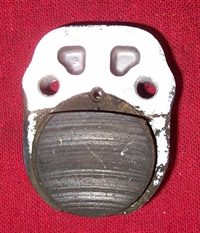
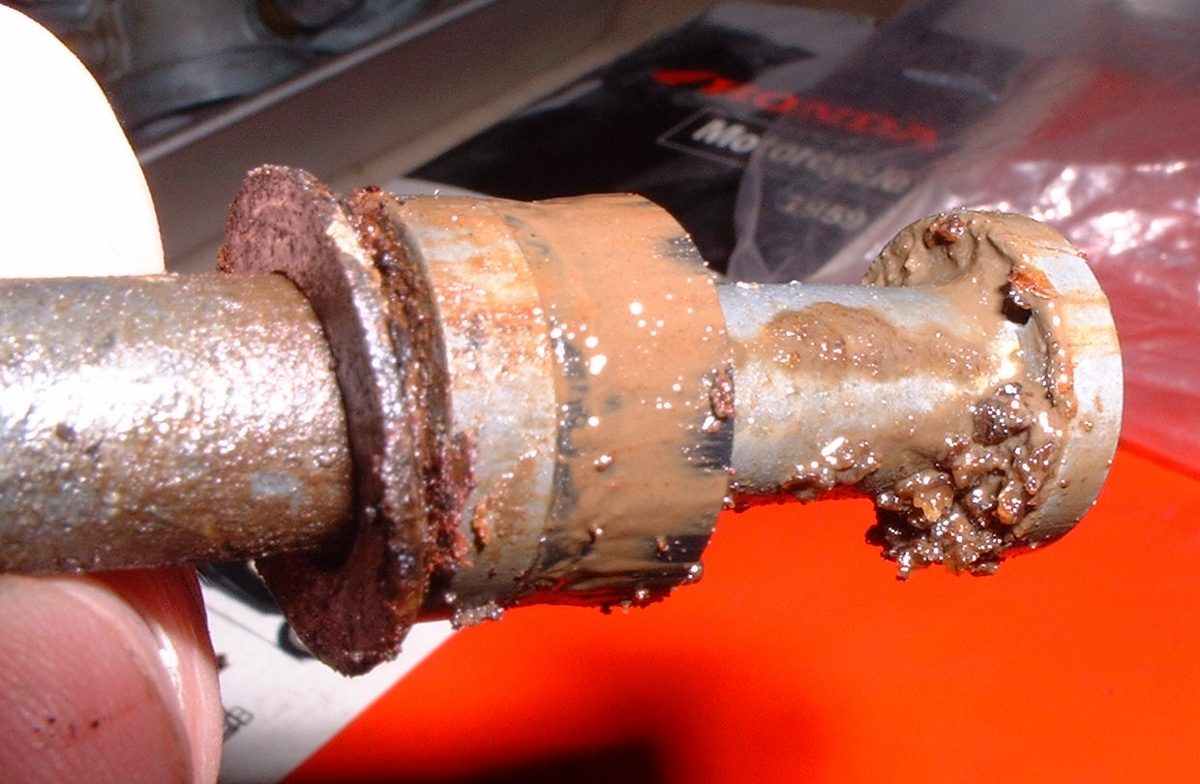
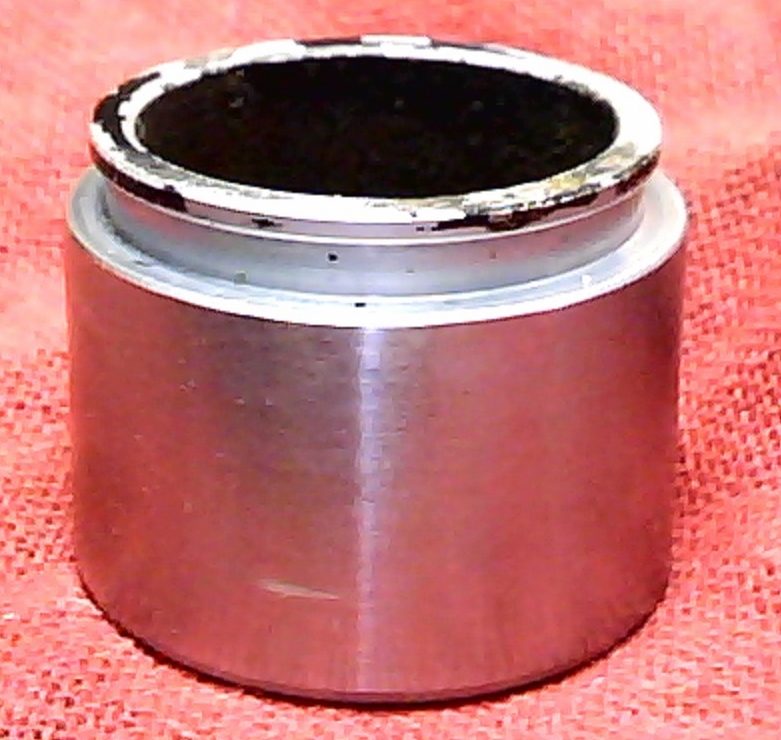
When you check or change pads, one pad is much thinner than the other in the same caliper, or a pad is worn into a wedge (thicker at one end). Both pads should wear at almost the same rate. Uneven wear tells you the caliper is not working freely: a piston or slide pin is sticking, the caliper is not square to the disc, or the brake is dragging.
Is it safe to ride?
Ride with care if the thinnest pad is still above the limit and the brake works well. If the thin pad is at or below the limit (K-Light 125: 3 mm), do not ride until the pads are replaced and the cause is fixed.
Quick checks first
- Measure both pads in each caliper.
- Spin the wheel: does it drag?
- Look at the disc: is one face shinier or more scored than the other?
- Look at the caliper slide pin boots (sliding calipers): torn or missing?
- Two pads in one caliper can wear by different amounts. Look at both pads at each check, not only the one that is easy to see.
Diagnose it step by step
1Is one pad worn much more than the other across its whole face?
- Yes: go to step 2.
- No, a pad is tapered (one end thinner): go to step 5.
2Is the caliper the sliding type (pistons on one side only)?
- Yes: the inner pad normally wears a little faster. A big difference means the slide pins are sticking. Clean and grease them: Clean a brake caliper and free the pistons.
- No (pistons on both sides): go to step 3.
3Do all pistons move in and out freely?
- No: a sticking piston keeps one pad on the disc. Clean it with Clean a brake caliper and free the pistons. If it is pitted or still sticks: Rebuild a brake caliper.
- Yes: go to step 4.
4Does the wheel still drag with all pistons free?
- Yes: the master cylinder may hold pressure. Check the brake master cylinder, and see Brake drags and the wheel does not spin freely.
- No: replace both pads and check again at the next service.
5Tapered pad: are the caliper bracket, slide pins or mounting bolts loose or worn?
- Yes: tighten to the model torque, replace worn pins or bracket.
- No: go to step 6.
6Is the disc warped or the wheel bearing loose?
- Yes: Check a brake disc and Check wheel bearings.
- No: a tapered pad can be normal on some calipers with one piston. Replace pads before the thin end reaches the limit.
Always replace both pads in a caliper at the same time (K-Light 125 manual).
Causes, most likely first
| Cause | How to confirm | Fix |
|---|---|---|
| Sticking slide pins | Sliding caliper; inner pad much thinner | Clean a brake caliper and free the pistons |
| Sticking piston | Piston will not move | Clean a brake caliper and free the pistons |
| Damaged piston or seal | Pitted piston, leak | Rebuild a brake caliper |
| Loose or worn caliper mounting | Movement at bracket; tapered pad | Tighten or replace bracket and pins |
| Warped disc or loose bearing | Runout over limit; wheel play | Check a brake disc |
| Master cylinder not releasing | Drag stops when bleed nipple opened | Check the brake master cylinder |
Reference values (K-Light 125)
| Item | Value | Source |
|---|---|---|
| Pad service limit | 3 mm (new 6.0 mm) | K-Light 125 manual, PDF p. 66 |