
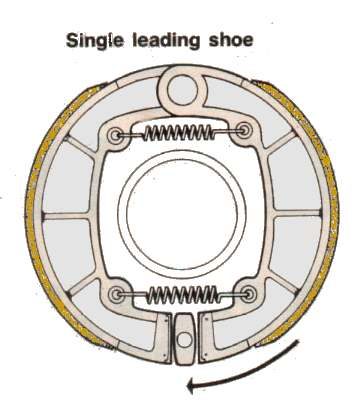
A harsh grinding or scraping noise when you brake, often with a rough feeling in the lever, usually means the friction material is gone and the metal backing plate is cutting into the disc or drum. It can also be a stone or grit trapped between pad and disc, or a broken pad. Every stop now damages the disc and braking is getting weaker.
Is it safe to ride?
No. Metal on metal stops poorly and can lock or break up. Push the bike to a place where you can fix it.
Quick checks first
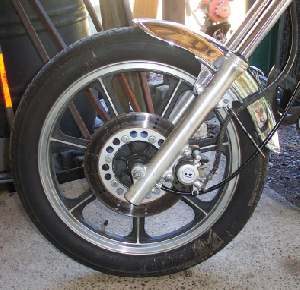
- Look into the caliper: can you see any friction material on both pads?
- Look at the disc: fresh deep, bright grooves?
- Does the noise happen with the brake off as well? Then something is rubbing all the time.
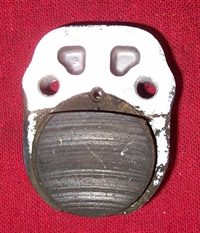
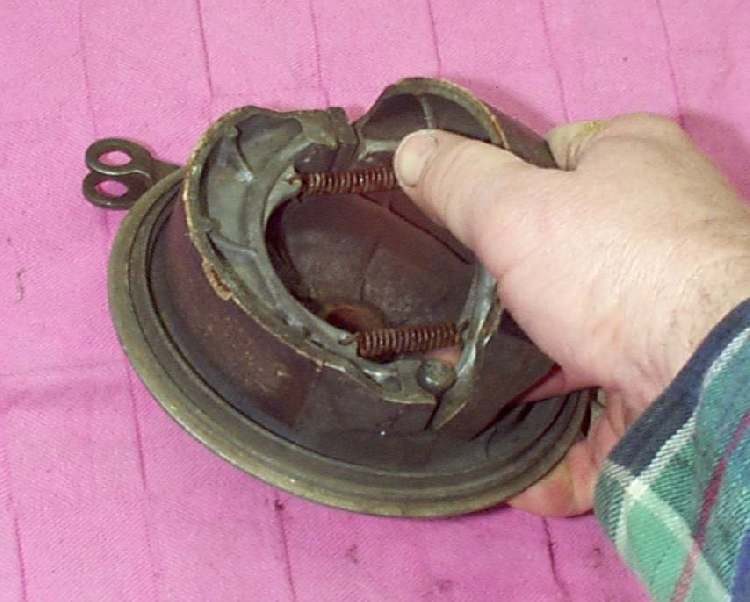
- Drum brake: does the wear pointer go past the end of its mark?
Diagnose it step by step
1Is it a drum brake?
- Yes: go to Drum brake squeaks or grinds.
- No: go to step 2.
2Is either pad worn to the metal or below the limit (K-Light 125: 3 mm)?
- Yes: Replace disc brake pads. Then go to step 4 to check the disc.
- No: go to step 3.
3Is a pad cracked, broken or loose on its plate, or is grit stuck between pad and disc?
- Yes: remove the pads, clean the caliper, replace damaged pads. See Clean a brake caliper and free the pistons.
- No: go to step 5.
4After the metal touched the disc, is the disc deeply grooved or below its thickness limit?
- Yes: replace the disc as well. New pads on a cut disc wear out fast and brake poorly. Check a brake disc.
- No: light marks only; fit new pads and bed them in.
5Is the noise there with the brake released, and is one pad worn more than the other?
- Yes: a sticking piston or slide keeps one pad on the disc. Go to Brake drags and the wheel does not spin freely.
- No: check that the caliper and disc bolts are tight and the disc is not touching the caliper body. A loose or bent part is a workshop check.
What happens if you keep riding: the steel backing plate eats the disc in a few days, a cheap pad job becomes a pad and disc job, and the piston can come out of its bore and dump the fluid.
Causes, most likely first
| Cause | How to confirm | Fix |
|---|---|---|
| Pads worn to metal | No friction material visible | Replace disc brake pads |
| Disc cut by metal | Deep bright grooves; thin disc | Check a brake disc |
| Grit or broken pad | Stone or pad pieces seen | Clean a brake caliper and free the pistons |
| Sticking caliper | Noise with brake off; uneven wear | Clean a brake caliper and free the pistons |
| Worn drum shoes | Drum wear pointer past mark | Service a drum brake |
Reference values (K-Light 125)
| Item | Value | Source |
|---|---|---|
| Pad service limit | 3 mm (new 6.0 mm) | K-Light 125 manual, PDF p. 66 |
| Disc thickness limit, front / rear | 3.0 mm / 4.0 mm | K-Light 125 manual, PDF p. 109 |