
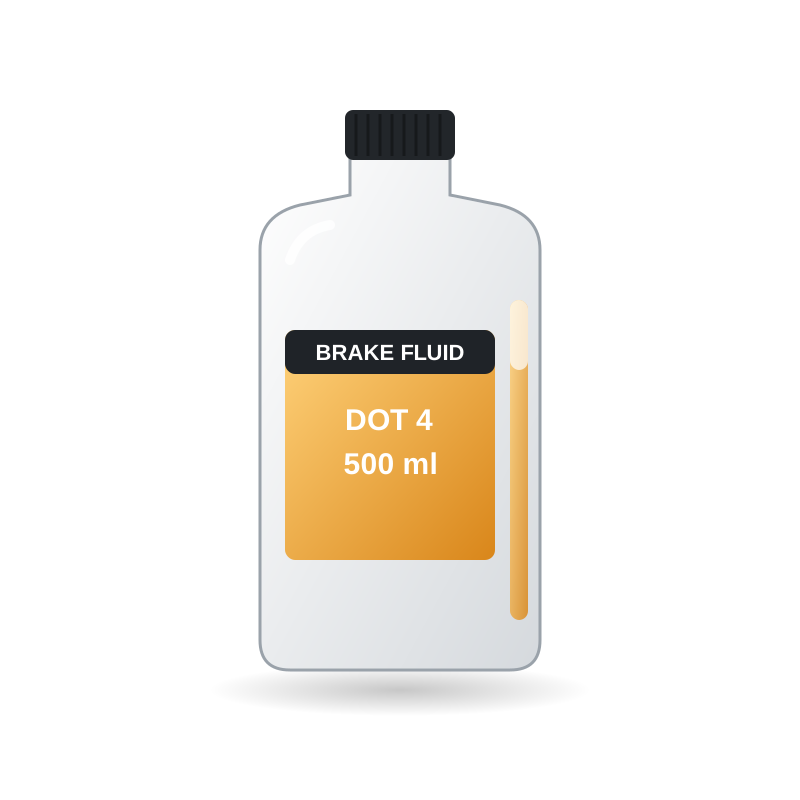
Brake fluid fills the hydraulic brake system: the reservoir on the master cylinder, the hoses and the calipers. It carries the force from the lever or pedal to the pads.
What it does
Fluid does not squash, so lever force reaches the caliper directly. Most brake fluids (DOT 3, DOT 4, DOT 5.1) are glycol based. They slowly soak up water from the air. Water lowers the boiling point, so after hard braking the fluid can boil, form vapour bubbles and give a soft lever. Water also rusts pistons from the inside.
Signs it is worn or failing
- Fluid dark brown or black, or level low: Brake fluid is dark or low.
- Soft lever, worse when hot: Spongy brake, Brake fade.
- Level dropping fast: Brake fluid leak. A slow drop is normal pad wear.
When to replace it
Change it at the interval in your manual, commonly every two years, and whenever it is dark or the system has been opened. Never reuse old fluid.
What to match when buying
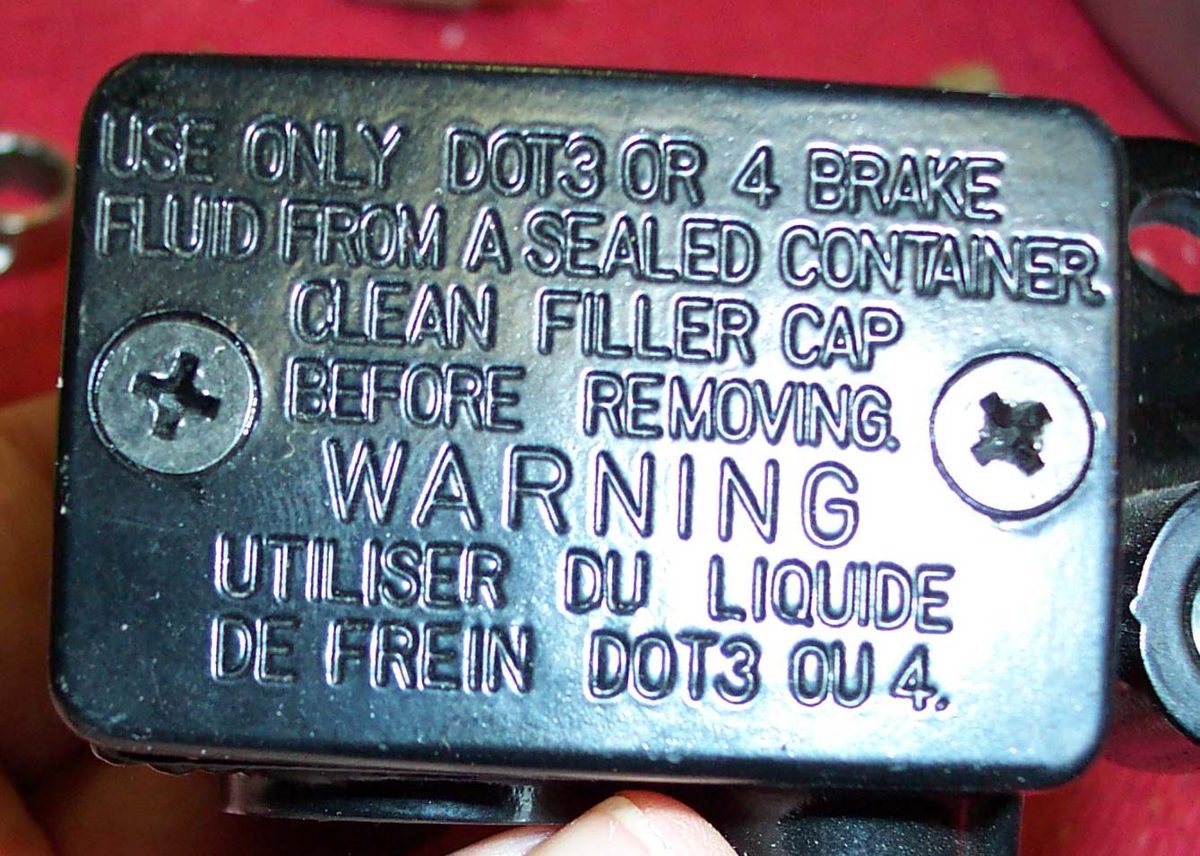
- Use the grade written on the reservoir cap or in the manual, for example DOT 4.
- DOT 3, DOT 4 and DOT 5.1 are all glycol based and can mix, but fill with one type. DOT 5 is silicone based and must never be mixed with the others.
- Buy small sealed bottles. An opened bottle soaks up water; do not use one that has been open for a long time.
- Check the seal on the cap and the expiry or batch date. Cheap unbranded fluid may not meet the DOT standard.
Fitting notes
- Brake fluid strips paint and hurts eyes. Cover paint, wear glasses and wash spills off with water at once.
- Keep the reservoir above the lower mark during bleeding so no air gets in.
- Bikes with CBS or ABS need their own bleed order.
- Rider check: Check brake fluid level and condition. Home job: Replace brake fluid and bleed the brakes.
Reference (K-Light 125)
| Item | Value | PDF page |
|---|---|---|
| Fluid | DOT4; flush fully if unknown fluid is in the system; do not mix brands | 65 |
| Reservoir volumes | Front 50 cm³; rear and CBS 15 cm³ each | 107 |