
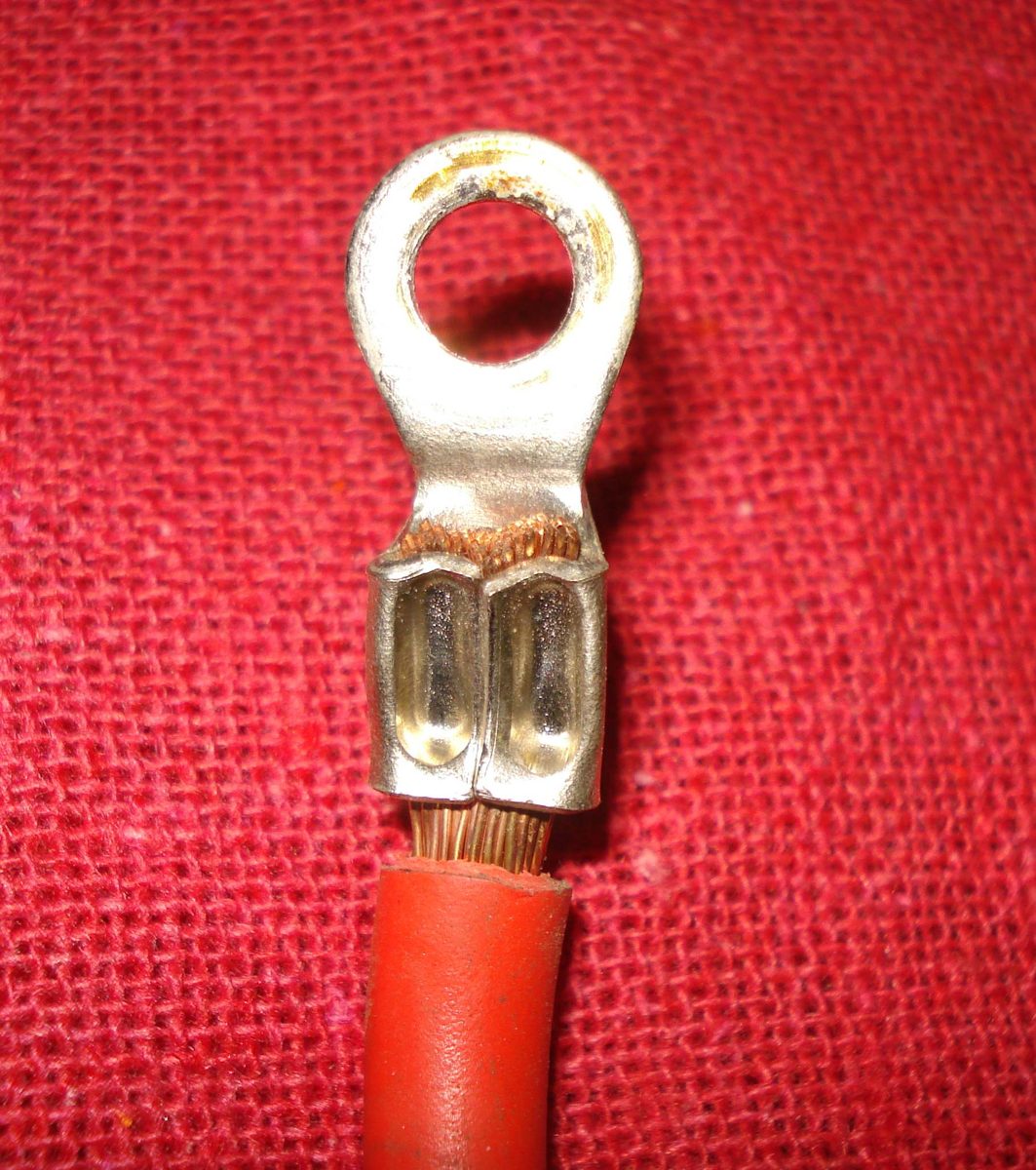
New faults started soon after something was added: an alarm, GPS tracker, phone charger, extra lights, LED indicators, heated grips or a louder horn. Typical results are a battery that goes flat overnight, fuses that blow, indicators that flash fast, dashboard warnings, a bike that will not start, or lights that dim at idle. Most come from four mistakes: no fuse or the wrong fuse, power taken from the wrong wire, an accessory that draws current with the key off, or more load than the alternator can supply.
Is it safe to ride?
With care, if the bike starts and lights work. If a fuse blows, wires get hot, or there is a burning smell, stop and see Burning smell from the wiring.
Quick checks first
- What was fitted, and where does it take its power? Find every added wire.
- Is there an inline fuse close to the battery on the accessory feed?
- Are there tap-type ("scotch lock") connectors cut into factory wires?
- Does the accessory stay on, or keep a light glowing, with the key off?
- Does the problem disappear when you unplug or disconnect the accessory? This is the fastest test.
Diagnose it step by step
1. Does the fault stop with the accessory disconnected? Remove its fuse or unplug it, and test the bike.
- Yes: the accessory or its wiring is the cause. Go to step 2.
- No: the fitting may have damaged factory wiring (cut strands, pierced insulation, a moved connector). Go to step 6.
2. Does the battery go flat when the bike is parked? Alarms and trackers draw current all the time, by design; a charger left on draws current too. Set the multimeter to DC volts (V with a straight line), 20 V range. Measure across the battery after a full charge, then again the next morning with the key off.
- A big fall overnight: Find what is draining the battery. Rewire the charger through an ignition-switched relay, or choose a low-drain alarm or tracker: Wire an accessory safely.
- No big fall: go to step 3.
3Does a fuse blow?
- Yes: the accessory wire is shorted or the accessory draws too much for that fuse. Never fit a bigger factory fuse to suit an accessory. Give the accessory its own fused feed from the battery: Find a short circuit and Wire an accessory safely.
- No: go to step 4.
4Did the fault start after LED indicators or LED bulbs were fitted?
- Fast or steady flashing: Fit LED indicators correctly. Kellermann notes flash rate can rise after new indicators are fitted (see sources).
- Dashboard or lamp warnings on a CAN-bus bike: these bikes check lamp current, so non-approved LEDs can set warnings, as HELLA's workshop guide explains. Refit original lamps, or use parts approved for your model.
- No: go to step 5.
5. Do the lights dim at idle with the accessory on? Small commuter alternators have little spare power. The K-Light manual gives two different alternator outputs in different places (PDF pp. 19 and 76), so ask a dealer for your figure, and check the system can carry the extra load before adding it (MAVCC PDF p. 294).
- Dim at idle: reduce the load (smaller lamps, switch accessories off at idle) and check charging: Test the charging system.
6. Was factory wiring damaged during fitting? Remove tap connectors and check the wire under them for cut strands and green corrosion. Repair with crimp joints and heat-shrink: Find a wiring fault. If an alarm or immobiliser cuts the ignition feed and the bike is dead, have the installer remove or repair it: see Nothing happens when the key is turned on.
Causes, most likely first
| Cause | How to confirm | Fix |
|---|---|---|
| Accessory draws current with key off | Overnight battery fall | Find what is draining the battery |
| No fuse or wrong fuse on accessory feed | Visual | Wire an accessory safely |
| Tap connector damaging factory wire | Cut strands under connector | Find a wiring fault |
| LED lamps with bulb-type flasher or lamp monitoring | Fast flash or warnings | Fit LED indicators correctly |
| Short in accessory wiring | Fuse blows | Find a short circuit |
| Too much load for alternator | Lights dim at idle | Test the charging system |
| AC-rated or small switch used for a DC accessory | Switch hot or burnt contacts | Choose the right switch for a 12 V circuit |
| Wire too thin for the load | Wire warm to touch; fuse blows | Choose the right wire |