
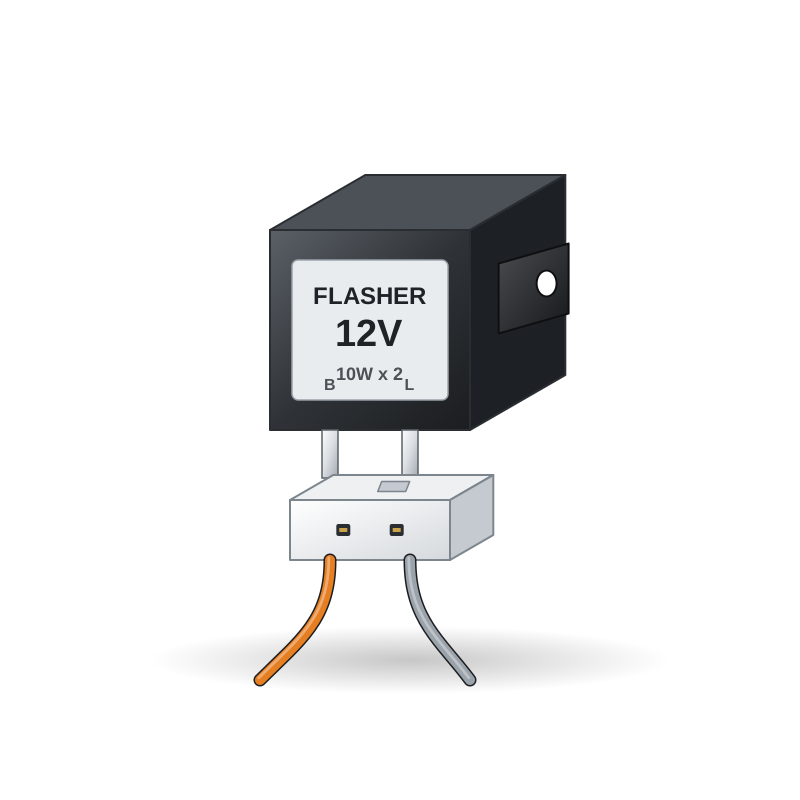
The flasher relay is a small plug-in unit, usually under the seat or behind the headlight, with two or three pins. It sits between the ignition switch and the indicator switch. The K-Light manual calls it a "variable-frequency flasher" (and in places a "scintillator").
What it does
The flasher switches the indicator current on and off to make the bulbs blink. Older thermal flashers rely on the current of the bulbs to time the flash, so a blown bulb or a change to LED indicators makes them flash fast, slow or not at all. Electronic flashers are less fussy, and "LED" flashers work with very low loads. Heat, vibration and water kill them.
Signs it is worn or failing
- Indicators do not work on both sides with good bulbs and fuse.
- Indicators flash too fast, often a blown bulb or LED fitted.
- Indicators stay on and do not flash.
When to replace it
When good bulbs, earths and switch are confirmed and the flasher still does not flash, or flashes wrongly with the correct bulbs. Follow your bike's manual.
What to match when buying
- Match pin count, pin layout and plug. A two-pin flasher is not the same as a three-pin one.
- Match the load type: standard bulbs or LED. If you fit LED indicators, fit an LED-rated flasher or the resistors the indicator maker supplies.
- Check the voltage is 12 V and the flash rate is legal where you ride.
Fitting notes
- Home job: Test the indicator flasher relay; for LEDs see Fit LED indicators correctly.
- Key off when unplugging. Check the plug pins for corrosion and fit it in its rubber mount.
- Bulb failure on one side often changes the flash rate: check the bulbs first.