
You smell hot or burning plastic, see smoke from under the seat, tank or headlight, or find a wire or connector that is melted or very hot. Electrical heat comes from too much current (a short circuit or an overloaded wire) or from a poor connection that resists the current and heats up. Either can start a fire, especially near fuel.
Is it safe to ride?
No. Stop now. Pull over, turn the key off and get off the bike. If there is smoke or flame, move away and call for help; use a fire extinguisher only if it is safe. When there is no smoke, disconnect the battery negative (-) terminal. Do not ride again until the cause is found and repaired.
Quick checks first
- Is it really electrical? Clutch, brakes, oil on the exhaust and a plastic bag on the exhaust also smell hot. A brake that drags makes the wheel hot: see Brake drags and the wheel does not spin freely.
- Electric motorcycle: if the smell comes from the battery area, follow Battery pack is hot, hissing or smells and keep away.
- Battery bulging, hissing or very hot: Battery is boiling, swollen or leaking.
- Where is the smell strongest: under the seat (battery, fuses, regulator), at the headlight, at the handlebar switches, at an accessory?
Diagnose it step by step
1. Is any fuse blown? Battery still disconnected. Check every fuse: Check fuses and relays.
- A fuse blew: there is a short on that circuit. Go to step 3.
- No fuse blown: the heat came from a poor connection or an overload below the fuse rating. Go to step 2.
2. Which connector or wire is melted or brown? Look and feel (only once cold) at: the regulator rectifier plug and the generator (stator) plug, the main fuse holder, the battery terminals, the headlight plug, the handlebar switch, and any accessory wiring.
- Regulator or stator plug burnt: very common. Go to Regulator is very hot or the connector has melted or Burnt smell from the generator or a dark stator connector. The K-Light regulator plug checks are on PDF p. 79.
- Fuse holder or connector burnt: a loose contact was heating. Replace the connector or holder with new terminals: Clean and seal electrical connectors. Then go to step 4.
- Headlight plug or switch burnt: often an over-powered bulb. Check the bulb wattage.
- Accessory wiring burnt: go to step 5.
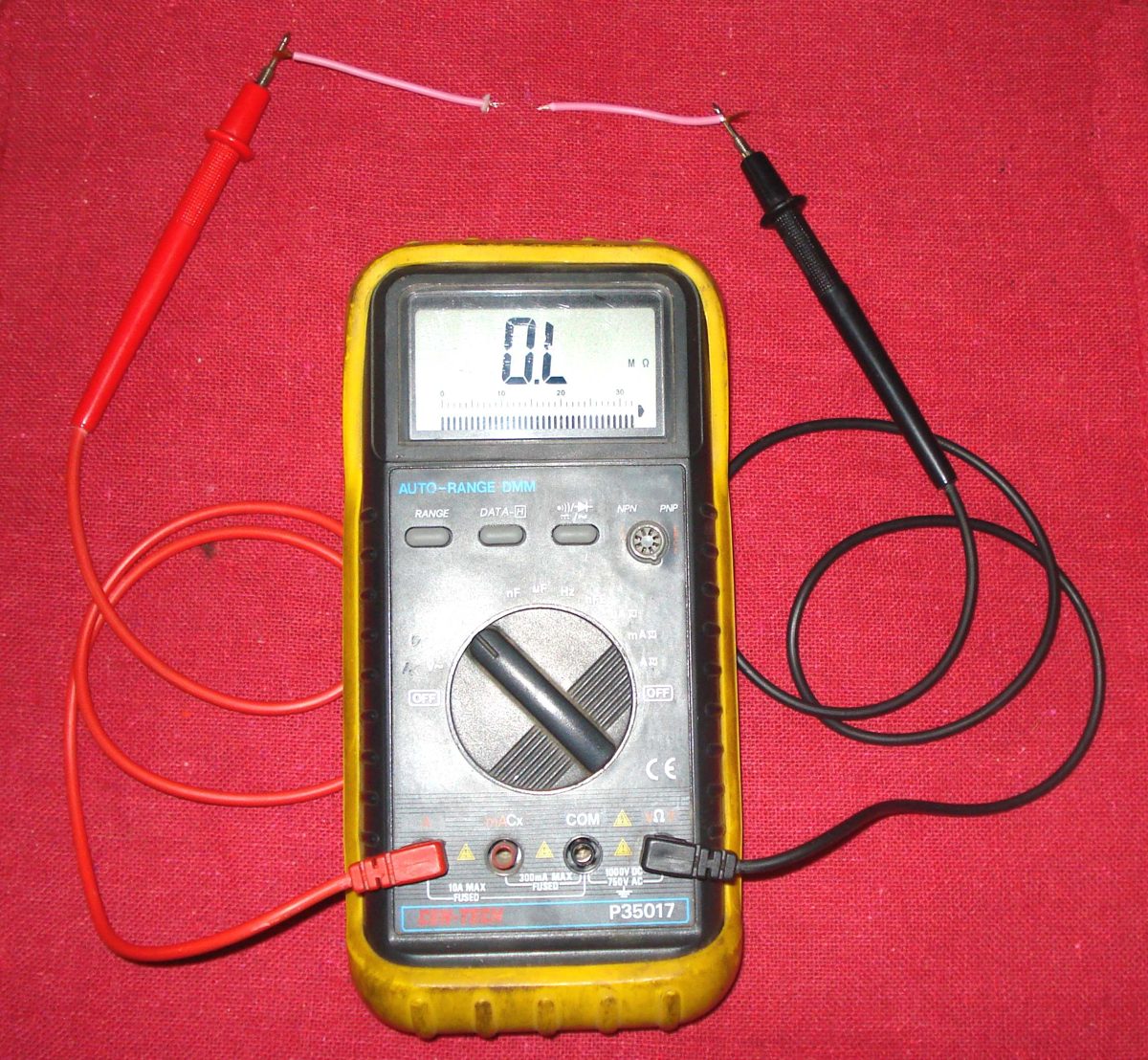
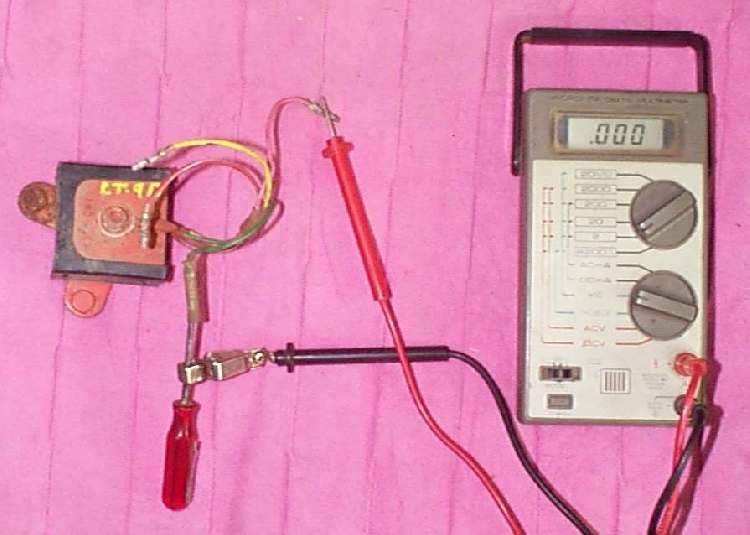
3. Where is the short? Do not fit a new fuse and switch on to "see what happens". Use the meter, power off: Find a short circuit. MAVCC reminds us that a blown fuse means a pinched, bare or shorted wire somewhere (PDF p. 313).
4. Will the repair stay cool? After repairing, reconnect the battery and run the circuit. Set the multimeter to DC volts (V with a straight line) and measure across the repaired joint while it carries current, one probe on each side of it.
- A reading close to zero: good.
- A clear reading: the joint still has resistance and will heat again: Do a voltage drop test.
5. Was an accessory involved? Accessories connected without a fuse, with thin wire, or taking power through a light or switch wire are a common cause. Rewire it correctly: Wire an accessory safely.
6. Harness badly damaged? If insulation has melted along a length of harness, wires inside may be joined. Replacing the harness is workshop work. Ask for the correct harness for your model (the K-Light 125 diagram is on PDF p. 278).
Causes, most likely first
| Cause | How to confirm | Fix |
|---|---|---|
| Burnt regulator or stator connector | Brown, melted plug | Test the regulator rectifier |
| Short circuit (wire rubbed through) | Fuse blown, continuity to frame | Find a short circuit |
| Loose, corroded connector or fuse holder heating | Melted plastic at one joint | Clean and seal electrical connectors |
| Badly fitted accessory | Burnt accessory wire or tap | Wire an accessory safely |
| Over-powered bulb | Higher wattage than specified | Fit correct bulb |
| Overcharging battery | Battery hot, swollen | Battery is boiling, swollen or leaking |