
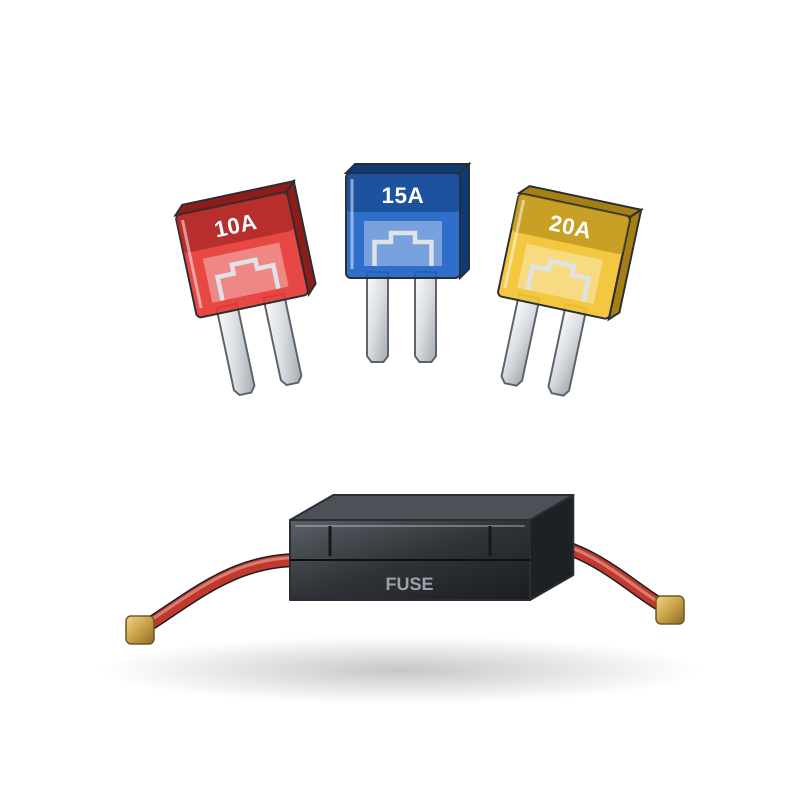
A fuse is a small part with a thin metal strip that melts if too much current flows. Most modern bikes use plastic blade fuses in a fuse box under the seat or side cover; older ones use glass tube fuses. There is usually a main fuse near the battery or starter relay, plus smaller fuses for each circuit.
What it does
If a wire rubs through and touches the frame (a short circuit), current rises very fast and the wire could melt and start a fire. The fuse melts first and cuts the circuit. A fuse does not wear out in normal use. When one blows, something caused it: find that cause before fitting a new one.
Signs it is worn or failing
- Fuse keeps blowing.
- Nothing happens when the key is turned on.
- All lights stop working or one group of items dead.
- Corroded or loose fuse holder, or a fuse that looks fine but has no continuity. MAVCC warns never to trust a fuse by its look.
When to replace it
When it is blown, or the blades or holder are corroded. A holder that is discoloured or melted means poor contact or overload; replace it.
What to match when buying
- Fit the same rating (amps) and same size and type (mini blade, standard blade, glass). The rating is printed on top. Never fit a larger fuse, a wire or foil: the wiring can burn.
- Blade fuses are colour coded by rating, but always read the number.
- Cheap fuses may blow late or not at all. Buy fuses from a known maker in sealed packs.
- Carry spares of each rating on the bike.
Fitting notes
- Rider job: Check fuses and relays. Key off first.
- If it blows again, look for a short: Find a short circuit.
- When adding accessories, give them their own fused supply: Wire an accessory safely.
Reference (K-Light 125)
| Item | Value | PDF page |
|---|---|---|
| Main fuse | 20 A | 74 |
| Other fuses | two at 10 A | 278 |