
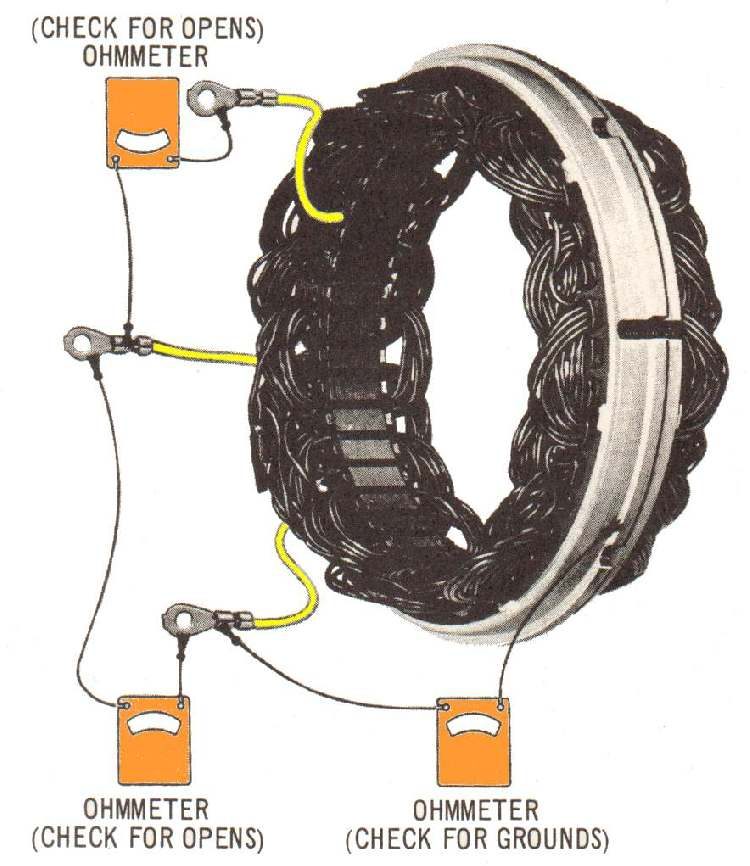
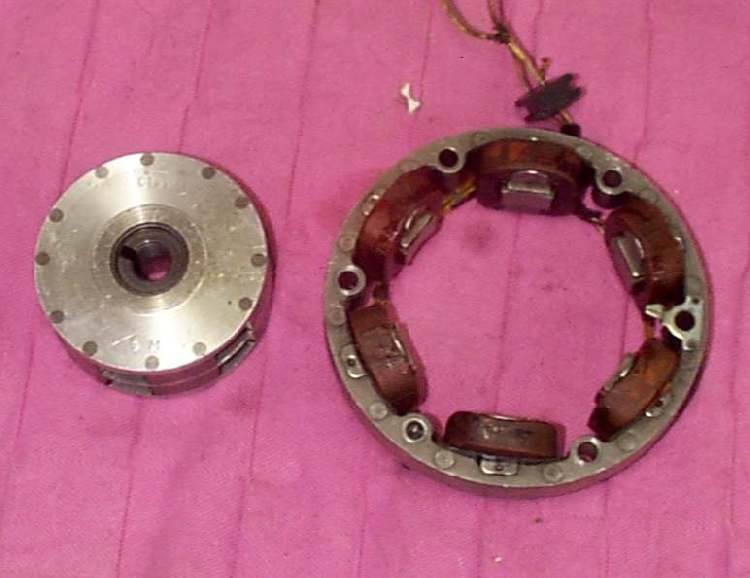
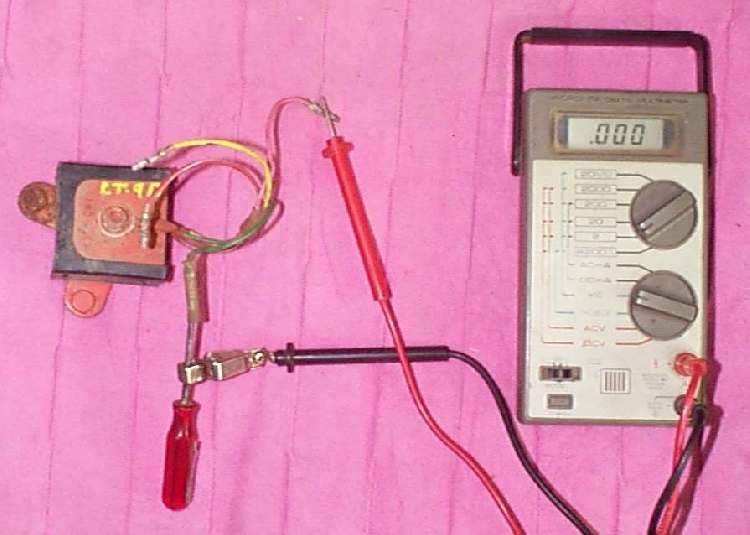
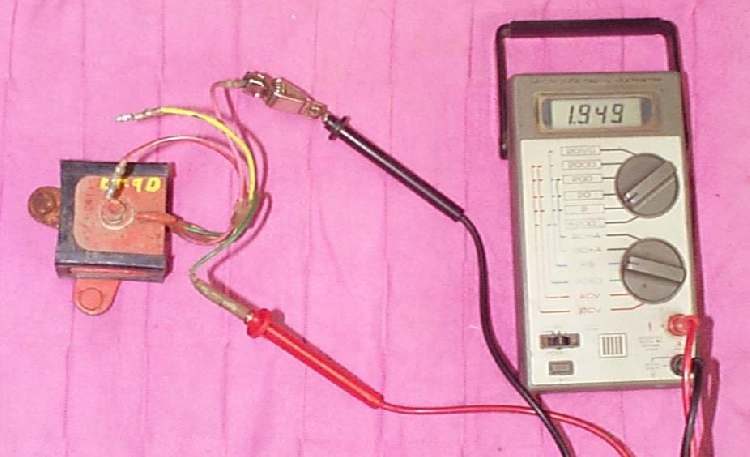
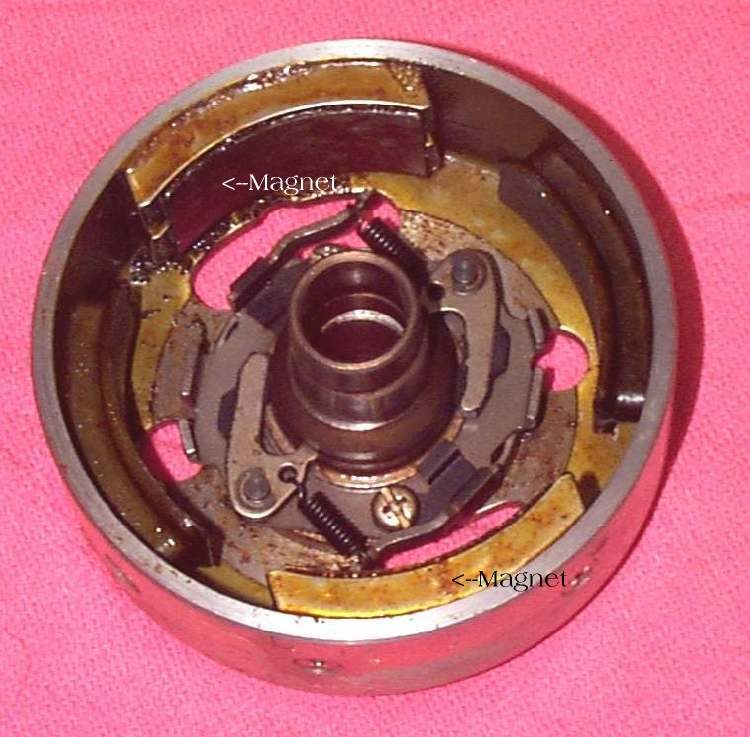
You ride, but the battery does not recover: it is flat again after a day or two, lights dim, and the voltage at the battery does not rise when the engine runs. The charging system has three parts: the stator (coils behind the flywheel that make AC power), the regulator rectifier (turns it into DC and limits the voltage), and the wiring and fuse to the battery. The K-Light 125 fault chart tests the stator coil at its connector, then checks the wiring to the battery, then the regulator (PDF pages 34 and 35).
Is it safe to ride?
With care, for a short way. A fuel-injected bike will stop when the battery voltage drops too low, and lights and indicators fade. Ride in daylight and get it fixed.
Quick checks first
- Is the main fuse good? K-Light 125: 20 A main fuse.
- Are the battery terminals and the main earth tight?
- Look at the regulator connector and the stator connector: any brown, melted or green pins?
- Any warning light for battery or charging on the dashboard?
Diagnose it step by step
1Is the battery able to hold a charge (charge it, then check it reaches the charged value)?
- No: the battery is worn. Replace it, then test charging again. Test and charge a 12 V battery.
- Yes: go to step 2.
2With a charged battery, does the voltage rise into the manual's range at test speed? (K-Light 125: 14.5 ± 0.5 V at 5000 rpm)
- Yes: charging works. The battery goes flat for another reason: Battery goes flat after the bike is parked.
- No: go to step 3. Use Test the charging system.
3Is the main fuse good, and is there battery voltage on the regulator's battery wire (red on the K-Light 125)?
- No: replace the fuse or repair the wire. Check fuses and relays.
- Yes: go to step 4.
4Are the regulator and stator connectors clean and tight, with no burnt pins?
- No: repair the terminals. Clean and seal electrical connectors. Melted pins: Regulator is very hot or the connector has melted.
- Yes: go to step 5.
5Is the regulator earth (black wire) connected to earth with good continuity?
- No: Clean and tighten earth connections.
- Yes: go to step 6.
6Does the stator read in range between its wires and show no continuity to earth? (K-Light 125: 0.8 ± 0.3 Ω at 20 °C)
- No: the stator is faulty. Test the stator (generator coils).
- Yes: the regulator is the likely fault. Test the regulator rectifier.
Causes, most likely first
| Cause | How to confirm | Fix |
|---|---|---|
| Worn battery that will not take charge | Fails after full charge | Replace a 12 V battery |
| Blown main fuse | No voltage on regulator battery wire | Check fuses and relays |
| Loose or burnt connector | Brown pins; voltage jumps | Clean and seal electrical connectors |
| Poor regulator earth | No continuity on black wire | Clean and tighten earth connections |
| Faulty regulator | Diode test fails; stator good | Test the regulator rectifier |
| Faulty stator | Resistance out of range or shorted to earth | Test the stator (generator coils) |
Reference values (K-Light 125)
| Item | Value | PDF page |
|---|---|---|
| Charging voltage | 14.5 ± 0.5 V at 5000 rpm | 78 |
| Stator charging coil | 0.8 ± 0.3 Ω at 20 °C | 80 |
| Main fuse | 20 A | 74 |