
Home mechanic (basic tools) · Time: 10 to 20 min (editorial estimate) (estimate)
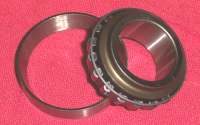
The steering head bearings sit at the top and bottom of the frame's head tube. They let the forks and handlebar turn. Older and many commuter bikes use loose steel balls in cup-shaped races; others use tapered roller bearings. Worn or loose bearings cause a clunk when braking, wobble and weaving; tight or dented bearings make the steering heavy or make it catch in the centre. This check tells you which, without taking anything apart.
Safety
- The front wheel must be off the ground, and the bike must not tip forward or sideways. Use the centre stand with a weight on the rear seat, or a stand under the engine, and a helper.
- If you feel a clear clunk or the steering catches in one place, do not ride until the bearings are adjusted or replaced.
You need
- A helper to hold the bike steady.
- Correct tyre pressure first, because a soft front tyre also makes steering heavy (Check tyre pressure).
Steps
- Lift the front wheel off the ground.
- Free movement: centre the bars and give them a very light push to one side. They should fall smoothly to the lock without help. Do the same to the other side. If they do not move, or stop partway, the bearings are too tight, damaged or dry.
- Notch test: turn the bars slowly from lock to lock with two fingers. Feel for a click, a small step or a place where the bars want to stop, especially in the straight-ahead position. That is a dented (indented) race. Adjustment will not fix it.
- Check cables and wires while turning: the K-Light 125 manual asks you to make sure nothing is pulled tight or catches at full lock. A tight cable feels like a heavy bearing.
- Play test: sit or crouch in front of the bike. Hold both fork legs near the axle and push them firmly towards the engine and pull them back. Watch and feel at the top of the head tube. A knock or movement there means loose or worn bearings.
- Second play test on the ground: put the front wheel down, hold the front brake on, and rock the bike forward and back. Put your other hand round the joint between the top yoke and the frame. A clunk felt there is steering head play. A clunk felt lower down is more likely fork bushes, a loose caliper or a loose axle.
- Write down what you found: free, tight, notchy, or loose.
Check your work
- You can say which of these the bearings are: smooth with no play (good), loose, tight, or notchy.
- You have ruled out tyre pressure and cable routing.
If it did not fix the problem
- Loose, tight or notchy: Adjust or replace steering head bearings.
- Clunk is lower down: Clunk from the front when braking.
- Steering pulls or bars are crooked: Align the front wheel, forks and handlebar.