
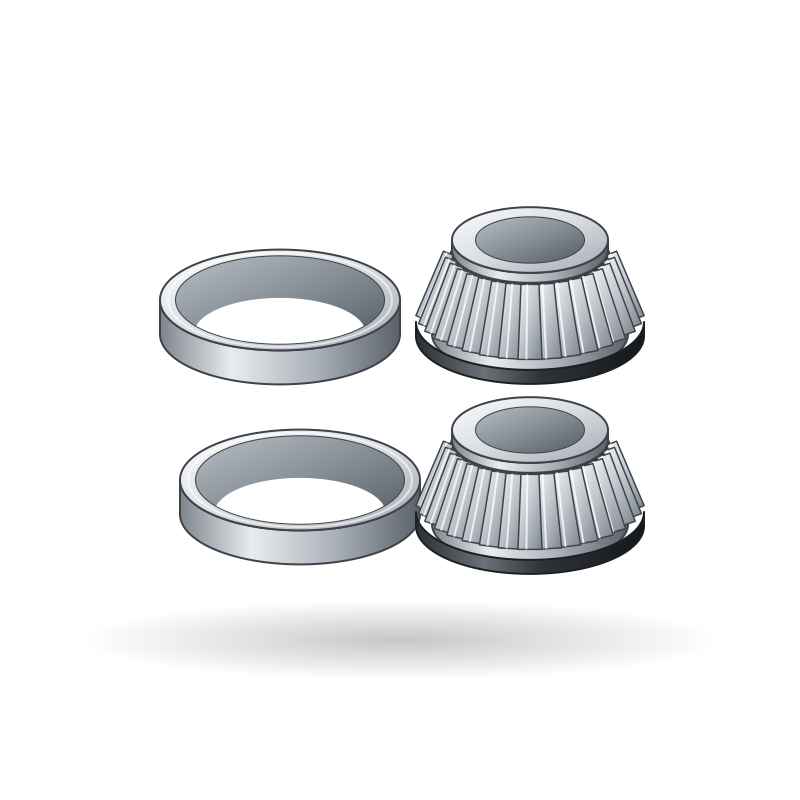
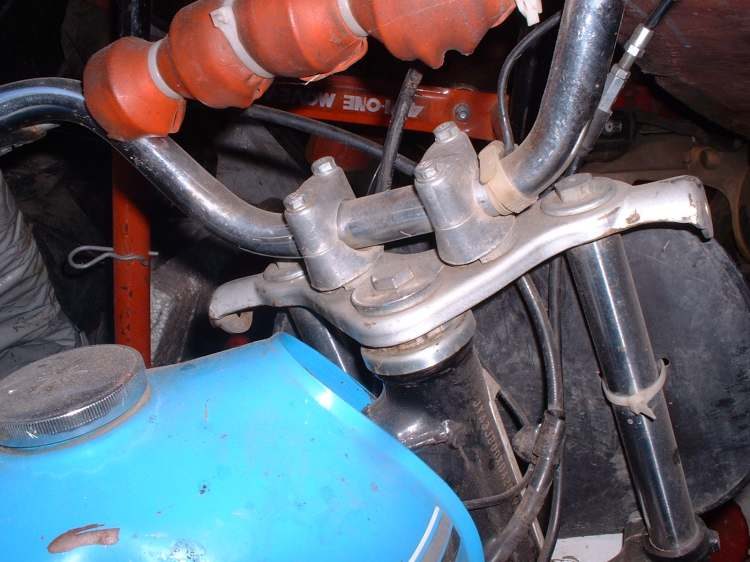
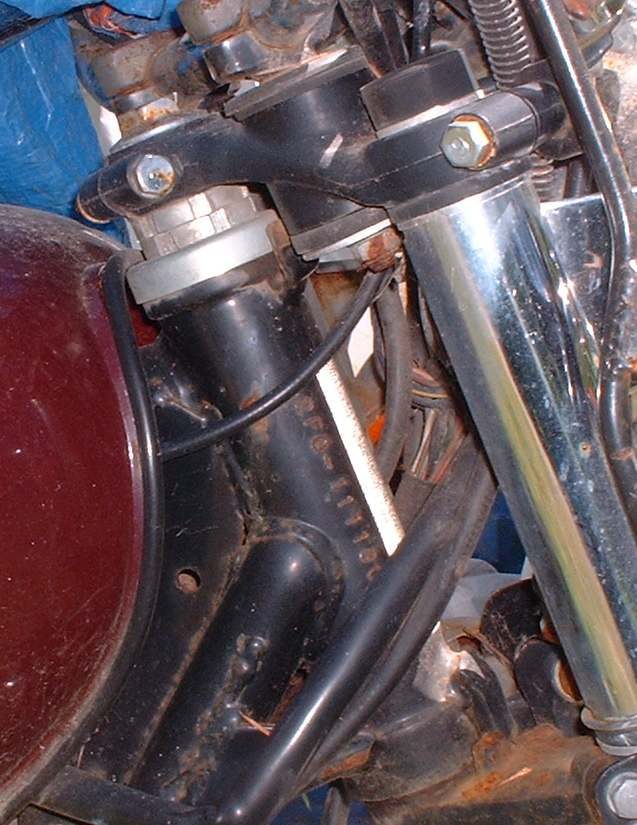
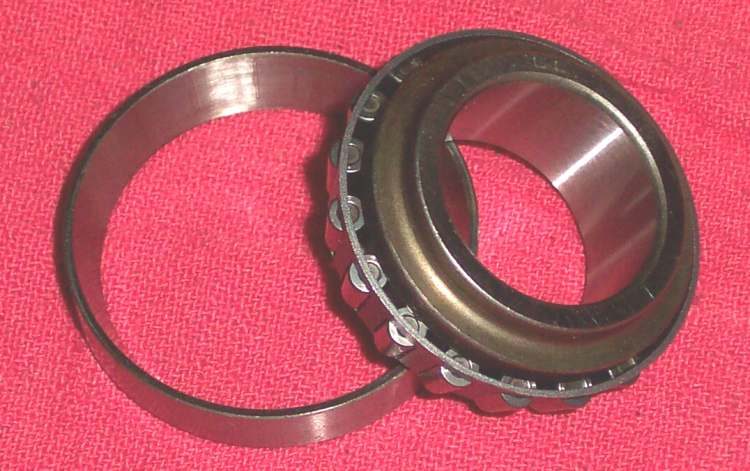
Steering head bearings are two bearings inside the steering head of the frame, one at the top and one at the bottom. The steering stem of the lower fork yoke turns in them. Many commuter bikes use loose steel balls between cups and cones; others use caged balls or tapered rollers.
What it does
The bearings let the forks and bars turn smoothly from lock to lock while holding the front end tight to the frame. An adjusting nut sets how tight they are. Too loose, the front end clunks and can wobble. Too tight, the steering feels heavy and the bike weaves. Water and old grease wear dents into the races, which you feel as a notch in the centre.
Signs it is worn or failing
- Notch or catch in the straight-ahead position: Steering is notchy.
- Clunk from the front when braking: Clunk from the front when braking.
- Heavy steering: Steering feels heavy.
- Wobble or weave: Handlebars shake, Bike weaves.
When to replace it
Adjust if loose but smooth. Replace if notchy, pitted or rough after adjustment. Replace balls, cups and cones (or complete taper roller sets) top and bottom together; never mix old and new parts.
What to match when buying
- Make, model and year. Check the type: loose balls (count and size), caged balls, or tapered rollers. The ball count and size must match your bike exactly; check the manual or the old parts.
- Taper roller kits are a common upgrade, but buy one made for your model.
- Dust seals usually come in the kit.
- Buy known brands; soft cheap races dent quickly.
Fitting notes
- Check: Check the steering head bearings (home).
- Adjusting and replacing needs a special nut wrench, race drivers and the exact torque sequence for your bike: Adjust or replace steering head bearings (workshop).
Reference (K-Light 125)
| Item | Value | PDF page |
|---|---|---|
| Bearing type | Loose 1/4 inch steel balls in cup and cone races | 133 |