
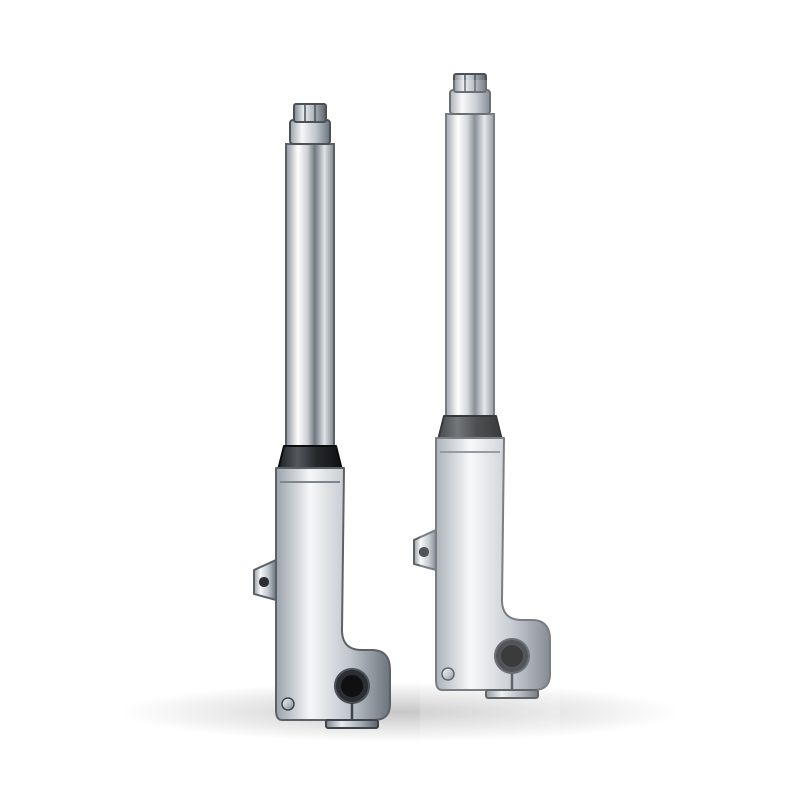
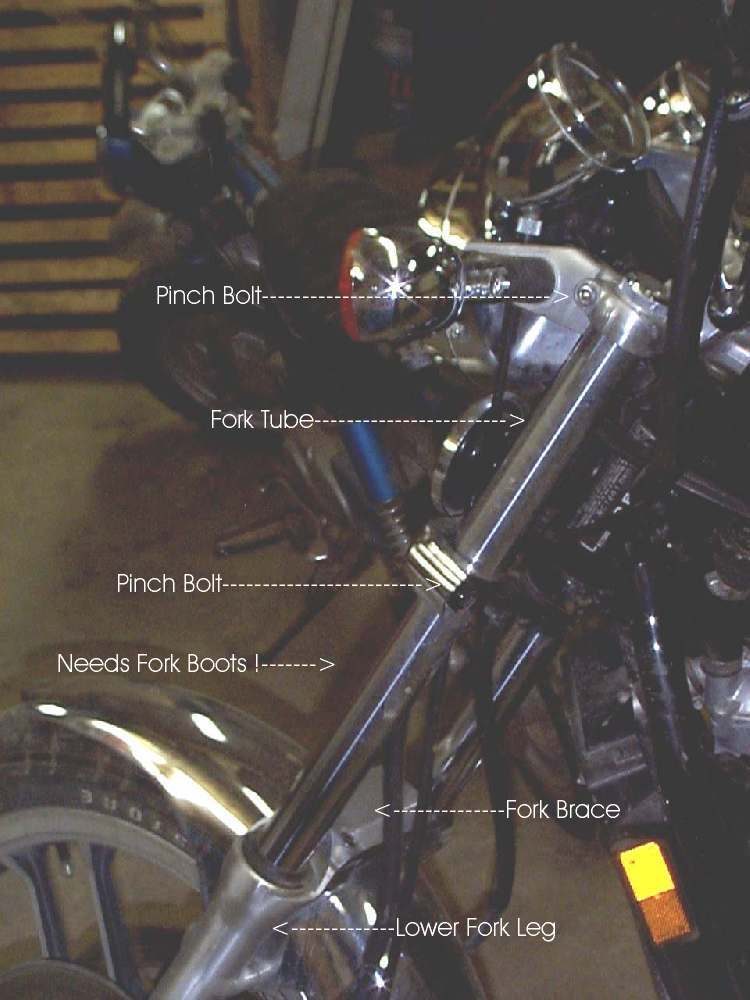
The front forks are the two tubes that hold the front wheel and connect it to the handlebars. Each leg has a shiny inner tube (stanchion) clamped in the yokes and an outer slider that holds the axle. Inside are a spring, oil and a damper rod.
What it does
The spring carries the weight of bike and rider and soaks up bumps. The oil, forced through small holes in the damper rod, slows the movement so the bike does not bounce. A rebound spring stops the fork hitting the top. Seals at the top of the slider keep oil in and dirt out. Bushes let the tubes slide smoothly. Wear comes from dirt on the tubes, old oil, rust pits and crash damage.
Signs it is worn or failing
- Oil on the tube or slider: Fork leak.
- Bottoming out or diving under braking: Forks bottom out.
- Harsh or sticky: Forks feel harsh, Forks feel sticky.
- Twisted legs or bars off-centre: Fork legs twisted.
- Knocks or squeaks: Fork noise, Clunk when braking.
When to replace it
Fork legs are rarely replaced whole. Seals, oil, bushes and springs are service parts. Replace an inner tube that is bent or pitted where the seal runs. Never straighten a bent tube or damper rod.
- Dents or rough patches on a fork tube wear out any new seal. Replace a damaged tube instead of fitting new seals onto it.
What to match when buying
- Fork seals (sized by inner tube diameter), Fork oil, springs, bushes, dust seals.
- Inner tubes: match diameter, length and model. Fork springs: match free length and rate.
- Some bikes use upside-down or cartridge forks with different parts; check the manual.
Fitting notes
- Rider check: Inspect the front forks.
- Seal and oil work: Replace fork oil and seals (workshop).
- After refitting, align the front end: Align the front wheel, forks and handlebar.
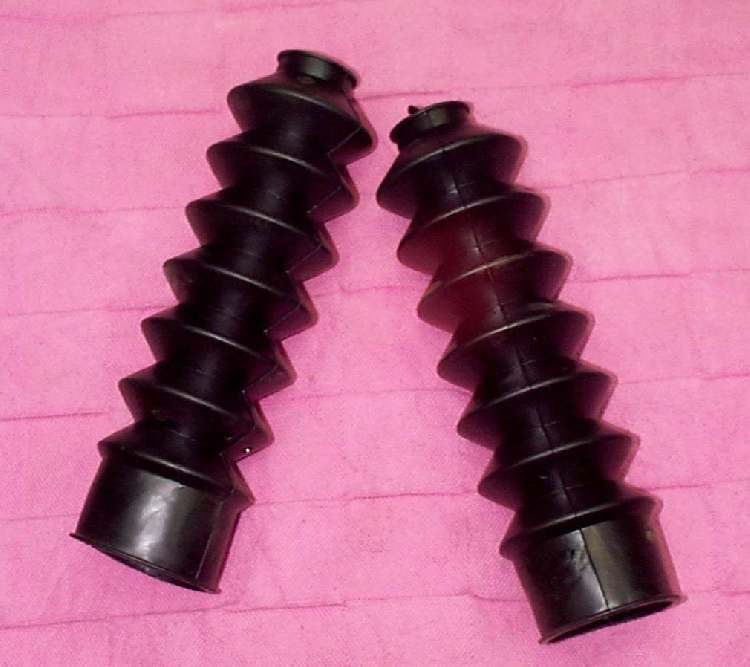
- Rubber gaiters over the tubes keep dirt off the seals and stones off the tubes. They are worth fitting on a bike used on dusty or stony roads.
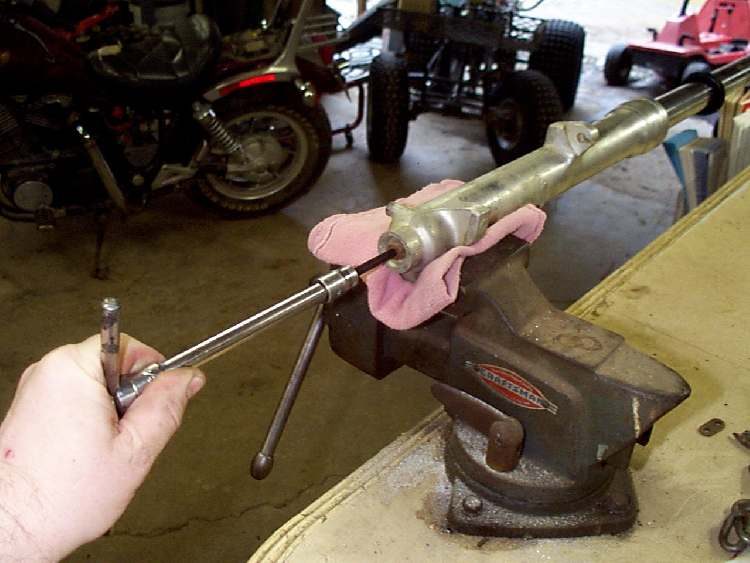
- When a fork leg is removed, tie the brake caliper up and do not let it hang by the hose. A top bolt that holds the spring can be under pressure and fly out, so hold it down while loosening.
- A thicker fork oil firms up a soft front end. A spacer cut from plastic pipe and fitted on top of a sagged spring has a similar effect.
Reference (K-Light 125)
| Item | Standard | Limit | PDF page |
|---|---|---|---|
| Fork type | Telescopic, damper rod | 151 | |
| Fork spring free length | 300 mm | 295 mm | 154 |
| Fork oil per leg | 285 ± 2 ml, grade 46# | 156 |