
A bike that has stood for months or years needs restoration, not just repair. Rust forms, rubber dries and fuel turns to varnish. A short set of checks shows whether the bike is worth the cost. A non-running bike is worth much less than a running one, so settle the price from what you find.
Safety
- Keep a fire extinguisher near. Sparks and backfires can ignite old fuel.
- Do not crank a stuck engine with the starter.
- Never connect a charged battery to a dead one in the bike. Remove the dead battery first. A flat battery can overheat and burst.
- Test brakes and tyres before riding. Old tyres can crack inside.
You need
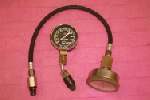
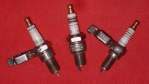
- A torch, notebook, plug spanner and compression gauge.
- A charged battery of the right voltage, or a charger.
- A clean jar to catch fuel and oil samples.
Steps
- Look it over. Check for bent parts, scrapes and fresh metal where it has fallen. Check frame, forks, bars and wheels for crash damage: Inspect the frame after a crash. Note rust and missing parts.
- Ask the history. Treat a seller's story with care and check facts yourself. Low mileage on a very old bike may simply mean it stood for years.
- Oil. Check level and colour: Inspect drained oil for clues. Milky oil means water. A fuel smell means a leaking fuel valve. Burnt smell can mean clutch trouble.
- Turn it over. Remove the battery. Use a charged battery of the correct voltage, or kick it over. If it will not turn: Find out why the engine will not turn over. A stuck engine means a top end rebuild.
- Compression. Remove the plug, ground the plug lead, open the throttle fully and crank. Use a gauge: Test engine compression. A rough check without a gauge is to put a thumb over the plug hole while cranking. Firm pressure that pushes the thumb off suggests there is some compression, but it does not replace a gauge.
- Cylinder pressure leak. If compression is low on a four-stroke, check valve clearance first: Check and adjust valve clearance. Then use air through the plug hole at top dead centre to find where it escapes: air heard at the intake means the intake valve, at the exhaust the exhaust valve, at the breather the rings. A workshop can do this: Do a leak-down test.
- Spark. Check for a spark: Check for a spark safely. If there is none on an electronic ignition bike, repairs can be costly: Diagnose a suspected CDI or ECU fault.
- Fuel and carburettor. Expect old fuel. Drain it and check for water: Test fuel for water, Bring a bike back into use after storage.
- Price it. Add up the likely cost of the repairs: piston and rings, carburettor work, tyres, chain, battery. Compare with what a running bike of the same type sells for. Walk away if parts and labour make it a poor deal.
- After it runs, do the basic service only, then ride a few hundred kilometres. Several small faults clear by themselves. Fix what remains. Replace dangerous items at once: cracked tyres and a worn or stiff chain.
Check your work
- You have a written list of faults and their cost.
- You know if the engine has compression and spark, and whether the gearbox, clutch and brakes work.
If it did not fix the problem
- Engine turns over but still will not start: Engine turns over but will not start.