
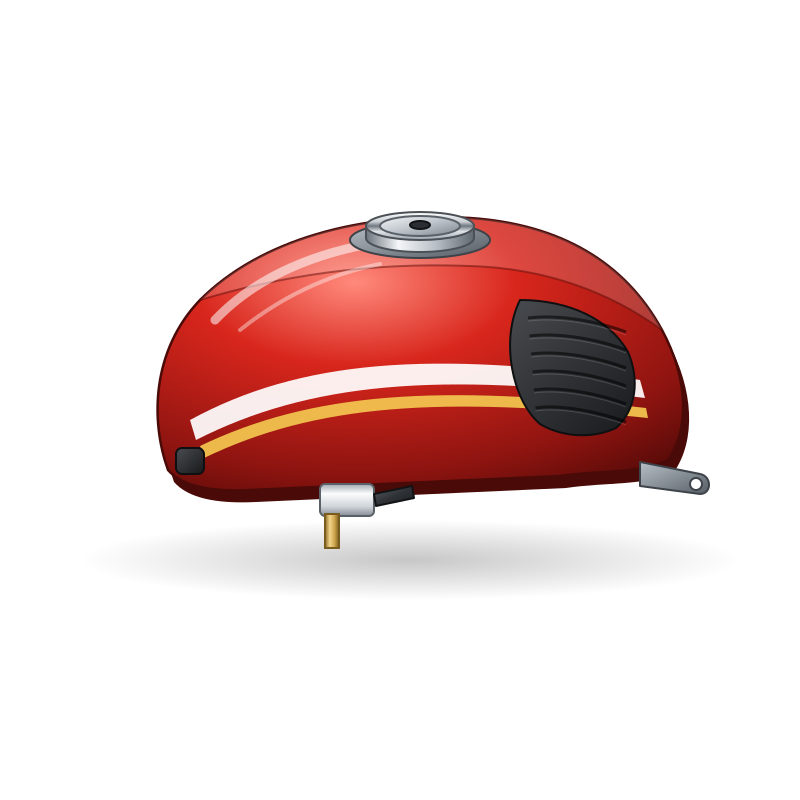
The fuel tank holds the petrol, on top of the frame on most motorcycles or under the floor or seat on scooters. It carries the fuel cap, and either a fuel tap (carburettor bikes) or an in-tank fuel pump and level sender (fuel injection).
What it does
The tank stores fuel and lets air in through a vent as fuel is used. On newer bikes vapour goes through a rollover valve to a charcoal canister instead of the open air. Steel tanks rust inside when water sits in them, and rust flakes block filters and pumps. Dents and cracks at mounts cause leaks.
Signs it is worn or failing
- Rust or flakes inside the tank.
- Fuel leaking or fuel smell.
- Engine stops and the cap hisses: blocked vent.
- Water or dirt in the fuel.
When to replace it
When it leaks from a seam or crack, or rust has thinned the metal. Light surface rust can be removed: Remove rust from a fuel tank. Never weld or braze a fuel tank at home; fumes in an "empty" tank explode.
What to match when buying
- Match make, model and year: mounts, pump or tap opening, sender opening and cap ring differ.
- Check the inside of a used tank with a torch for rust and old sealer. Shake it to hear loose flakes.
- Buy new pump and sender seals with the tank.
Fitting notes
- Work outside or in good air, engine cold, no flame or sparks; disconnect the battery negative first, as the K-Light manual says.
- On fuel injection, residual pressure sprays fuel when the hose is unplugged; cover the connector with a cloth.
- Check rubber mounts and hose routing. Drain old fuel: Drain old or contaminated fuel.
Reference (K-Light 125)
| Item | Value | PDF page |
|---|---|---|
| Capacity | 11.8 ± 0.5 L | 19 |
| Fuel | unleaded, 92 or 95 octane | 274 |
| Tank mounting screw | 10 to 12 N·m | 180 |