
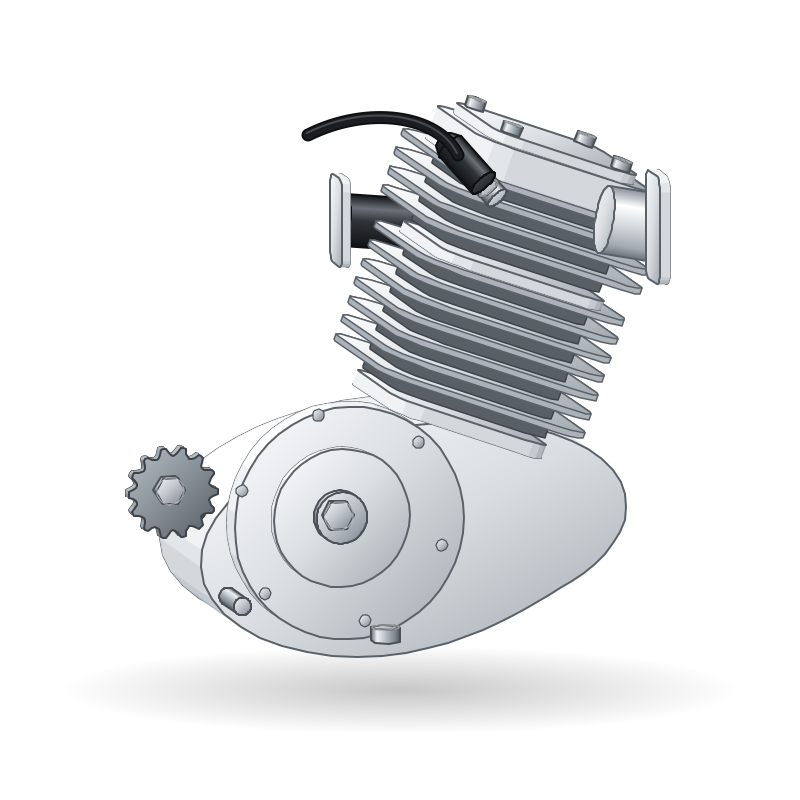
On a commuter bike the engine, clutch and gearbox share one crankcase under the tank. The cylinder points up or forwards, with the spark plug in the head.
What it does
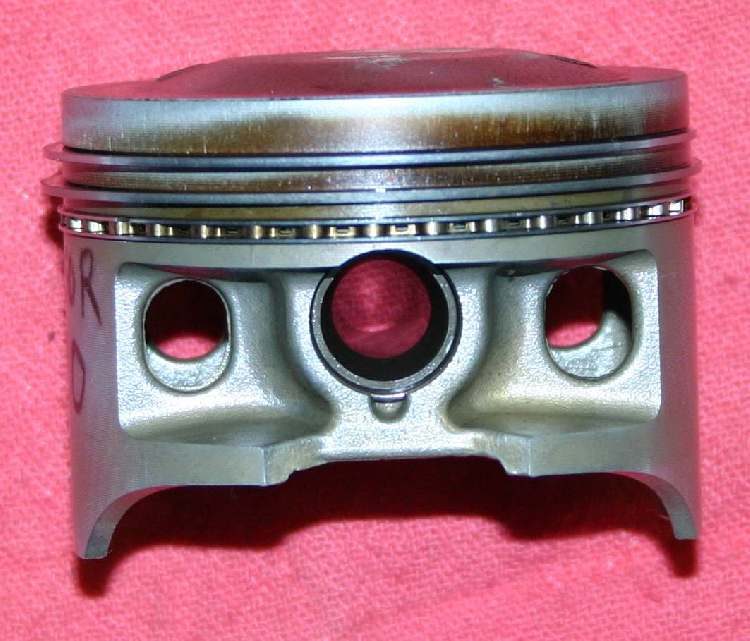
The engine burns petrol and air above a piston. The pressure pushes the piston down, and the connecting rod turns the crankshaft. A four-stroke fires once every two turns of the crank; a two-stroke fires every turn. An engine needs four things at the right time: fuel, air, a spark and compression. Most engine faults are one of these missing. See every part move in Under the Engine.
Signs it is worn or failing
- Will not start: Engine turns over but will not start.
- Loses power: Sudden loss of power while riding and Low power.
- Smoke: Blue smoke, black smoke, white smoke.
- Knocking, rattling or overheating: see Engine noise and internals.
When to replace it
An engine is rarely replaced whole. First rule out the cheap causes: fuel, air filter, spark plug, valve clearance and oil level. A compression test tells you whether the piston, rings and valves seal. Internal wear (rings, bearings, crankshaft) is a workshop job: Engine internal assessment.
What to match when buying
- A used or exchange engine must match the frame mounts, the gearbox and final drive, the wiring (CDI or ECU, starter) and the exhaust and carburettor or throttle body.
- Ask for the engine number and check it matches the papers where your country requires it.
Fitting notes
- Check the mounting bolts now and then: Check engine mounting bolts.
- Change the oil on time: Change the engine oil. Low or old oil is the most common cause of engine damage.
Reference (K-Light 125)
| Item | Value | PDF page |
|---|---|---|
| Compression pressure | 1.0 to 1.2 MPa | 60 |