
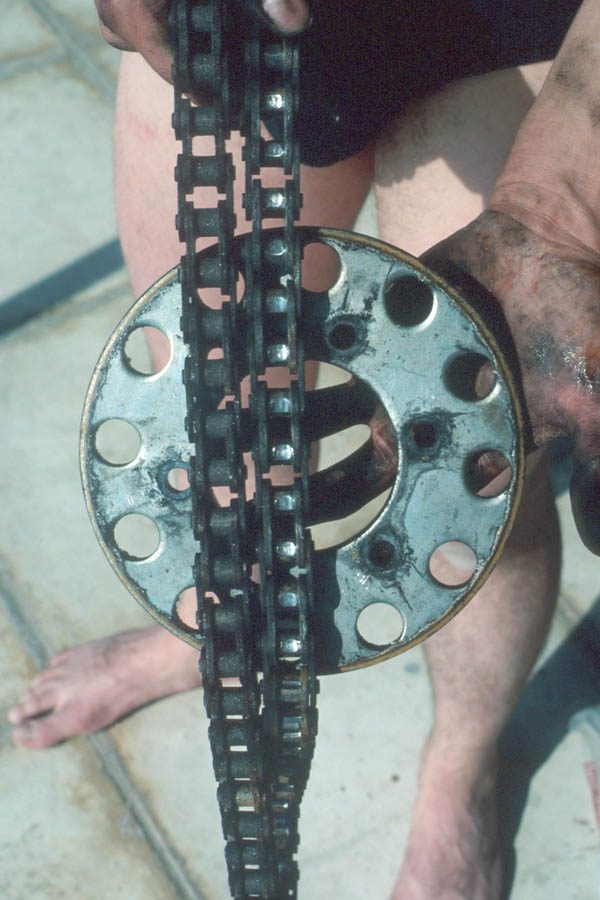
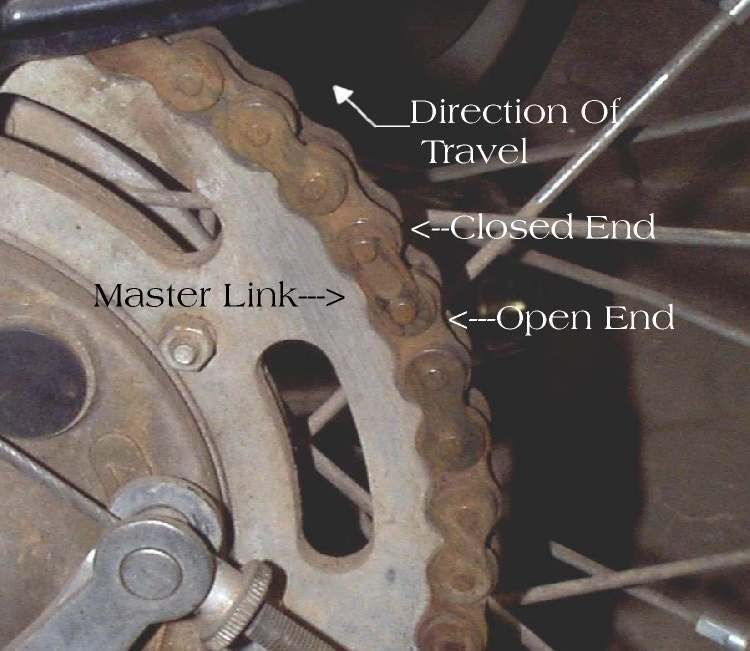
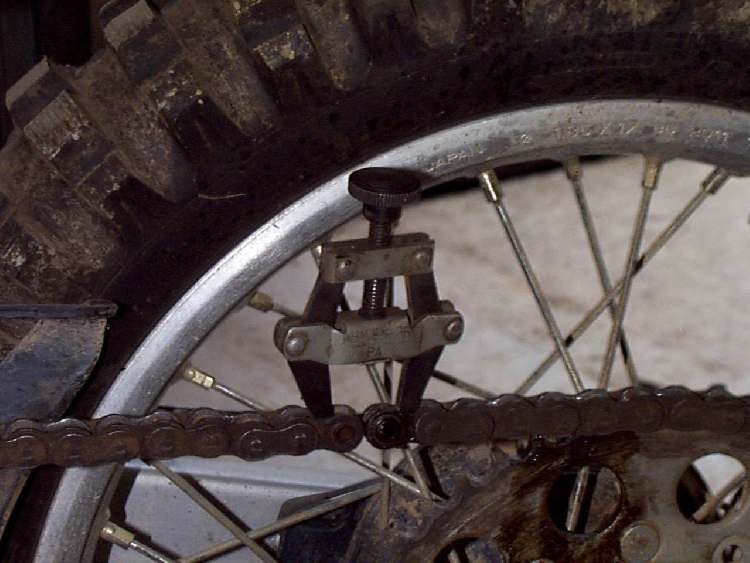
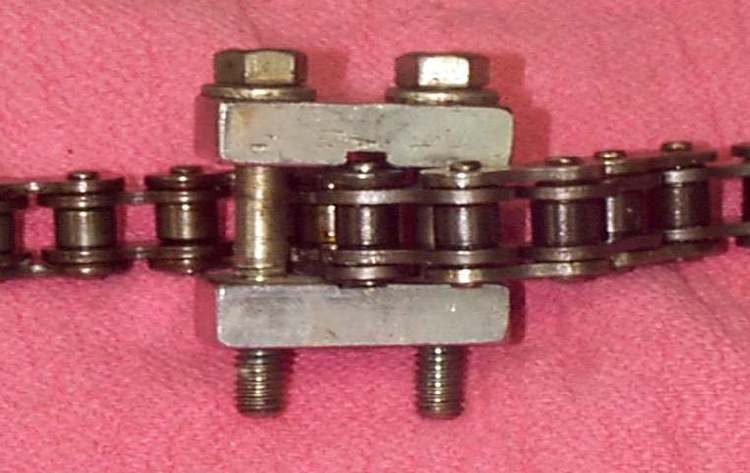
There was a bang, the engine revved with no drive, and the chain is lying on the road or hanging off the bike. Chains break at a weak point: often the joining link, a cracked side plate, or a link worn by rust and lack of oil. A breaking chain can whip round and jam between the front sprocket and the engine case or wrap round the rear sprocket, which can crack the engine case or lock the rear wheel.
Is it safe to ride?
No. Pull the clutch in (or switch off an electric bike), steer to the side and stop gently. Do not restart the engine until you have checked for damage. Push or transport the bike.
Quick checks first
- Stop the engine.
- Does the rear wheel turn freely? Is anything jammed around the sprockets?
- Look at the engine case around the front sprocket for cracks and oil.
- Look at the rear brake hose, speed sensor wire and swingarm for damage.
- A chain that breaks can throw an end through the crankcase or lock the rear wheel. A solid guard in front of the front sprocket helps protect the case.
- Do not shorten a badly stretched chain by taking out links to keep riding. The chain is past worn out; replace the chain and sprockets together.
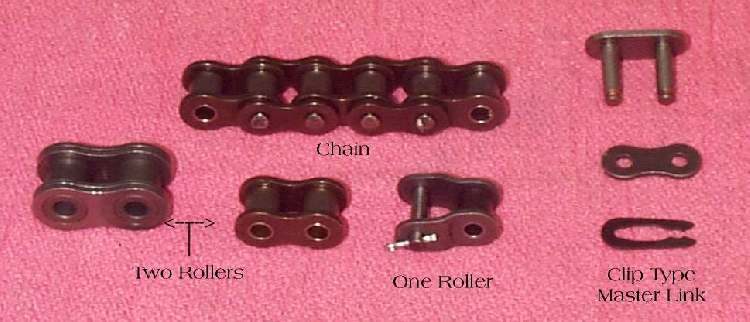
- Keep a spare master link clip in the tool kit.
Diagnose it step by step
1Is the chain jammed around the front sprocket, or is the engine case cracked or leaking oil near it?
- Yes: do not start the engine. A cracked case loses oil and the engine seizes. Remove the sprocket cover only to free the chain, then take the bike to a workshop. Oil behind the sprocket may also be a damaged seal: Oil leaking behind the front sprocket, Trace an oil leak.
- No: go to step 2.
2Is the rear wheel free, and are the brake hose, cables and wires undamaged?
- No: free the wheel and have damaged brake parts repaired before riding. Do not ride with a damaged brake hose.
- Yes: go to step 3.
3Where did it break: at the joining link, or in the middle of the chain?
- Joining link: it may have been fitted wrongly or the clip lost. Even so, check the whole chain in step 4.
- A side plate or roller: the chain was worn, rusty or overloaded. Go to step 4.
4Is the rest of the chain worn, rusty or stiff, and are the sprocket teeth hooked or broken?
- Almost always yes. Do not just join the old chain with a new link: it will break again. Replace the chain and sprockets as a set. Ask the workshop to check the slider, guards and rear wheel bearings while the wheel is out (Check chain guides, sliders and guards, Check wheel bearings).
5Why did it fail? Check before riding again:
- Chain was dry or rusty: Chain is dry, rusty or has stiff links.
- Chain was jumping or very loose: Chain jumps teeth or comes off the sprockets.
- Chain needed adjusting very often: Chain needs adjusting very often.
Causes, most likely first
| Cause | How to confirm | Fix |
|---|---|---|
| Worn, dry or rusty chain | Rust, stiff links, cracked plates | Replace the chain and sprockets |
| Joining link failed | Break at the link, clip missing | Replace the chain and sprockets |
| Worn sprockets let the chain jump and snap | Hooked or broken teeth | Inspect sprockets |
| Chain set too tight or too loose | History of adjustment problems | Check the chain for wear |