
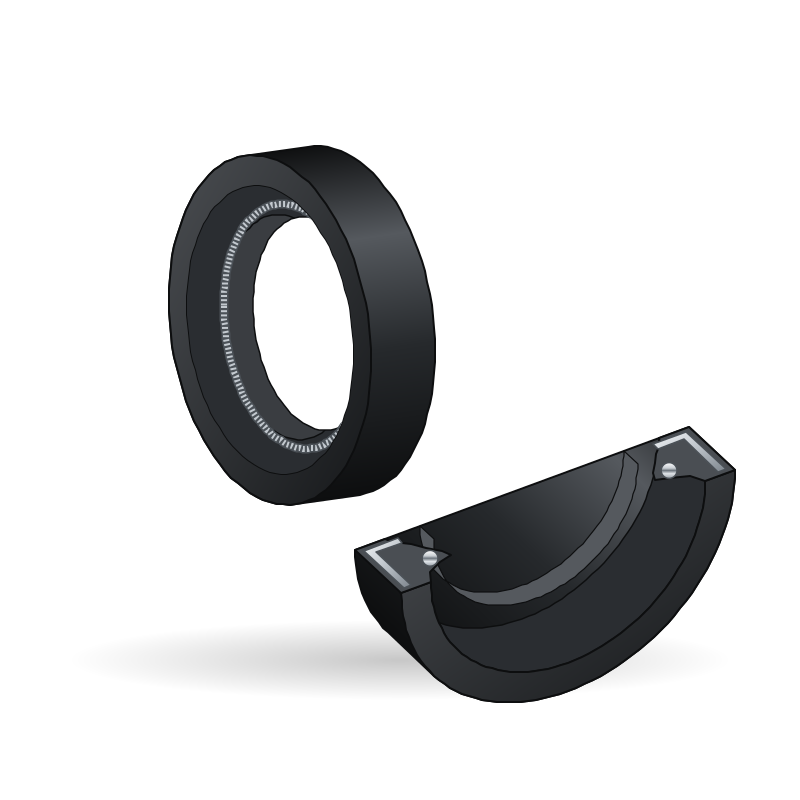
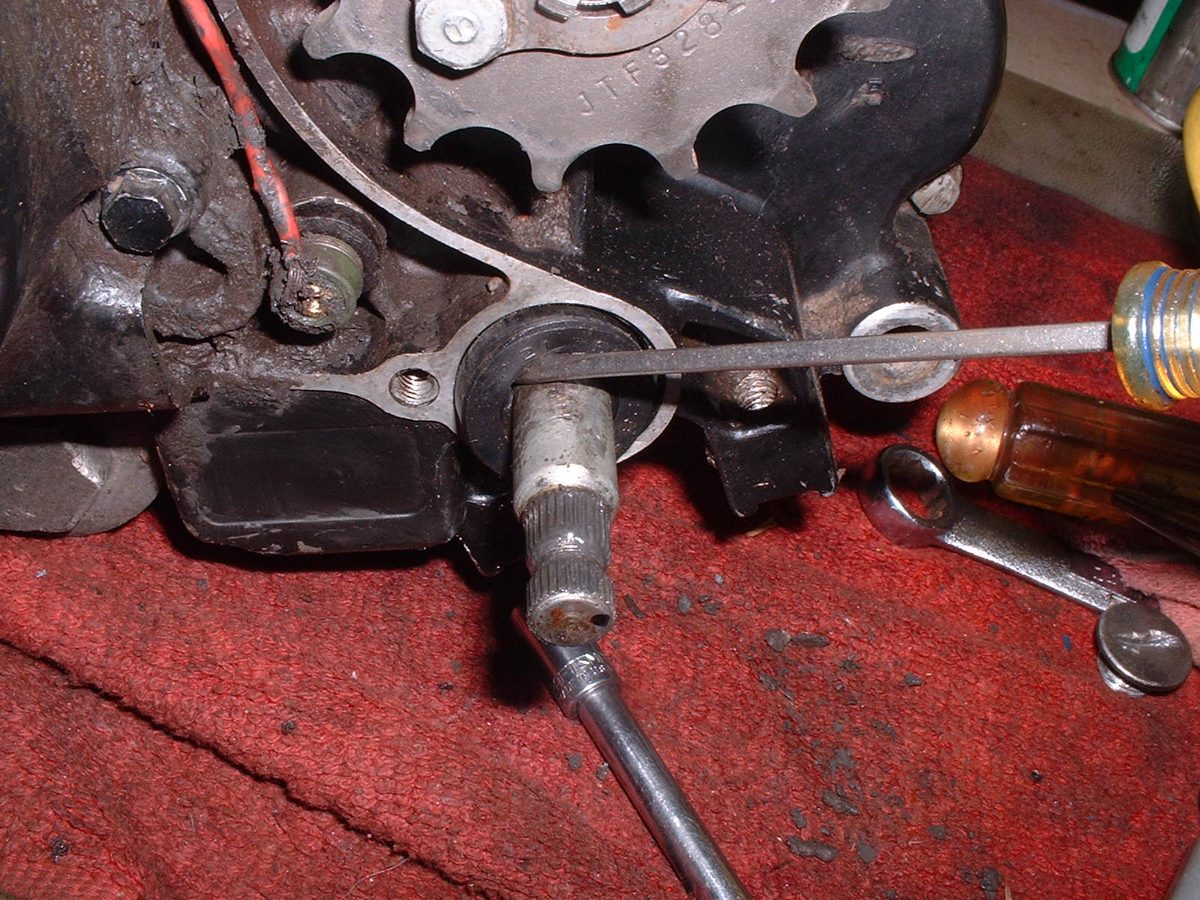
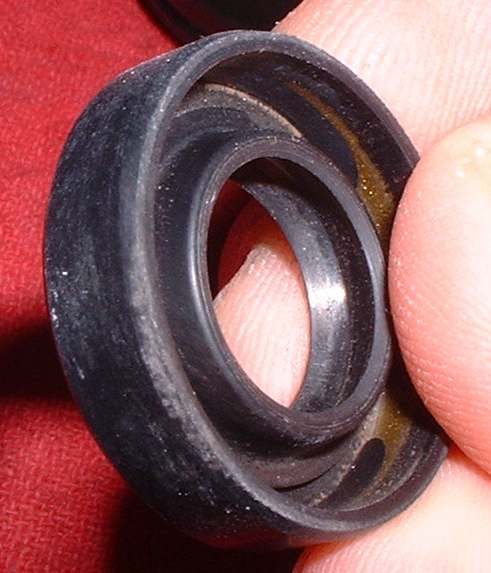
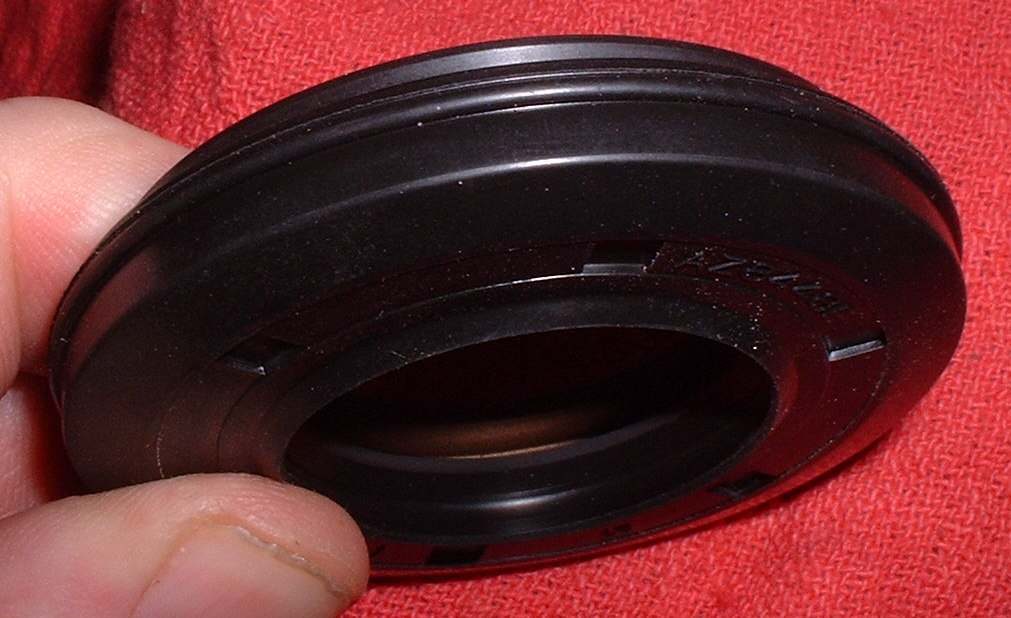
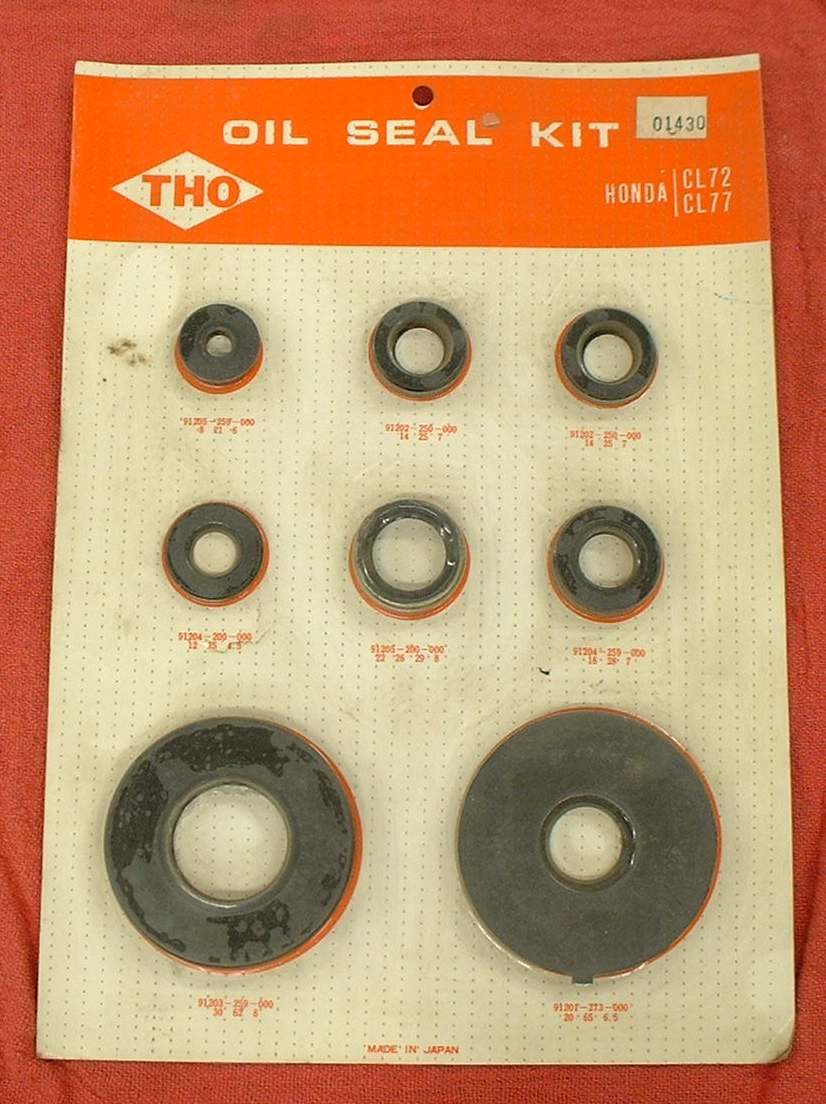
Oil seals are round rubber lip seals with a metal case, pressed into the engine cases where a shaft comes out. The main ones are behind the front sprocket (output shaft), on the gear lever shaft, on the kickstart shaft and on each end of the crankshaft.
What it does
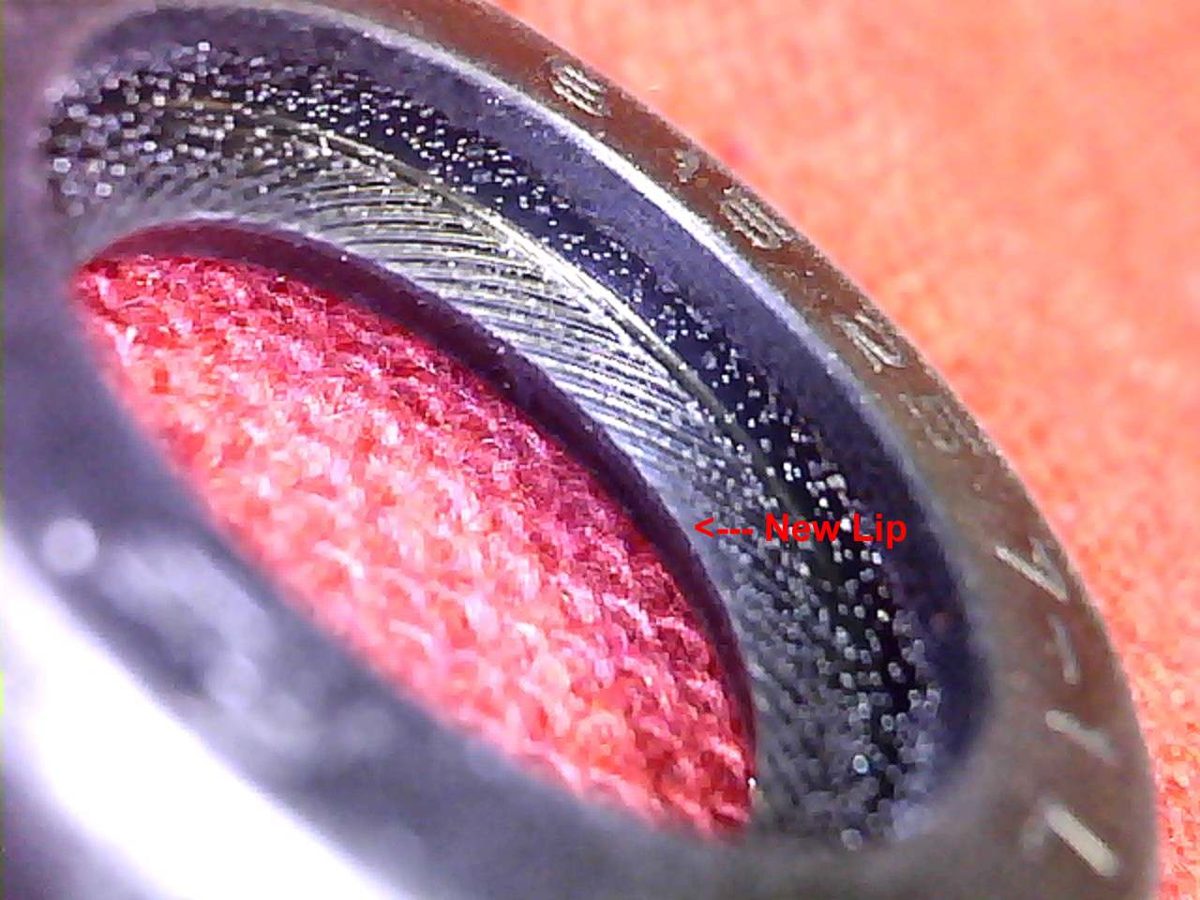
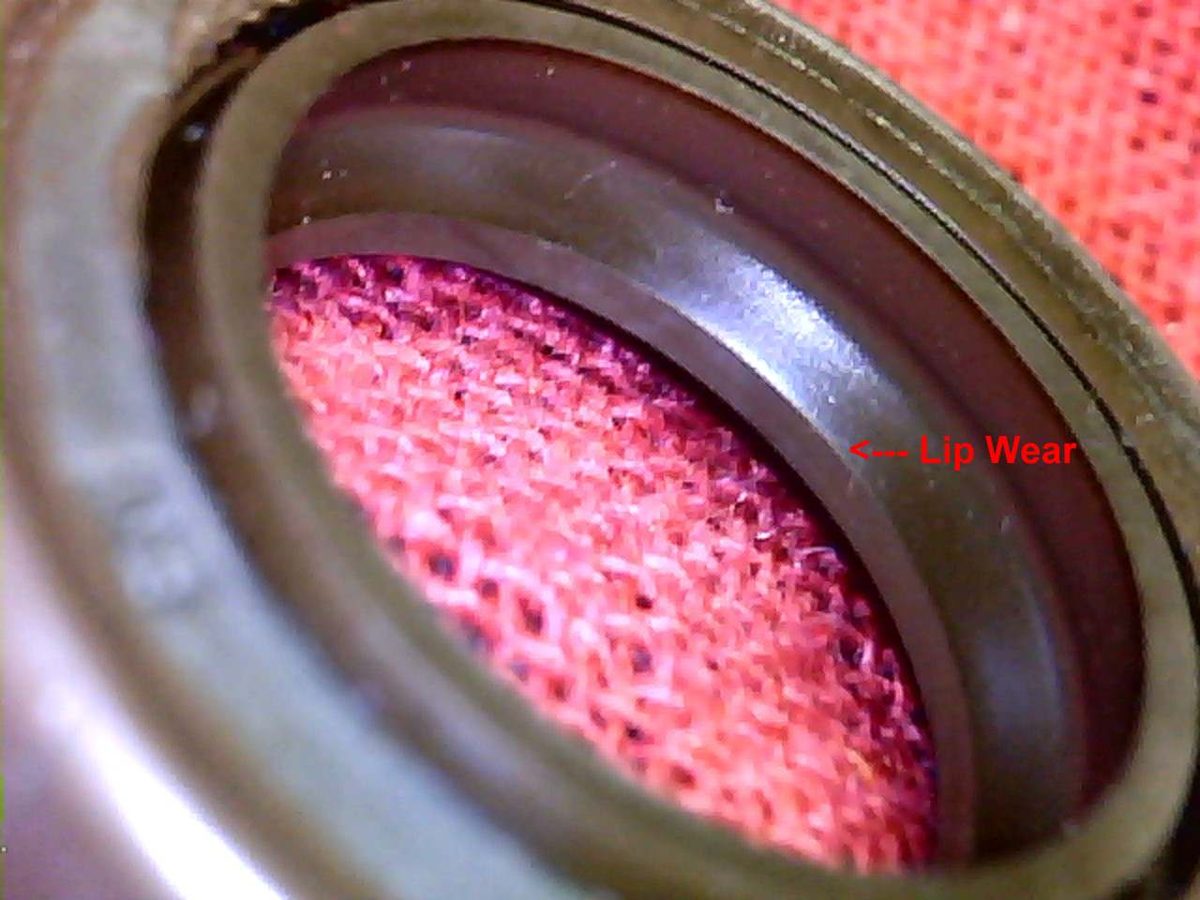
A thin rubber lip, held by a small spring, wipes the turning shaft so oil stays in and dirt stays out. On a two-stroke the crank seals also hold crankcase pressure, which the engine needs to move the mix; a leaking crank seal makes a two-stroke run lean and badly. Lips harden with heat and age, and grit or a rusty or worn shaft cuts them.
Signs it is worn or failing
- Oil leaking behind the front sprocket.
- Oil weeping around the gear lever or kickstart shaft: Oil leaking under the bike.
- On a two-stroke, a high or hunting idle and hard starting from a crank seal leak.
When to replace it
When it leaks, and always when it has been removed. The K-Light manual says crankcase seals removed with the puller are never reused. Follow your bike's manual.
What to match when buying
- Seals are sized inside diameter x outside diameter x width in mm, for example 20 x 32 x 6. Read the size printed on the old seal or measure the shaft and housing.
- Match lip type (single or double lip) and any direction arrow.
- Rubber type matters near heat. Buy from a known seal maker; cheap seals can be hard, out of round or lack the spring.
Fitting notes
- Fill the space between the lips with grease before fitting, as the K-Light manual advises.
- Press in square with a driver that pushes on the metal case, not the rubber. Cover shaft splines or keyways with tape so they do not cut the lip.
- Check the shaft surface: a groove worn by the old lip will leak again. Output shaft seal: Replace the output shaft seal. Crank seals need the engine opened: Assess bottom end.