
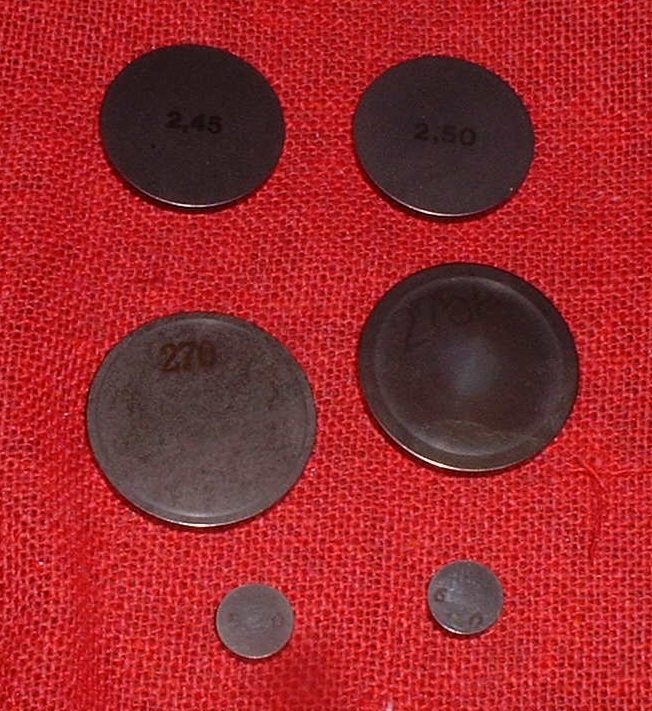
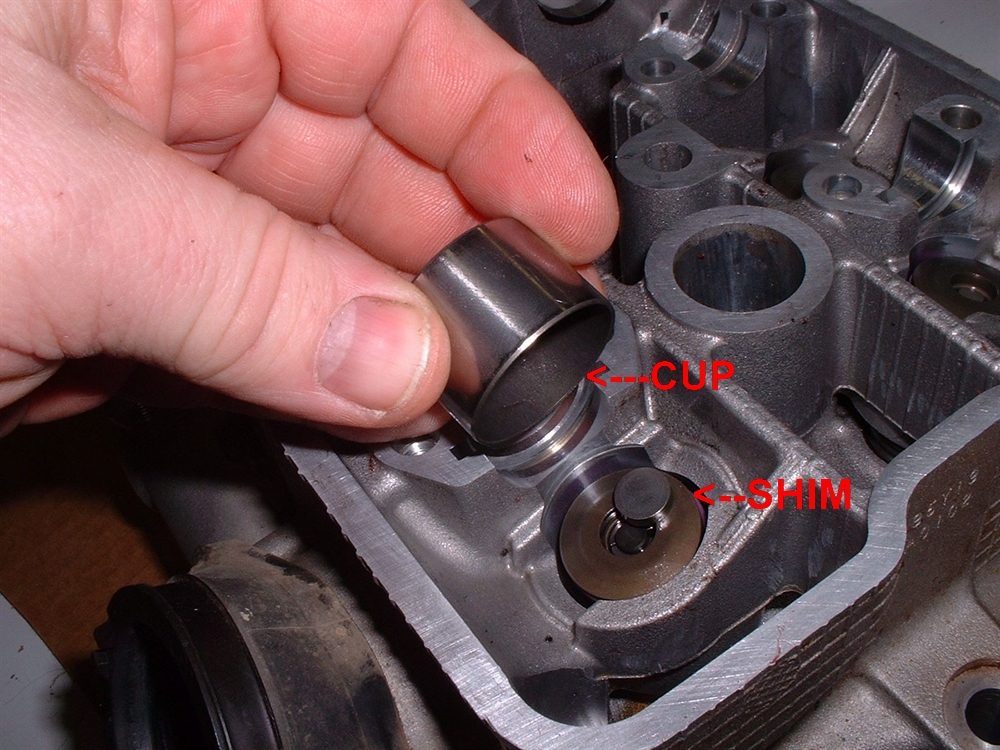
A valve shim is a small, hardened steel disc of exact thickness. It sets the valve clearance on engines that have no adjusting screw. The shim sits on the valve or inside a bucket (cup) that rides under the cam.
What it does
The clearance between the cam and the valve changes as parts wear. A shim fixes that clearance by its thickness. A thicker shim reduces the gap, a thinner shim increases it. Shim engines usually go a long distance between checks.
Signs it is worn or failing
- A ticking or tapping noise from the top of the engine when the clearance is too large.
- Hard starting, low power or popping from the exhaust when the clearance has closed up and a valve is not sitting fully shut.
- Clearance readings outside the manual limits at a normal check.
When to replace it
Shims rarely wear out. Change one only to bring the clearance back into range. Shims can be swapped between valves, a tight one into a loose position and the reverse, to avoid buying new ones.
What to match when buying
- Shims are sold by thickness. The size is marked on the underside. If it cannot be read, measure with calipers.
- Check the diameter. Several sizes exist, so match the old shim and the engine code.
- Calculate the new thickness from your readings and the manual's range. See Adjust valve clearance with shims.
Fitting notes
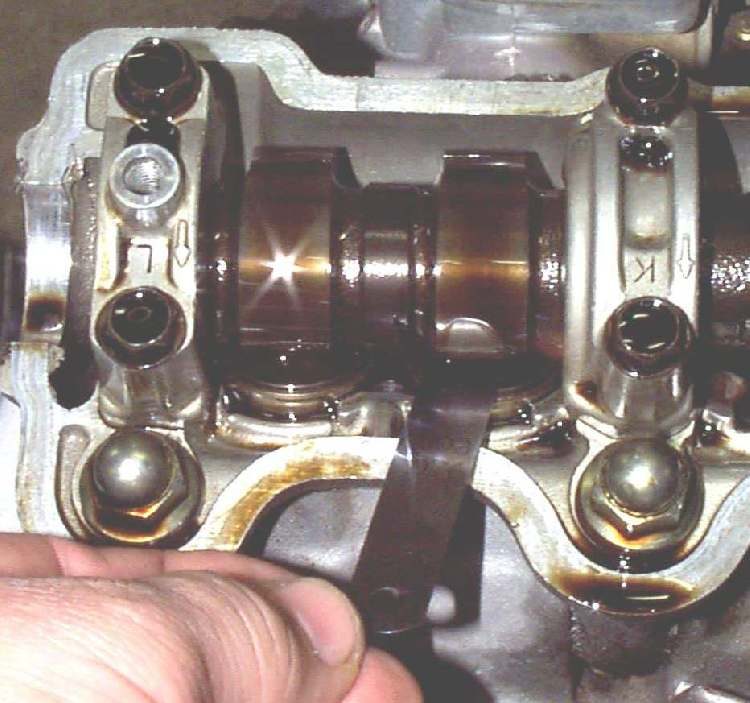
- Measure clearance with the engine cold and the piston at top dead centre on the compression stroke. See Check and adjust valve clearance.
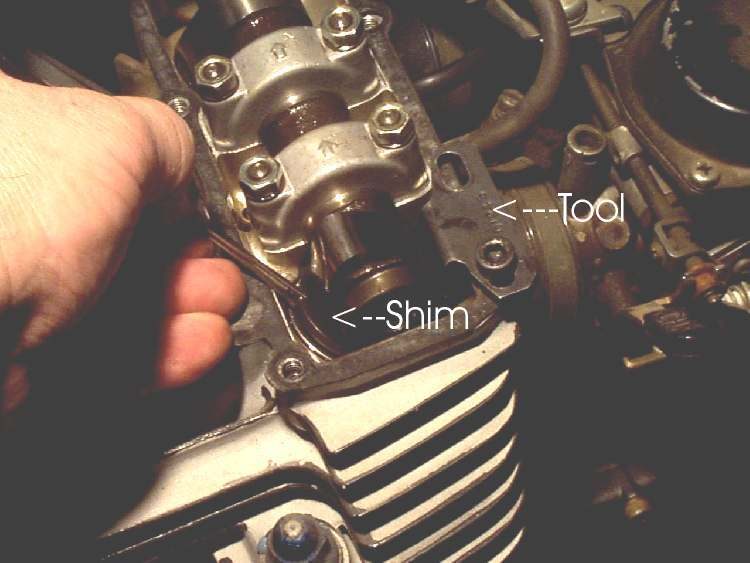
- A special tool presses the edge of the bucket down so the shim can be popped out with a small screwdriver. Do not press on the shim itself.
- Some engines have the shim under the bucket. The camshafts then have to come out. See Camshaft.
- Write down every reading and every shim size before the job.