
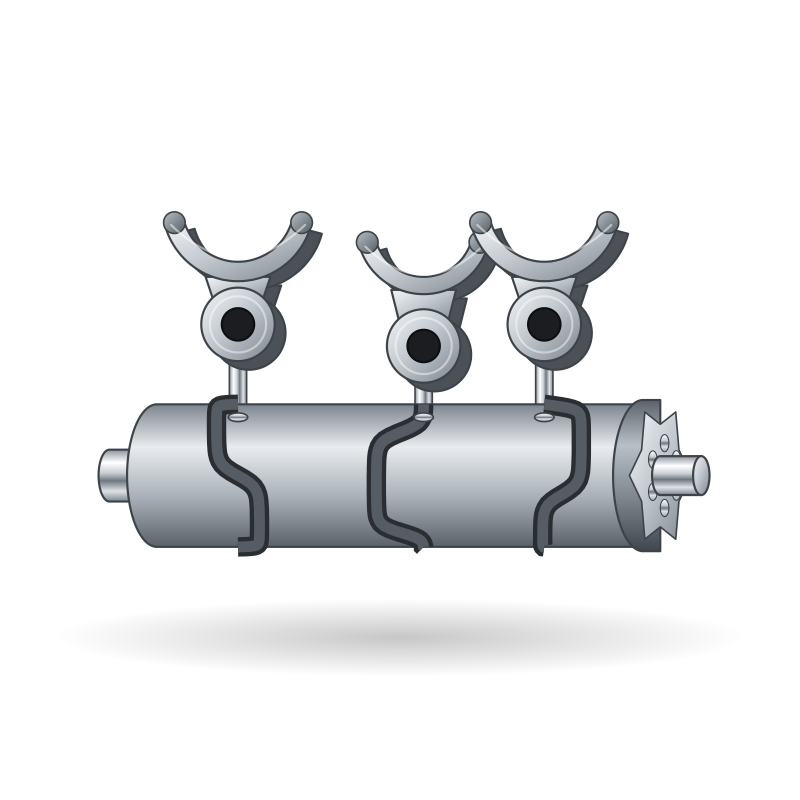
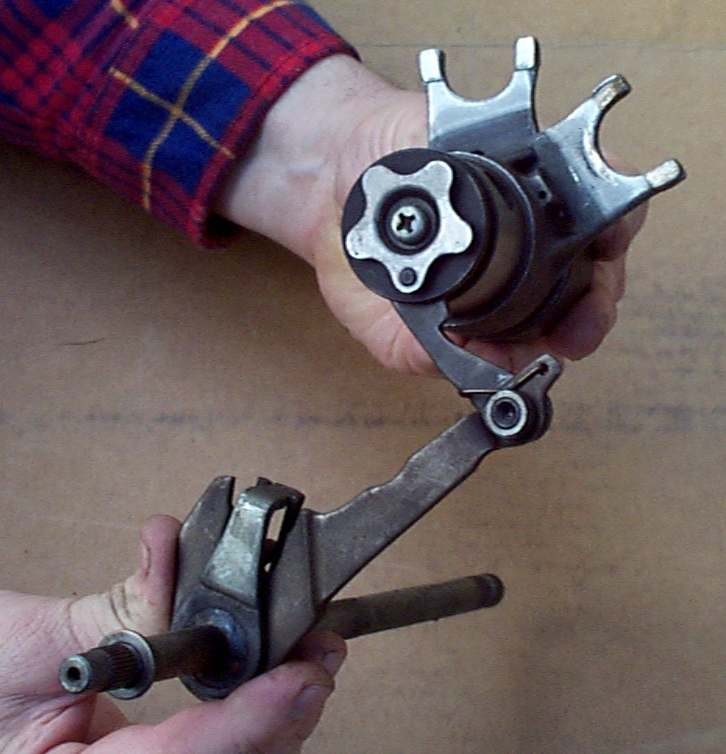
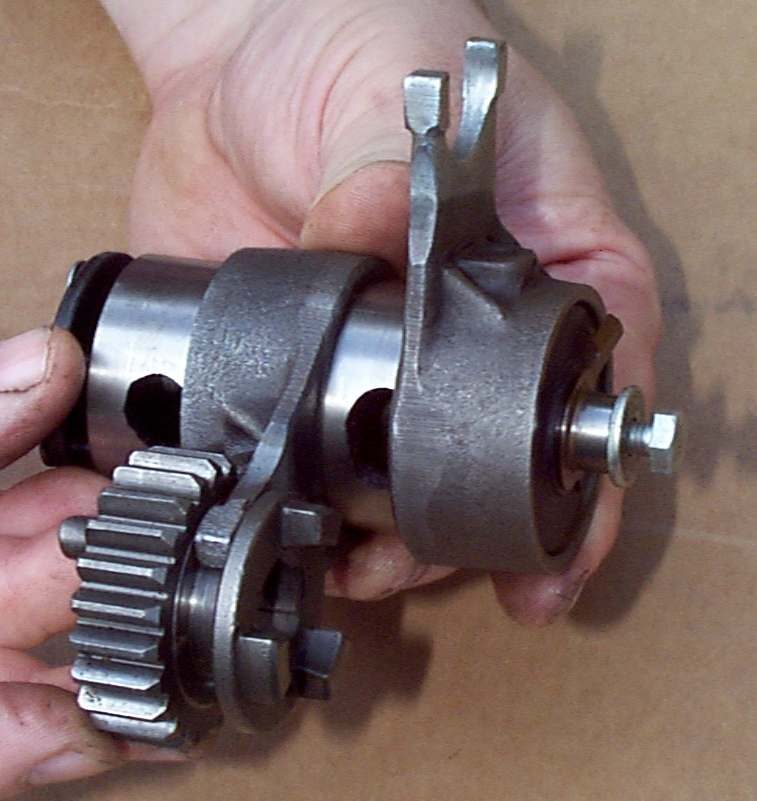
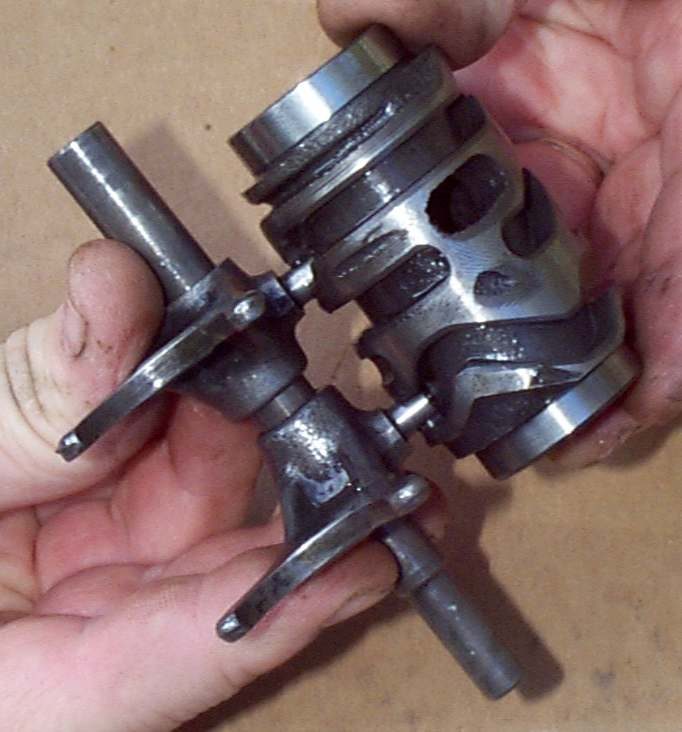
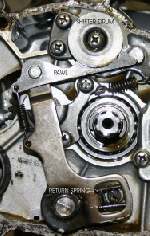
The shift mechanism links the gear lever to the shift drum inside the engine. It includes the shift spindle (the shaft the lever clamps to), the shift plate or pawl, its return spring, the stopper arm and spring, and the star-shaped positioning plate on the end of the drum. Most of it sits behind the clutch cover.
What it does
Each press of the lever turns the spindle, which turns the drum by one step. The stopper arm drops into a notch on the star plate to hold the drum in each gear. The return spring brings the lever back so it is ready for the next change. A weak stopper spring lets the drum creep out of gear. A broken return spring leaves the lever hanging down.
Signs it is worn or failing
- Lever does not come back: Gear lever does not spring back.
- Gear pops out under load: Jumps out of gear.
- Neutrals between gears: False neutrals.
- Stiff or skipping changes: Hard gear change.
- Lever slips on the shaft: Gear lever loose.
When to replace it
Replace springs that are broken, stretched or weak, a bent spindle, or a stopper arm with a worn roller. Inspection needs the clutch cover off.
What to match when buying
- Engine code and gearbox type. Spindle spline count and length must match the old one.
- Springs are model-specific: match wire thickness, coil count and hook shape.
- Buy a new cover gasket and the spindle oil seal at the same time.
Fitting notes
- Check the lever, linkage and spindle splines first: Check the gear lever and shift linkage.
- Parts behind the clutch cover are a workshop job: Assess internal gearbox faults.
- The spindle should turn and return freely before the cover goes back on.
- Gearboxes use a shift drum turned by a pawl, a cam plate and quadrant (mostly older British and European designs), or, rarely, a ball-lock shifter. Use the manual for the type fitted.
- On some drum shifters the pawl can be adjusted: loosen the lock nut, set the pawl to the centre position, and retighten. This is rarely needed.