
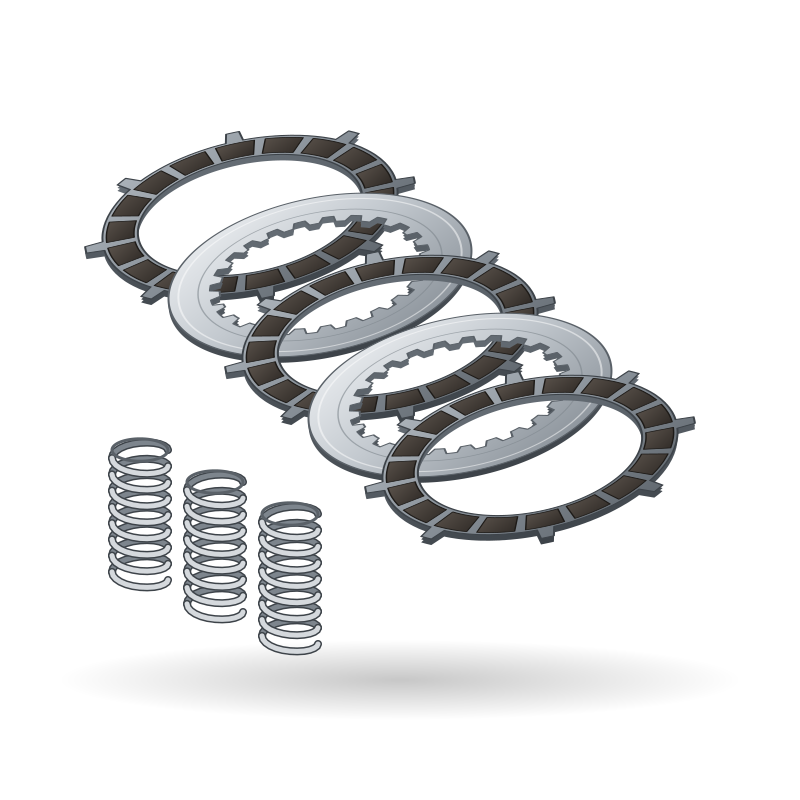
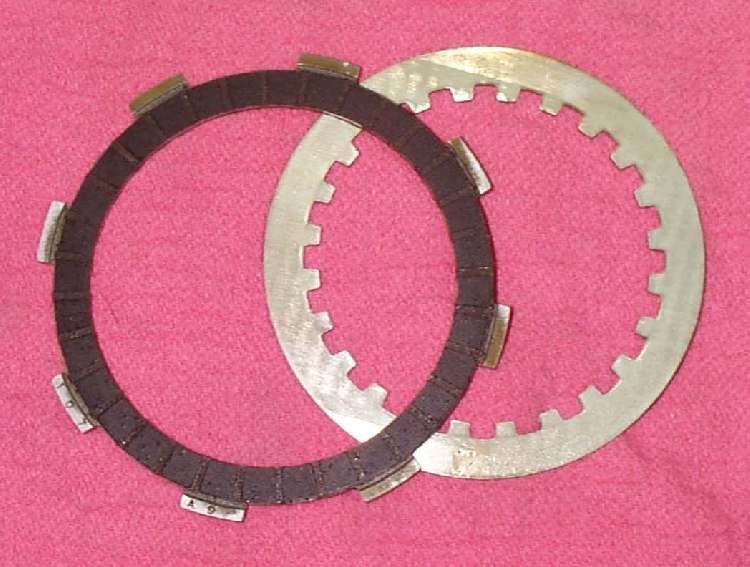
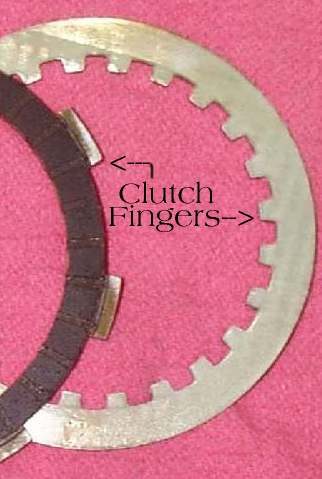
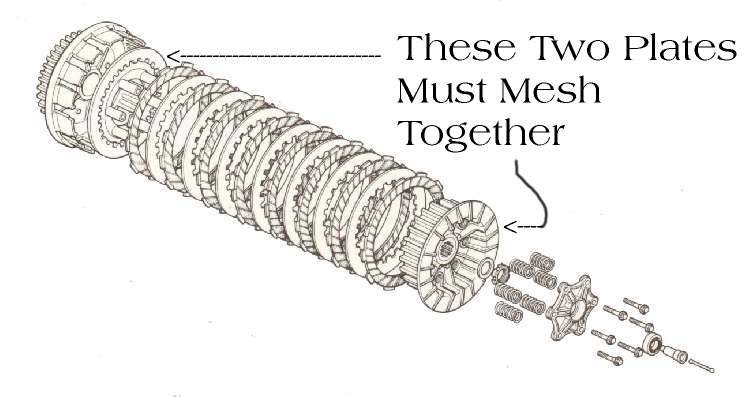
These are the parts inside the clutch basket that actually grip. Friction plates have a fibre lining and lock to the outer basket. Plain steel plates lock to the inner centre. Coil springs press the stack together.
What it does
Spring force clamps friction plates against steel plates so they turn together. Each time you slip the clutch to pull away, some lining wears off and heat builds up. Over time the linings get thinner, springs get shorter and weaker, and steel plates can warp from heat. Thin plates or weak springs cannot hold full power. Warped plates do not separate cleanly.
Signs it is worn or failing
- Engine revs rise in a high gear or on a hill without more speed: Clutch slips or Revs rise without speed.
- Creeping or hard neutral with the lever pulled, often warped steels: Clutch drags.
- Snatch or shudder on take-off: Clutch judder.
- Burnt smell, dark or glittery oil at oil change.
When to replace it
Replace when a friction plate is below the limit, a spring is shorter than its limit, or a steel plate is warped or blue. Replace friction plates, steel plates and springs as a full set. Always check cable free play and oil first, because a tight cable makes good plates slip.
What to match when buying
- Make, model, year and engine code. Plate count, thickness, outer diameter and tab shape must all match the old ones. Lay a new plate on an old one to compare.
- Some engines use plates of different thickness or a special first or last plate: keep the old ones in order.
- Genuine (OEM) kits are reliable. Good aftermarket kits name the bike model on the box. Avoid unbranded kits with uneven lining, loose lining edges or rough tabs.
- Soak new friction plates in the engine oil before fitting.
Fitting notes
- Workshop job: holding tool and locknut torque required. See Inspect and replace clutch plates and springs.
- Loosen and tighten spring bolts a little at a time in a cross pattern.
- After fitting, set free play: Adjust clutch lever free play.
- Stand each plate on edge and look along it. Replace any plate that is bent. Check the finger tabs of both plate types for damage.
- Steel plates can have a dished edge and are staggered, so put every plate, ring and washer back in the order it came out.
Reference (K-Light 125)
| Item | Standard | Limit | PDF page |
|---|---|---|---|
| Friction plate thickness | 2.9 to 3 mm | 2.6 mm | 222, 225 |
| Clutch spring free length | 35.45 to 36.5 mm | 34.2 mm | 222, 224 |