
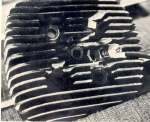
An air-cooled engine sheds heat through its fins into moving air, and through its oil. Signs of overheating are a strong hot smell, ticking from the cooling metal, pinking, loss of power after a long climb or slow traffic, the engine stalling when hot, and on fuel-injected bikes a temperature warning or fault code from the head temperature sensor. The K-Light chart lists poor fuel, long high-speed or overloaded riding, fins clogged with sand or oil, ignition timing, a slipping clutch, a lean mixture, carbon in the exhaust, and low, thin or dirty oil.
Is it safe to ride?
Stop now and let the engine cool with the engine off. Do not pour water on it. Ride on only after the cause is found, gently and with rests.
Quick checks first
- Stop, switch off, and let it cool in shade.
- Oil level once cool.
- Are the fins packed with mud or covered?
- Was the bike heavily loaded, climbing for a long time or stuck in traffic?
Diagnose it step by step
1Once cool, is the oil level low or the oil very old? Check with Check the engine oil level.
- Yes: top up or change oil. Low oil both overheats and wears the engine. Go to step 2 as well.
- No: go to step 2.
2Are the fins blocked, or is airflow cut off (scooter fan cover missing, luggage in front)? Check with Check air cooling (fins, airflow, mixture).
- Yes: clean and clear them. Test ride.
- No: go to step 3.
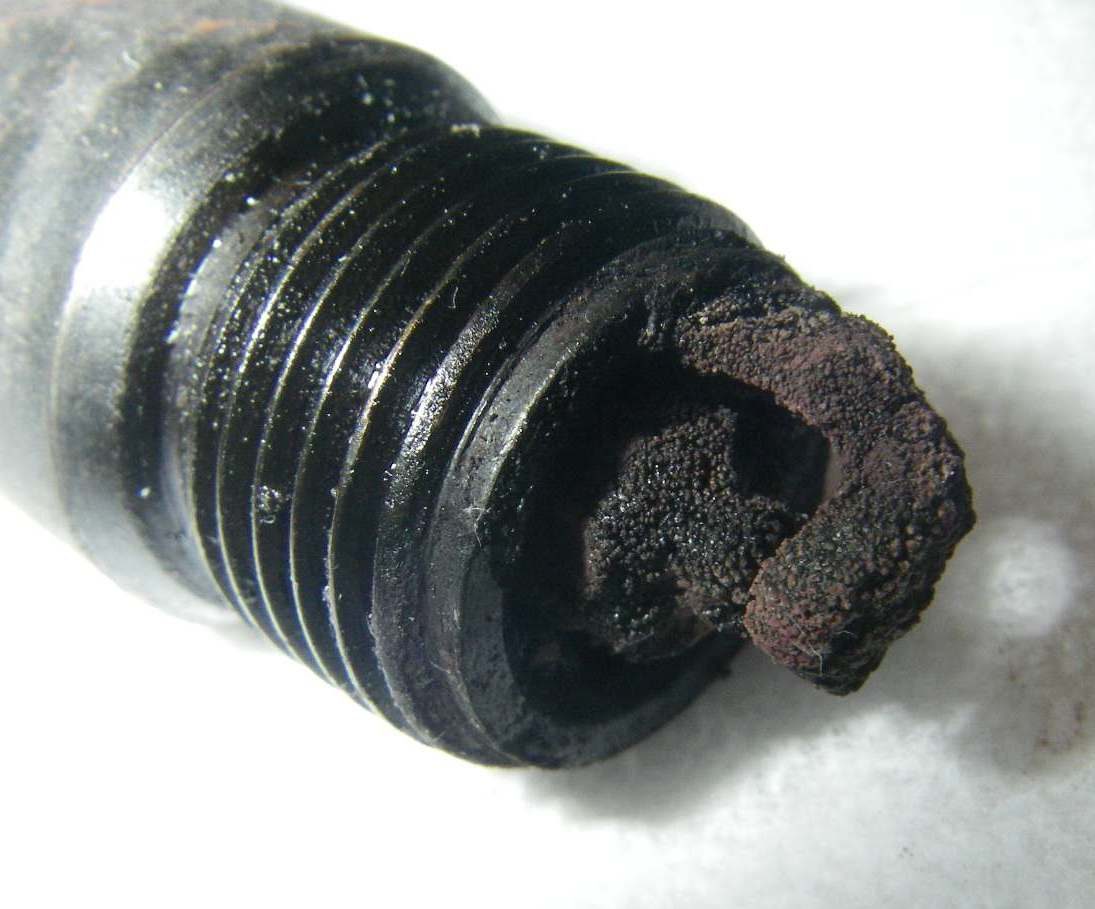
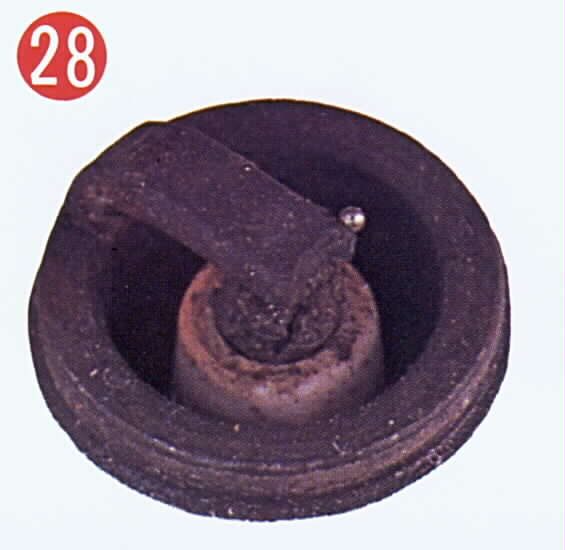
3Read the spark plug with Read a spark plug. What colour is it?
- White or blistered: lean mixture. Check Find an intake air leak and see Engine runs hot and lean, pops and pinks.
- Black: rich. Go to step 4.
- Light grey or brown (normal): go to step 4.
4Do the wheels spin freely and does the clutch hold? Check with Check for brake drag.
- Brake drags: see Brake drags and the wheel does not spin freely.
- Revs rise without speed: see Clutch slips: revs rise but the bike does not pull.
- Both fine: go to step 5.
5Fuel-injected bike: is there a fault code for the temperature sensor? Read with Read engine fault codes (fuel injection).
- Yes: the sensor or wiring may be wrong, not the engine. See Temperature gauge reads high or the warning light is on.
- No: go to step 6.
6. Is valve clearance correct? Check with Check and adjust valve clearance. Tight clearance makes valves run hot.
7. Is the exhaust choked (two-stroke) or crushed? See Exhaust blocked or choked with carbon (two-stroke).
8. Still overheating: ask for Check the ignition timing and Test engine compression. Use fuel of the grade in the manual (K-Light 125: 92# or 95# grade unleaded).
Causes, most likely first
| Cause | How to confirm | Fix |
|---|---|---|
| Low or old oil | Dipstick, colour | Check the engine oil level |
| Blocked fins or airflow | Visual | Check air cooling (fins, airflow, mixture) |
| Lean mixture, intake leak | White plug | Find an intake air leak |
| Dragging brake or slipping clutch | Wheel spin test | Check for brake drag |
| Overloading, long climbs | Riding conditions | Rest and lower gear |
| Timing or carbon | After the above | Check the ignition timing |
Reference values (K-Light 125)
| Item | Value | PDF page |
|---|---|---|
| Fuel | 92# or 95# grade unleaded | 274 |
| Head temperature sensor resistance, 25 °C | 1.9 to 2.1 kΩ | 261 |