
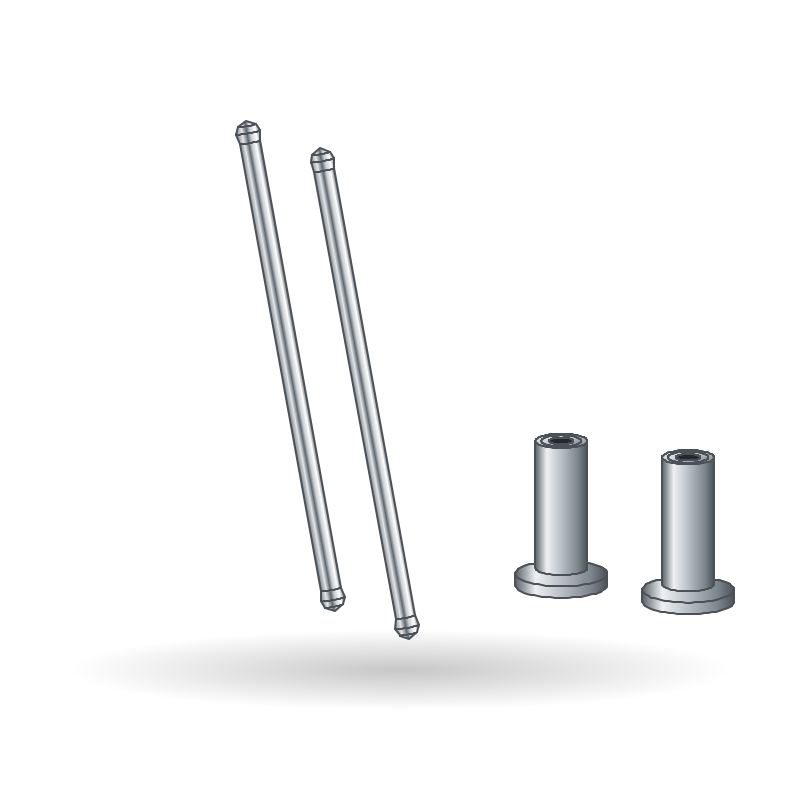
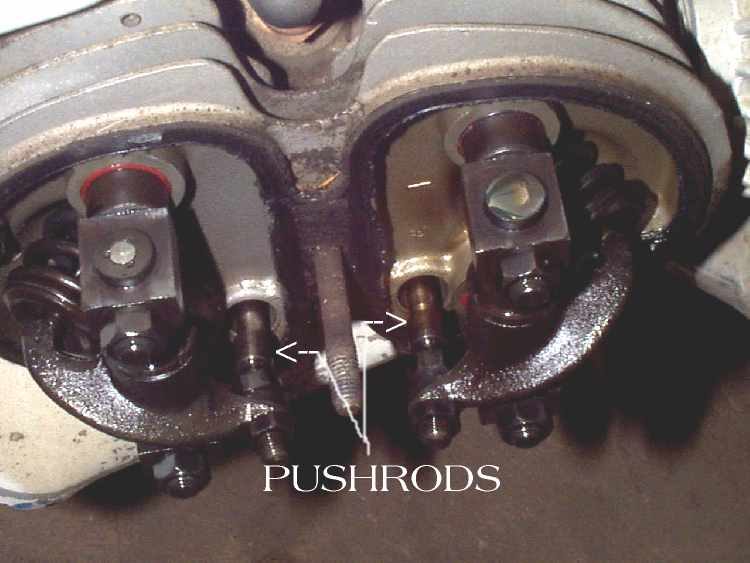
Pushrods are thin metal rods that run up the side of the cylinder, from the camshaft in the crankcase to the rocker arms in the head. Cam followers are small levers at the bottom that ride on the cam lobes. Only pushrod (OHV) engines have them, such as the K-Light 125 and many CG125-type engines. Overhead-cam engines use a cam chain instead.
What it does
When a cam lobe lifts a follower, the follower pushes its pushrod up, the pushrod tilts the rocker, and the rocker opens the valve. Pushrod engines are simple and tough, and their valve gear needs no chain. The follower pads and shafts wear when oil is dirty, and a bent pushrod stops its valve opening properly.
Signs it is worn or failing
- Ticking from the top of the engine that does not go away with correct valve clearance.
- Low power if a valve opens too little.
- A misfire or no running at all if a pushrod has bent or jumped out of its seat, often after over-revving.
When to replace it
Replace a pushrod that is bent (roll it on a flat glass surface) or has worn ends. Replace followers when the pad is pitted or the shaft or bore is past the limit. Follow your bike's manual.
What to match when buying
- Match engine code; inlet and exhaust pushrods may differ in length.
- Buy followers with their shafts and O-rings. On the K-Light the followers mount in the base of the cylinder.
Fitting notes
- Workshop job: the cylinder head, and on the K-Light the cylinder, comes off.
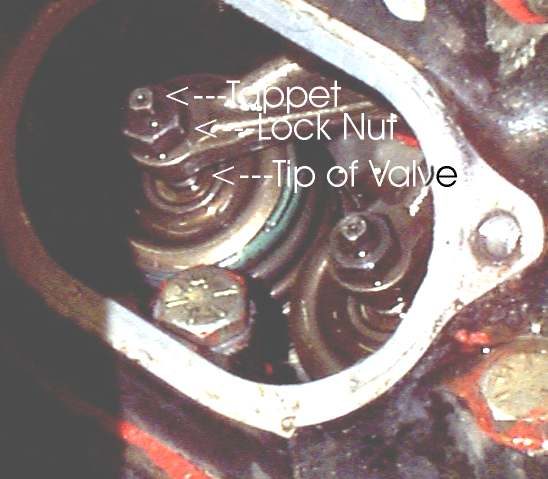
- Seat both pushrod ends in their cups before fitting the rockers, then set valve clearance.
- See Assess the top end.
Reference (K-Light 125)
| Item | Value | PDF page |
|---|---|---|
| Follower bore ID limit | 12.05 mm | 213 |
| Follower shaft OD limit | 11.93 mm | 213 |
| Bore to shaft clearance | 0.016 to 0.032 mm, limit 0.08 mm | 213 |