
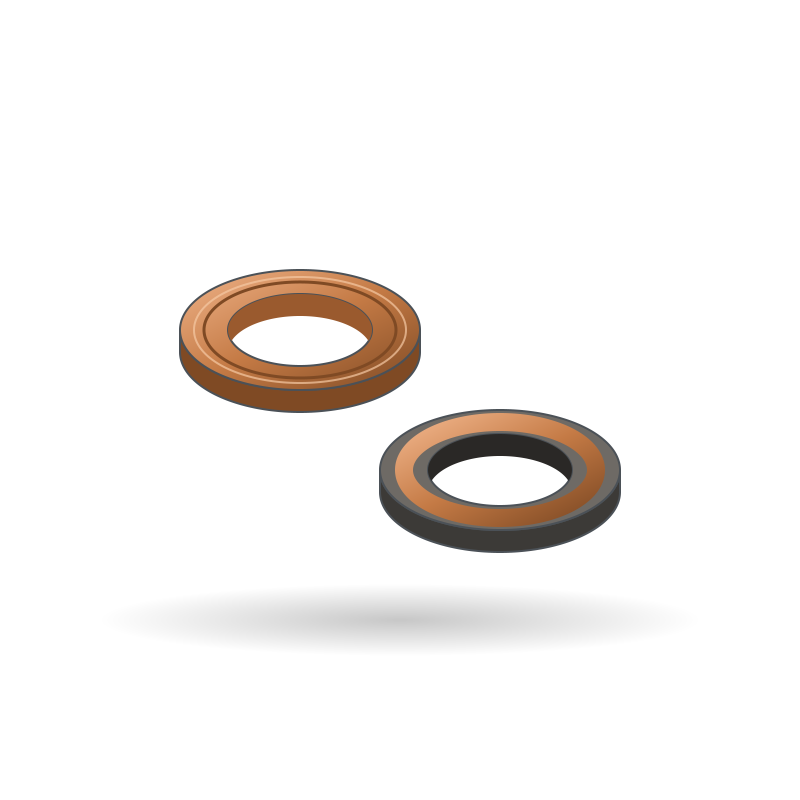
The exhaust gasket is a soft metal ring (often copper, steel or a graphite and metal sandwich) that sits in the exhaust port of the cylinder head, under the header pipe flange. Some pipes also have a gasket or sleeve at the joint between the header and the silencer.
What it does
The gasket seals the hot, pulsing gas where the pipe meets the head. It crushes a little when the flange is tightened, filling small gaps. Heat cycles flatten and burn it. A leak lets air into the pipe, which upsets the oxygen sensor, and lets hot gas burn the port face.
Signs it is worn or failing
- Ticking or puffing from an exhaust leak, louder when cold.
- Popping or banging when slowing down.
- Black soot marks around the header flange.
- On injected bikes, a lean reading and high fuel use.
When to replace it
Every time the header pipe is removed, and whenever the joint leaks. A crushed gasket does not seal twice.
What to match when buying
- Match the engine code or the inside and outside diameter and thickness of the old ring. Many commuter singles share sizes, but check.
- Match the type: plain crush ring, ring with a lip, or graphite sandwich.
- Cheap rings may be too hard to crush and seal. Buy from a dealer or a known gasket maker.
Fitting notes
- Home job: Find and fix an exhaust leak.
- Let the exhaust cool fully. Rusty header studs snap easily; use penetrating oil and the right spanner.
- Hold the gasket in the port with a dab of grease, tighten the flange nuts evenly in small steps, then the silencer mount. Recheck after the first ride.