
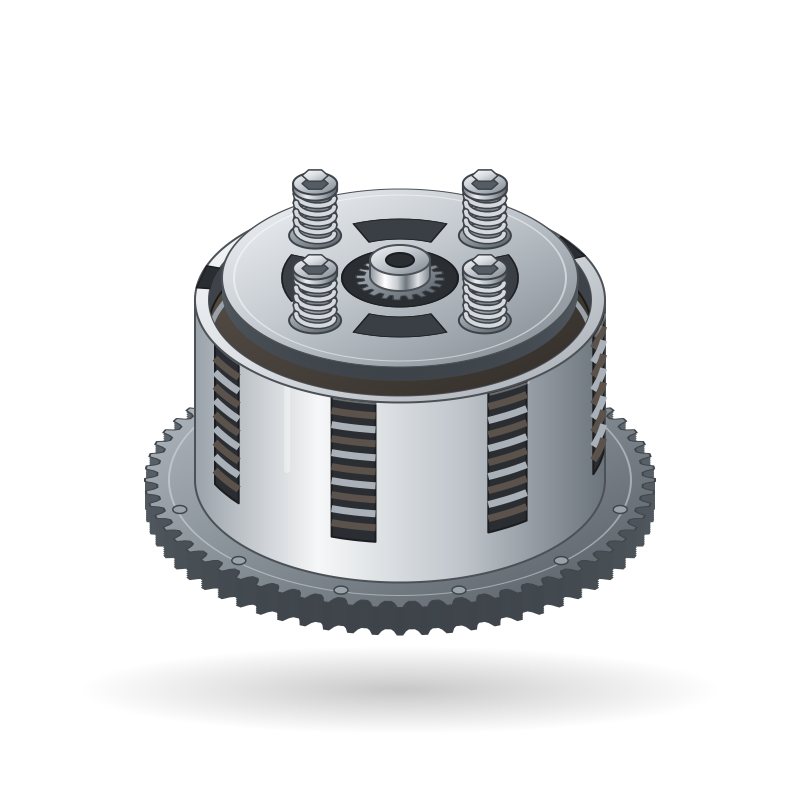
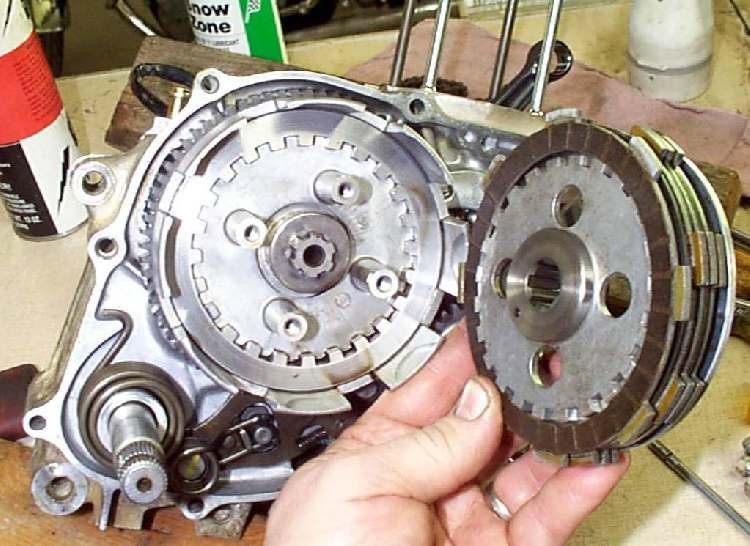
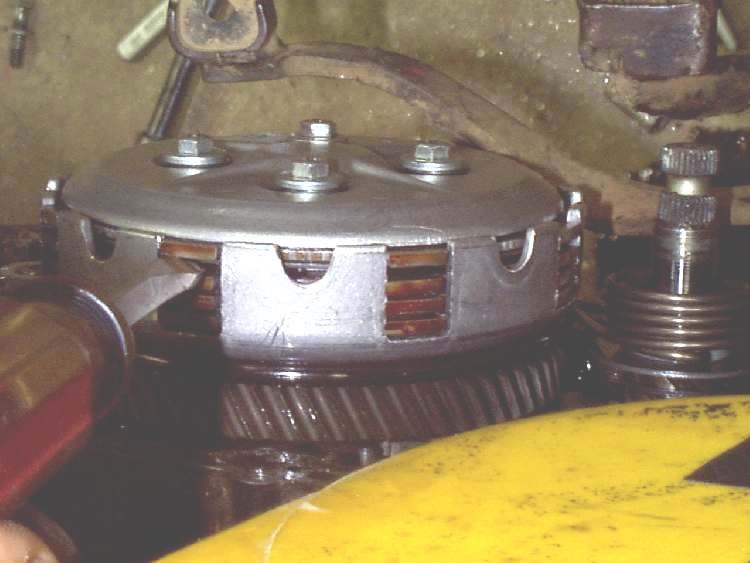
The clutch sits inside the engine, behind the right-hand cover on most commuter bikes. It is a stack of plates in a basket, bathed in engine oil.
What it does
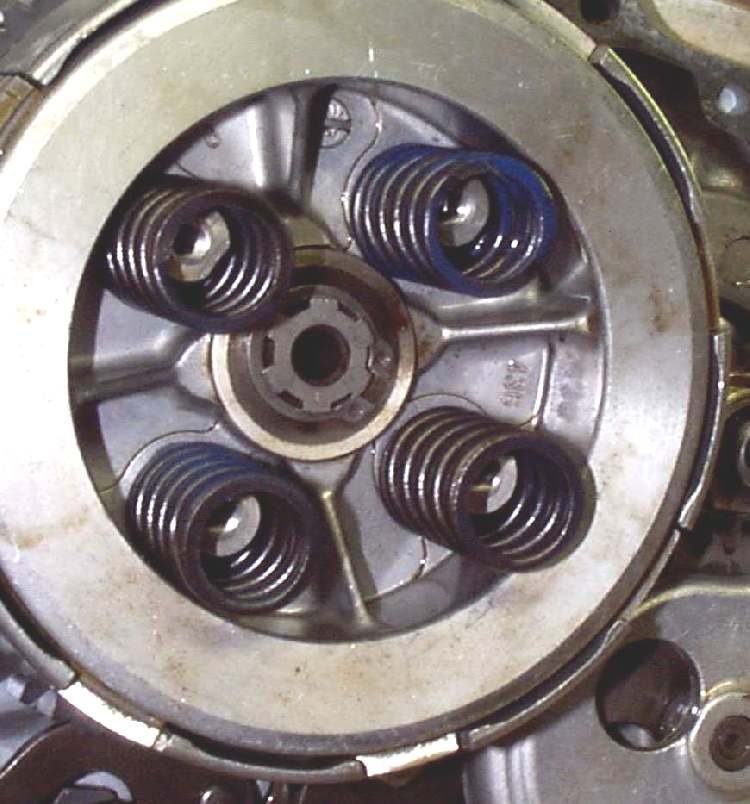
Friction plates and steel plates alternate. Springs squeeze them together so the engine drives the gearbox. When you pull the lever, a cable or hydraulic line lifts the pressure plate, the plates separate, and the engine turns without driving the wheel. This lets you pull away, change gear and stop without stalling. See it working in Under the Engine.
Signs it is worn or failing
- Revs rise but the bike does not speed up: Clutch slips.
- Hard to find neutral, creeps forward with the lever pulled: Clutch drags.
- Shudder when pulling away: Clutch judders.
- Lever very stiff: Heavy clutch lever.
- No resistance at the lever: Clutch lever has no resistance.
When to replace it
Most slipping and dragging is fixed by setting the lever free play first. Replace the friction plates when they are thinner than the limit, glazed or burnt; replace springs that are shorter than the limit; replace steel plates that are warped or blue from heat.
What to match when buying
- Buy a kit for your exact model: number of plates, size and tabs must match.
- Use engine oil rated for wet clutches (JASO MA or MA2 for most motorcycles). Car oils with friction modifiers can make the clutch slip.
Fitting notes
- Rider job: Adjust the clutch lever free play.
- Home workshop: Service the clutch plates and springs. Soak new friction plates in engine oil before fitting.
- All clutches need a little free play at the lever so the springs can press the plates fully. Where a rod-type clutch has an adjusting screw and lock nut on the release lever, set it first, then the cable free play. The screw can have a left-hand thread, so check the manual.
- A bike that has stood for a long time can have plates stuck together. See Free stuck clutch plates.
Reference (K-Light 125)
| Item | Value | PDF page |
|---|---|---|
| Clutch lever free play | 10 to 15 mm at the lever tip | 69 |
| Friction plate thickness | Standard 2.9 to 3 mm; limit 2.6 mm | 222 |
| Clutch spring free length | Standard 35.45 to 36.5 mm; limit 34.2 mm | 222 |