
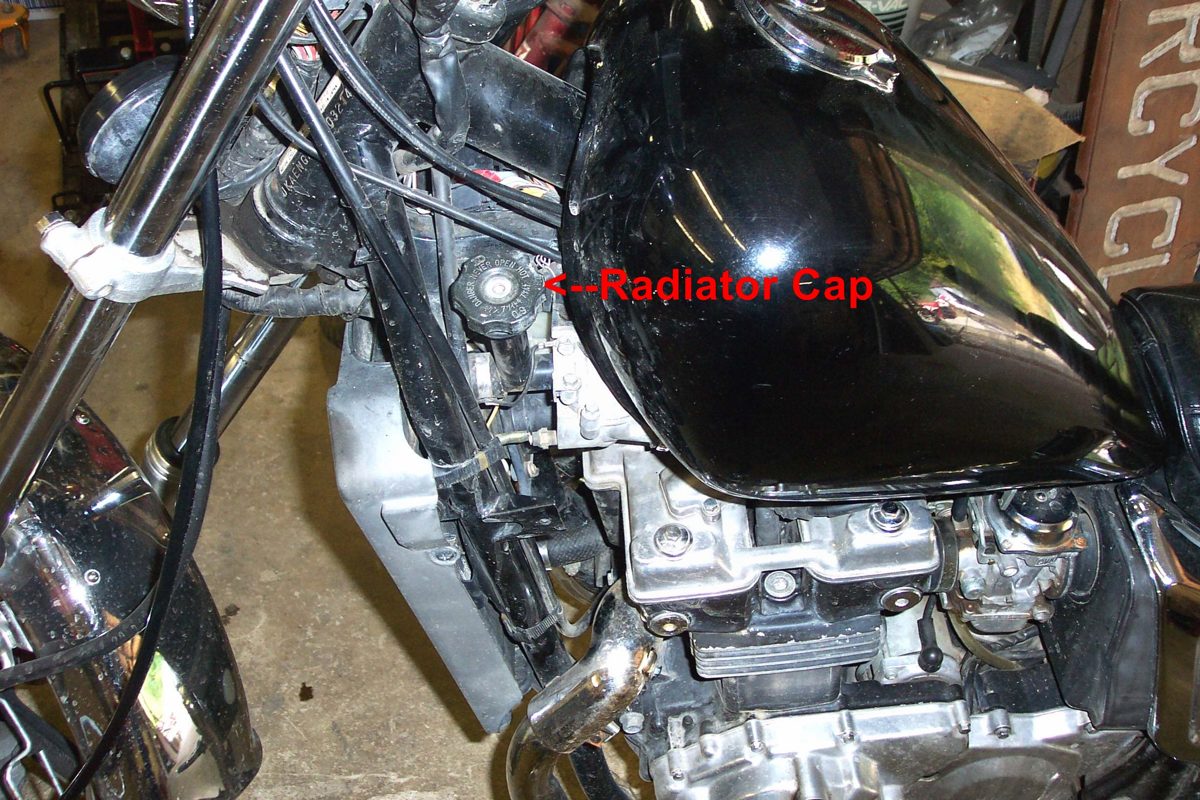
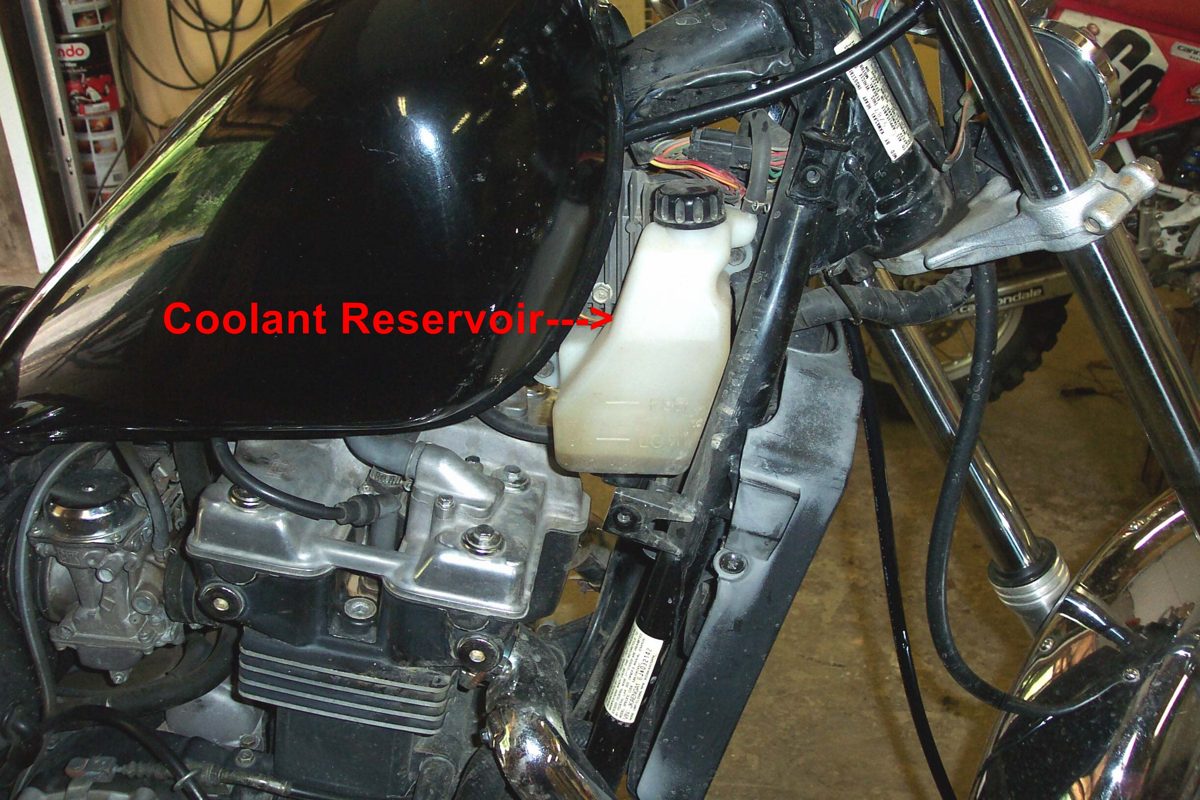
A liquid-cooled engine pumps coolant (water mixed with antifreeze and corrosion inhibitor) through passages in the engine and through a radiator, where air takes the heat away. Most bikes have a small plastic reserve tank (expansion tank) with UPPER and LOWER marks. You check and top up there, not at the radiator cap. A level that keeps falling means a leak, inside or outside the engine.
Safety
- Check only when the engine is cold.
- Never open the radiator cap on a hot engine. The coolant is under pressure and above boiling point; it can spray out and scald you.
- Coolant is poisonous and tastes sweet. Wipe up spills, keep it away from children and animals, and store it in its labelled bottle.
- Coolant on the tyre is slippery. Wipe it off.
You need
- Coolant of the type your manual names. Do not mix different types or colours unless the maker says they are compatible.
- Use distilled or demineralised water if the coolant is a concentrate. Hard tap water leaves scale. Plain water alone gives no corrosion protection and can freeze in cold places.
Steps
- Park on level ground, engine cold, bike upright (on the centre stand or held straight).
- Find the reserve tank. It may be behind a side cover; remove the cover if needed.
- Read the level against the UPPER and LOWER marks.
- If the level is below LOWER, remove the reserve tank cap (not the radiator cap) and add coolant to the UPPER mark.
- Refit the cap and the side cover.
- Look at the coolant colour. Rusty brown, oily or murky coolant needs replacing: see Replace the coolant.
- Look under the bike and round the radiator, hoses and water pump for wet patches or dried coloured crust.
- Write down the date and how much you added.
Check your work
- Level at the UPPER mark when cold.
- Cap fitted firmly, no spills left.
- At the next check the level is about the same.
If it did not fix the problem
- You need to add coolant often, or the tank was empty: Coolant is leaking and Find a coolant leak.
- No visible leak but the level falls, with white smoke or milky oil: possible head gasket; see White smoke or steam from the exhaust.
- Level correct but the engine overheats: Liquid-cooled engine overheats.