
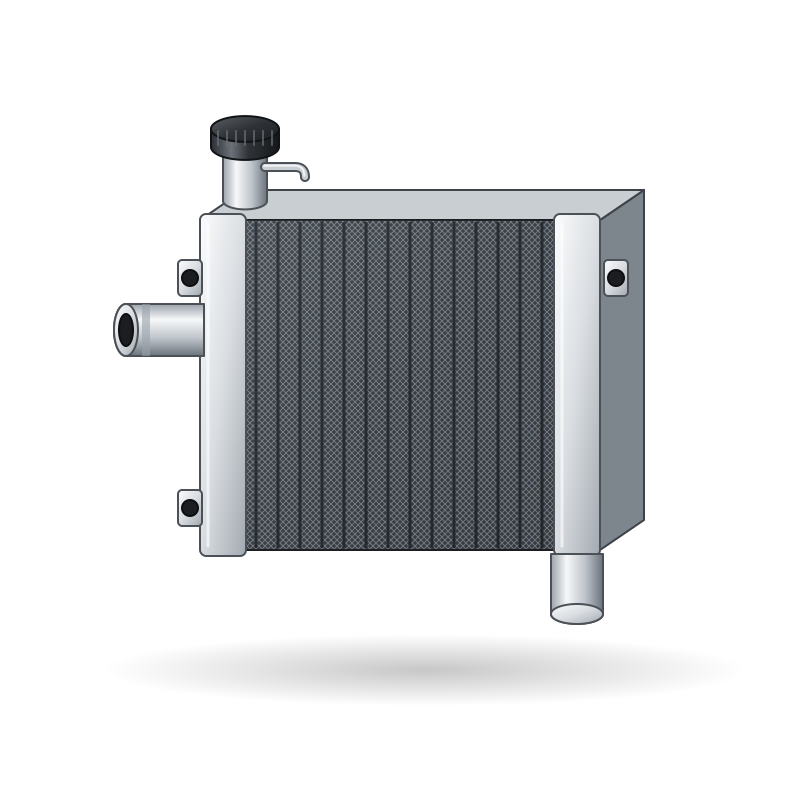
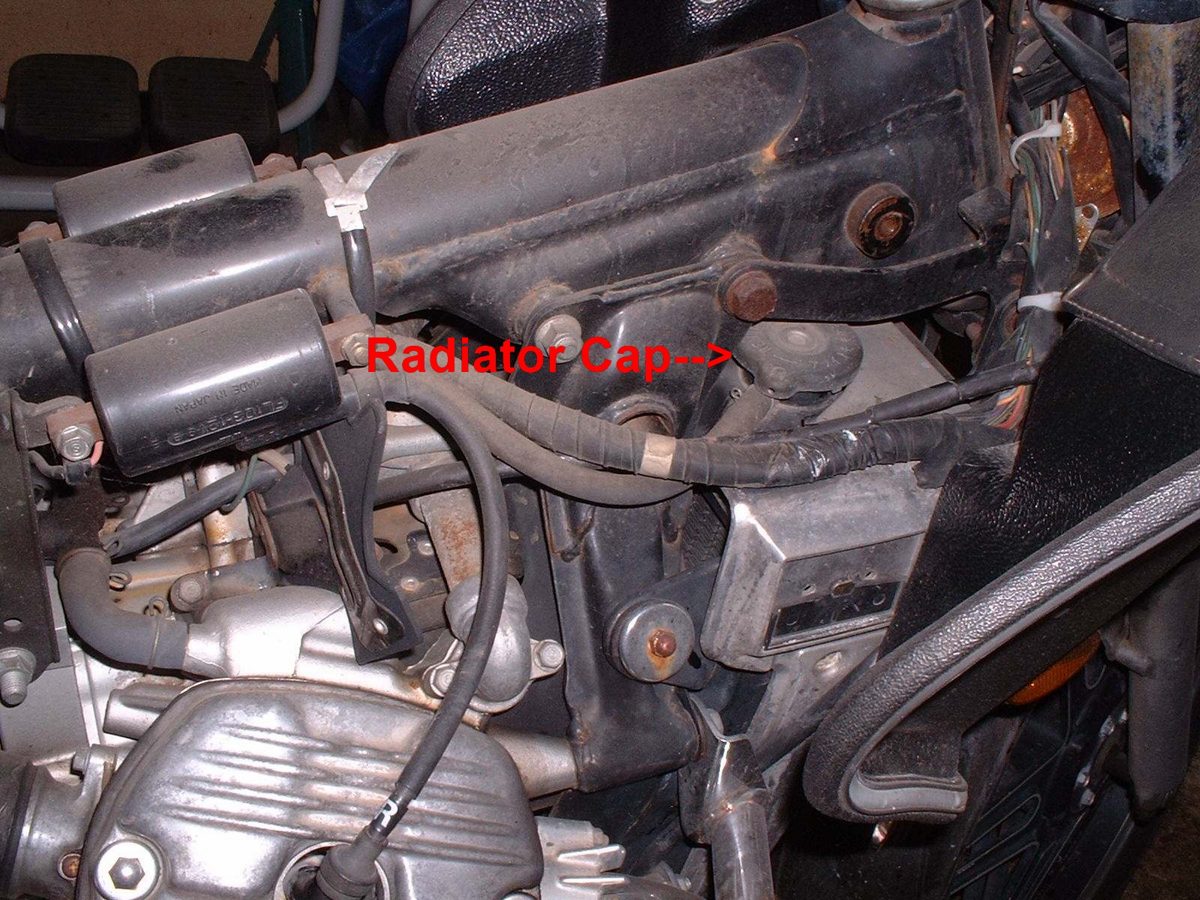
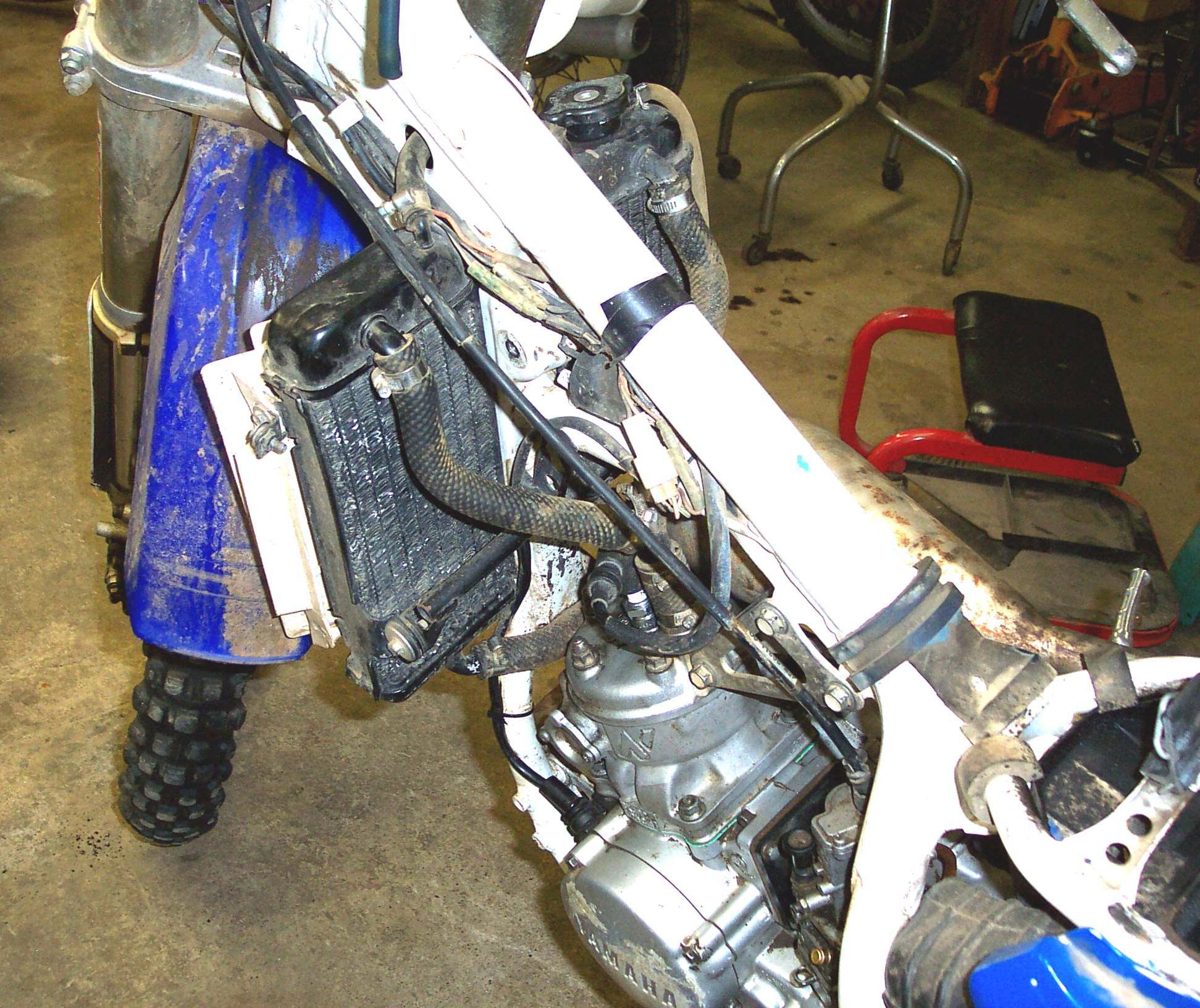
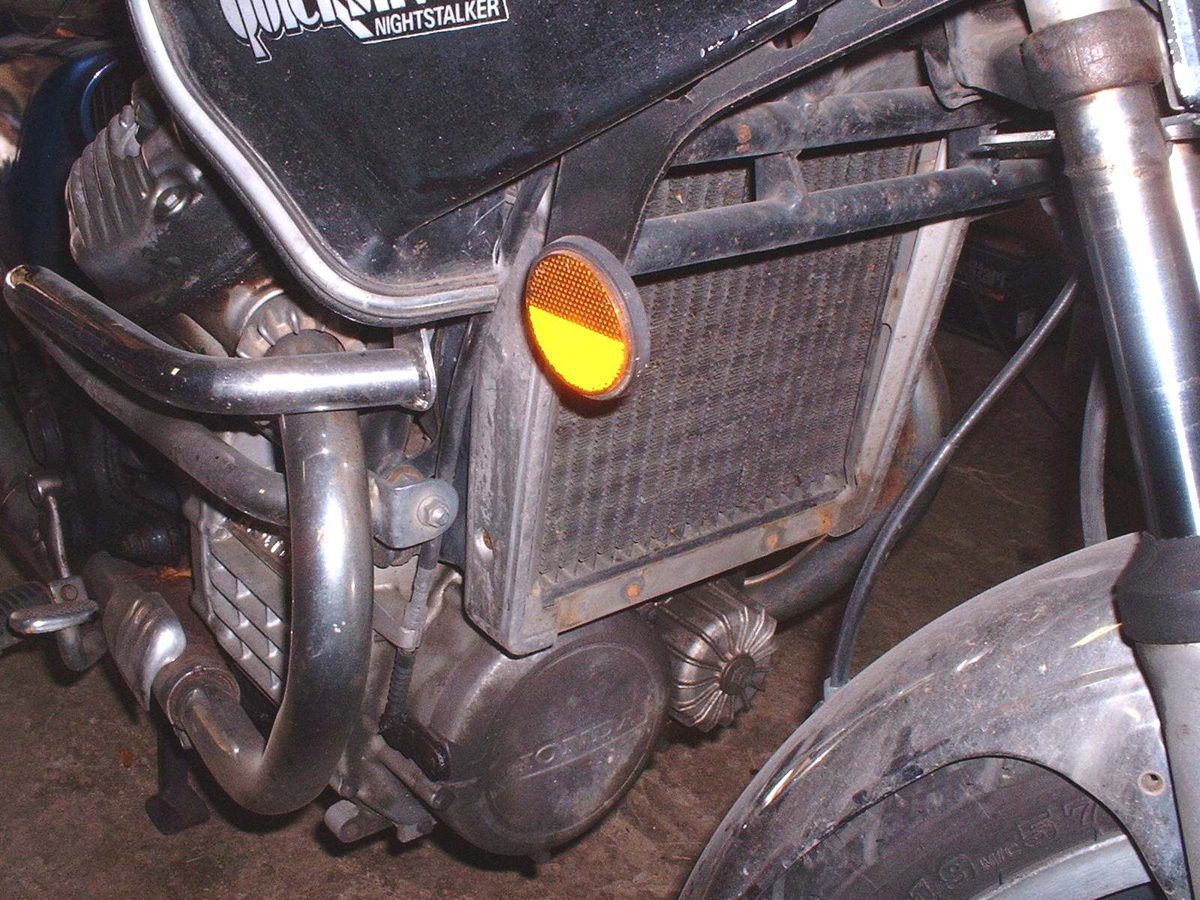
The radiator is a thin metal grid of tubes and fins at the front of the engine on liquid-cooled bikes and scooters. Hoses connect it to the engine, a pressure cap sits on top or on the expansion tank, and a fan sits behind it. Air-cooled engines such as the K-Light 125 have no radiator; they cool through fins on the cylinder.
What it does
Hot coolant from the engine flows through the thin tubes, and air passing through the fins takes the heat away. The cap holds the system under pressure so the coolant boils at a higher temperature, and lets extra coolant flow to the expansion tank as it heats. Fins get bent by stones and blocked by mud and insects. Old coolant corrodes the inside and silt blocks the tubes.
Signs it is worn or failing
- Radiator is damaged, bent or blocked.
- Liquid-cooled engine overheats or temperature gauge high.
- Coolant is leaking: wet or crusty marks on the core or seams.
- Coolant pushed out of the expansion tank: a weak cap, or exhaust gas getting into the coolant.
When to replace it
When the core leaks and cannot be sealed, many tubes are blocked, or the mounts are broken. Replace the cap if its seal is cracked or it fails a pressure test. Straighten bent fins gently with a flat blade.
What to match when buying
- Match make, model and year: size, hose positions, fan mounts and filler type.
- Match the cap pressure rating stamped on the old cap. A wrong cap can boil the coolant or burst hoses.
- Cheap copies may have fewer fins or thinner tubes and cool less.
Fitting notes
- Never open the cap on a hot engine; boiling coolant can spray out and scald you.
- Use new hose clips if the old ones are rusty. Refill and bleed air as your manual says.
- Home jobs: Check and top up coolant, Find a coolant leak.
- Keep the reservoir at its line when cold. After a refill, run the engine up to temperature, let it cool, and check the radiator and reservoir again.