
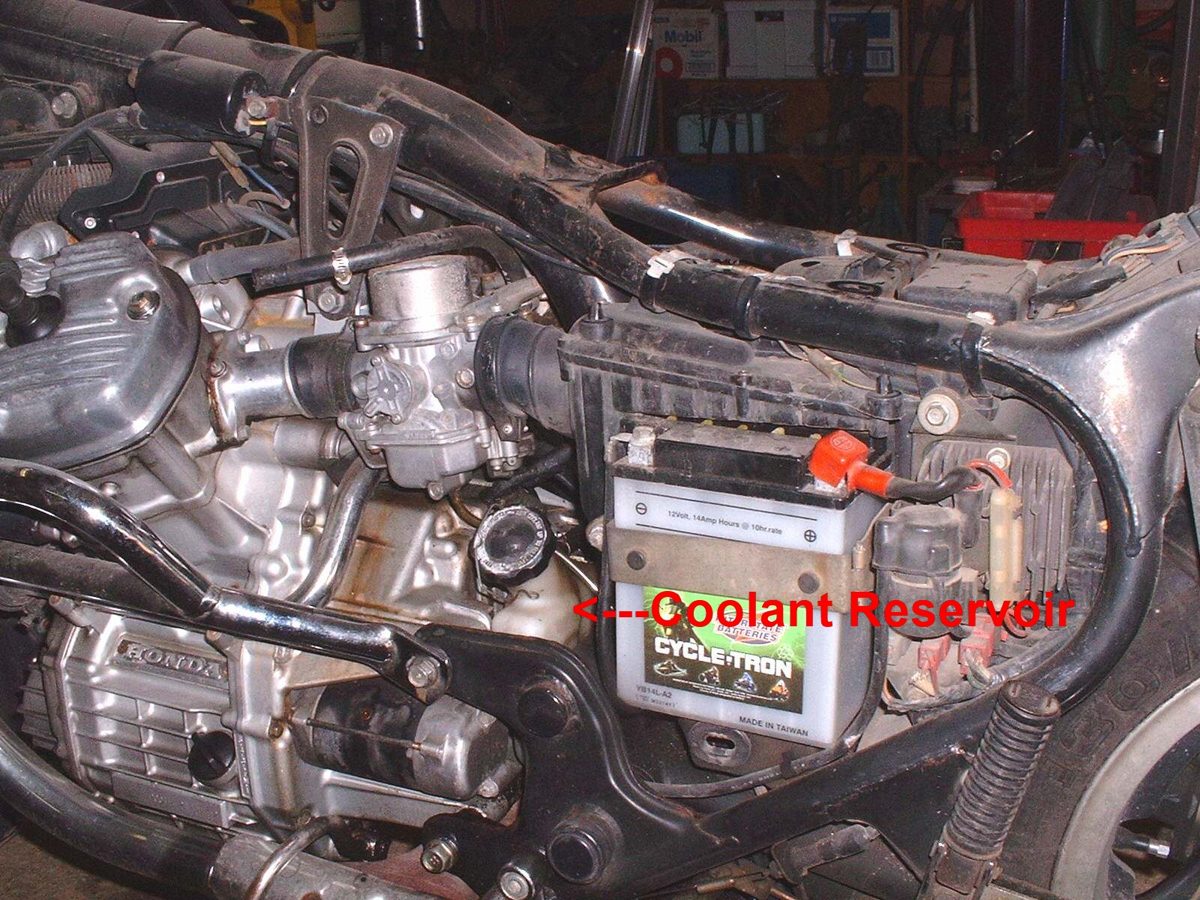
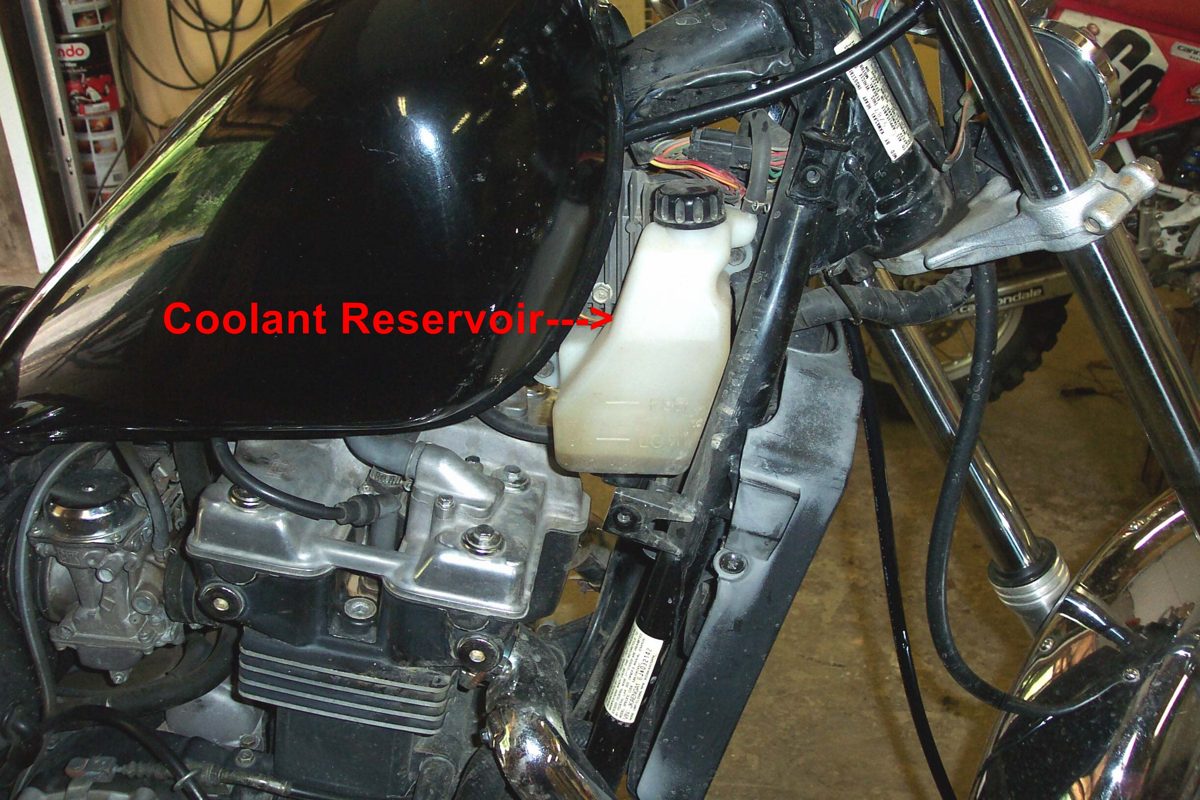
Coolant is the liquid in the radiator, hoses and engine water jacket of a liquid-cooled bike. It is a mix of antifreeze (usually ethylene glycol with corrosion inhibitors) and clean water. You can see its level in the plastic expansion tank. Air-cooled bikes, such as the K-Light 125, do not use coolant.
What it does
Coolant carries heat from the hot cylinder and head to the radiator. The antifreeze raises its boiling point, lowers its freezing point, and its inhibitors protect aluminium and the water pump seal from corrosion. Inhibitors get used up with time, so old coolant corrodes the engine from inside even when the level is right.
Signs it is worn or failing
- Liquid-cooled engine overheats.
- Coolant is leaking or the level keeps dropping.
- Brown, rusty or oily coolant, or flakes in the tank.
- White smoke from the exhaust or milky oil when coolant enters the engine.
When to replace it
At the interval in your bike's manual, and whenever it is dirty, oily or rusty. Top up only when cold, to the level marks on the tank.
What to match when buying
- Use the coolant type your bike's manual names. Honda, for example, asks for ethylene glycol coolant with inhibitors for aluminium engines and warns that silicate inhibitors can wear water pump seals and block radiator passages.
- Mix with distilled or low-mineral water, not tap water, in the ratio the manual gives, or buy premixed coolant.
- Do not mix different coolant types or colours; flush the old one out first.
- Fake or poor coolant may be dyed water. Buy sealed containers from a known brand.
Fitting notes
- Never open the cap on a hot engine. Coolant is poisonous and tastes sweet: keep it from children and animals and wipe up spills.
- Bleed air after refilling as the manual describes, then recheck the level after a ride, once cold.
- Home jobs: Check and top up coolant, Replace the coolant.