
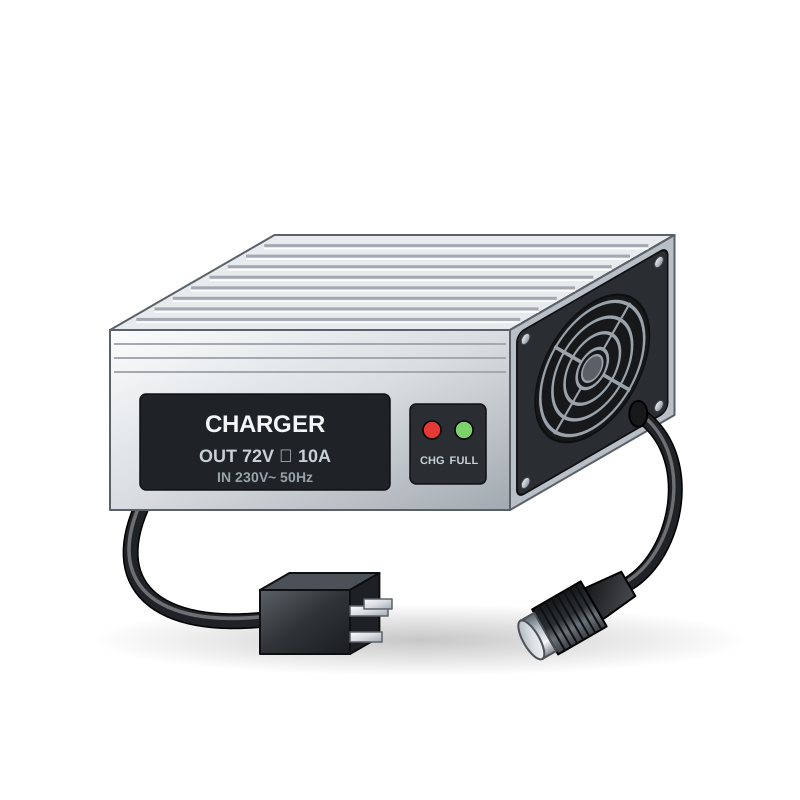
The charger turns mains AC power into the DC voltage and current the traction battery needs. It may be a separate box with two cables (off-board) or built into the bike (on-board), with only a mains cable to plug in. Swap stations have their own chargers.
What it does
The charger controls voltage and current to suit the battery chemistry and talks to the BMS on many bikes. It usually charges fast at first, then slows as the pack gets full, then stops. A fan or fins cool it. A wrong charger can push too much voltage or current into the pack and cause overheating or fire. Chargers fail from heat, dust, water, dropped units and damaged cables.
Signs it is worn or failing
- Fault light, or no lights at all: Charger shows a fault light or stays off.
- Battery does not charge: Battery will not charge.
- Stops early: Charging stops before full.
- Cable cut, crushed or plug burnt: Charger cable or plug is damaged. Stop using it.
- Very hot, smells of burning or makes crackling noises: unplug from the wall at once.
When to replace it
Replace a charger that is damaged, has a cut or melted cable, shows a fault that does not clear, or gets very hot. Do not open or repair a charger unless you are trained; it holds dangerous voltages inside.
What to match when buying
- Use the charger supplied with the bike or one the maker approves. Output voltage, current and the charge profile must match your battery's chemistry and voltage.
- The connector and any communication pins must match.
- Input must suit your mains supply.
- Buy from the maker or an approved dealer. Fake chargers are a major fire risk and may lack protections.
Fitting notes
- Charge on a hard surface, away from exits, with a smoke alarm nearby. Let the battery cool after riding first. Do not charge unattended or overnight if the maker advises against it.
- Plug into a wall socket, not a long or overloaded extension lead.
- See Check the charger and cable and Diagnose a charging fault.