
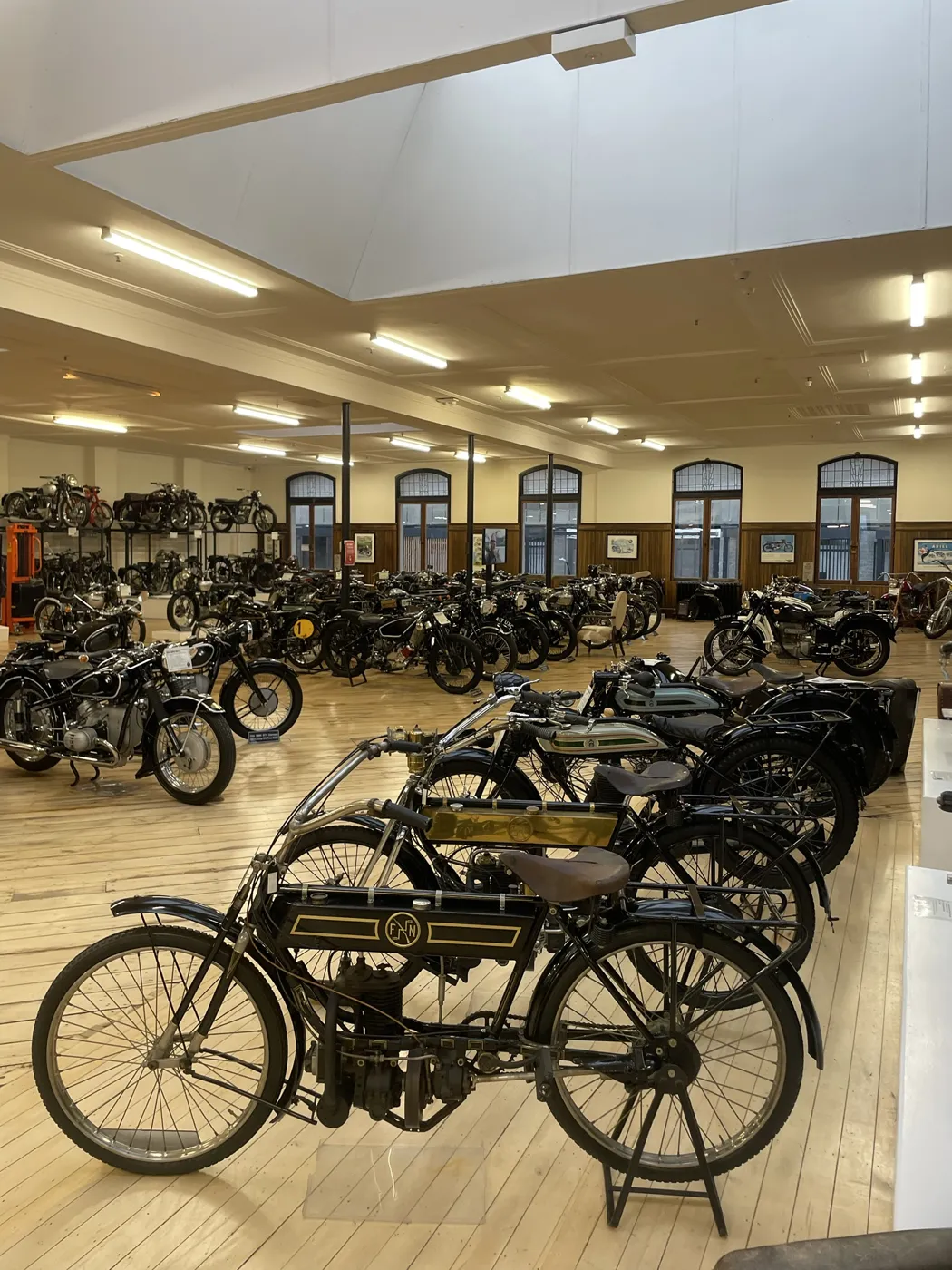
Invercargill sits at the bottom of New Zealand's South Island, a flat, windy town where the next stop south is Stewart Island and then the Southern Ocean. It is not where you would expect to find one of the finest motorcycle collections in the southern hemisphere. Yet in old brick buildings in the centre of town, Classic Motorcycle Mecca keeps around three hundred motorcycles on its wooden floors, from bicycles with engines bolted in to a six-cylinder Honda. Walk through it in order and you walk through the whole history of how a motorcycle is built.
This is a tour of that walk, bike by bike, with the engineering idea each one shows and where to learn more about it in Motopedia.
Before it was a motorcycle
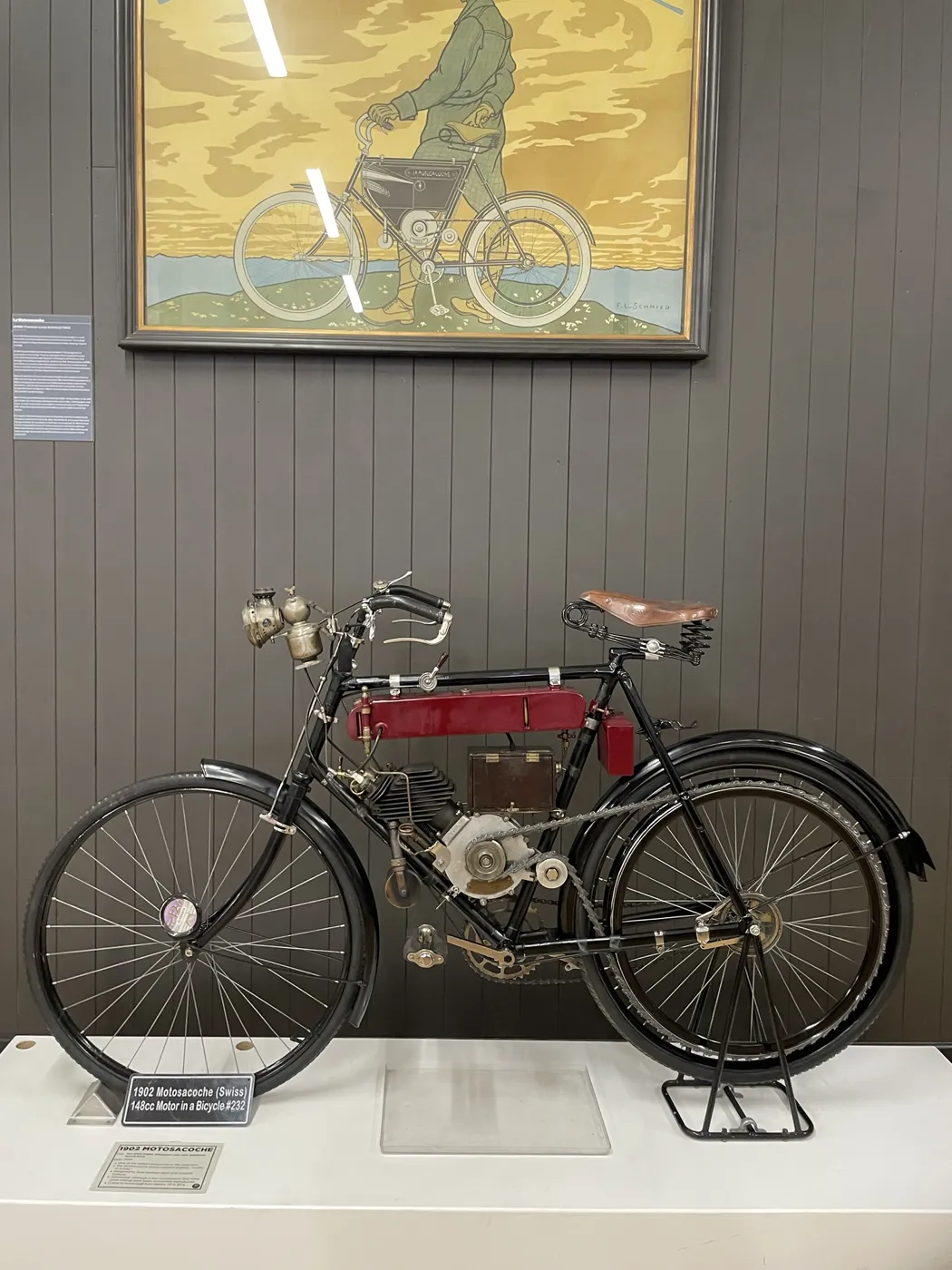
The oldest machines in the collection are bicycles first. The 1902 Motosacoche from Switzerland is exactly what its placard says: a 148 cc motor in a bicycle. The name means "motor in a bag", because the engine sat inside the frame triangle like a parcel. It still has pedals, a bicycle saddle on springs and rim-width tyres. The rider pedals away to start the engine and pedals again to help it up hills.
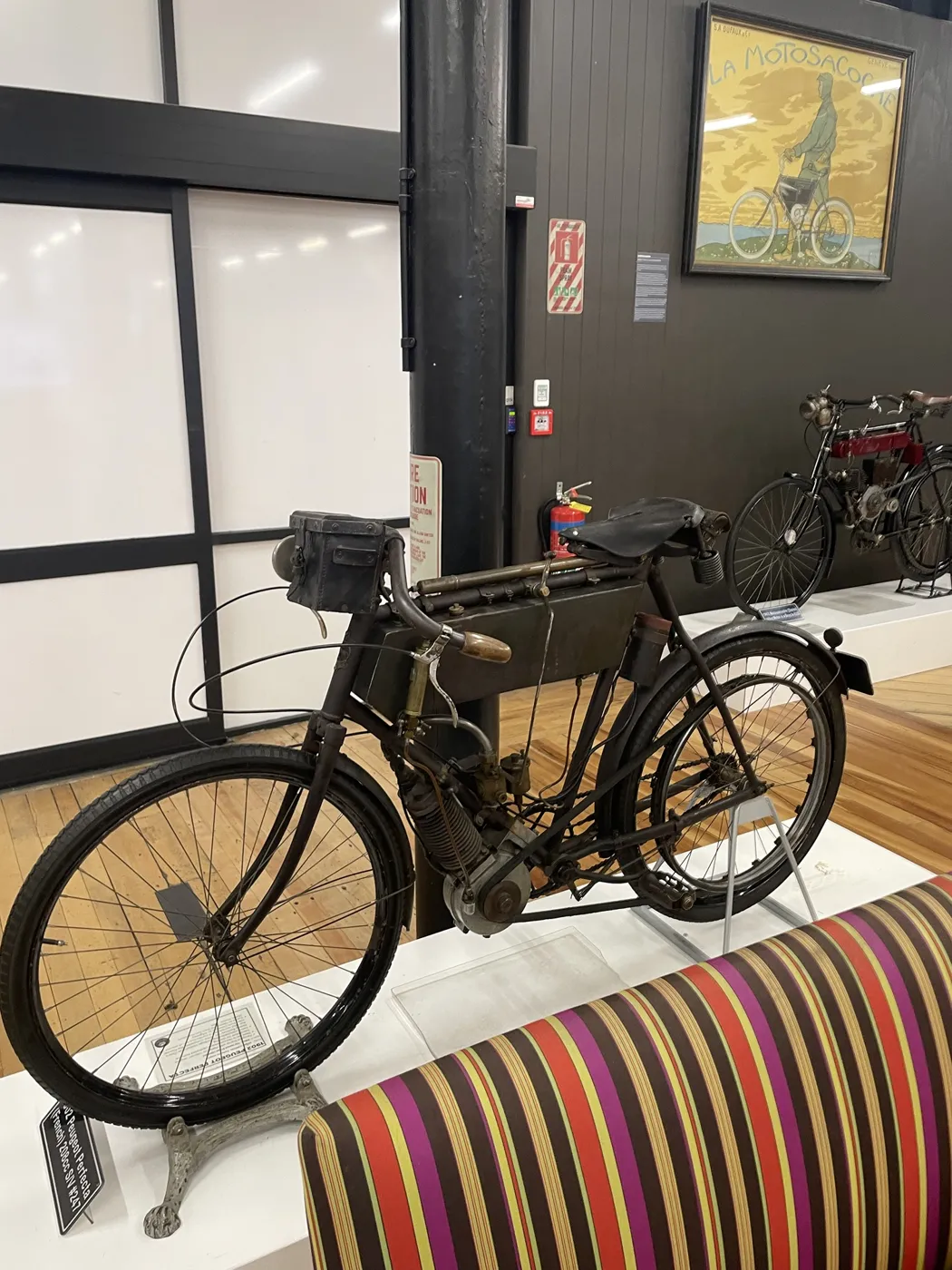
Next to it, the unrestored 1902 Peugeot Perfecta from France does the same job with a 200 cc side-valve engine low in the frame and a flat leather belt to the rear wheel. Belts were quiet and simple, but they slipped in the wet, which is one reason chains took over. The final drive chapter compares belt, chain and shaft.
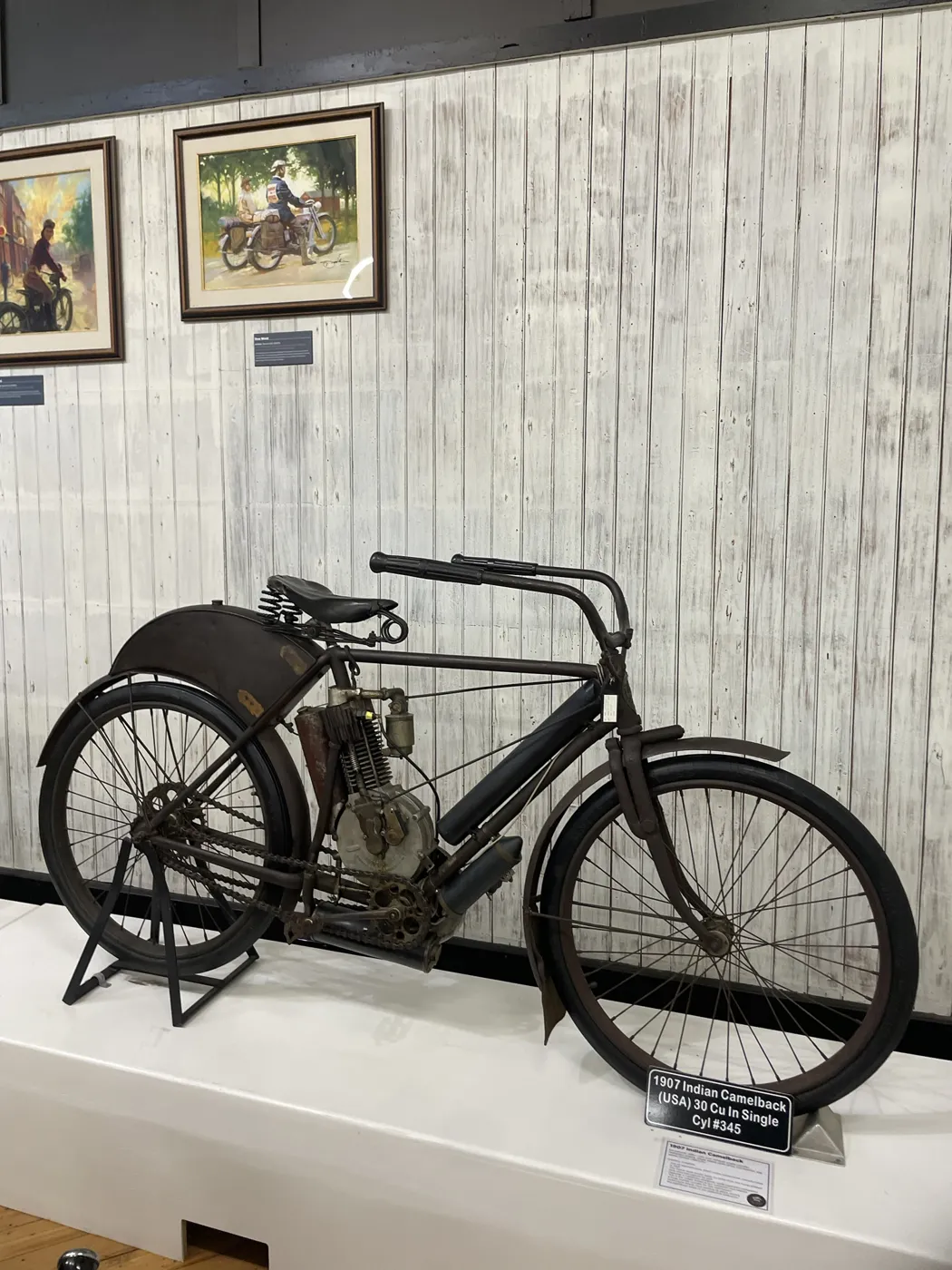
Five years later the 1907 Indian Camelback shows the first step towards a real motorcycle frame. The single cylinder is no longer a passenger: it stands where the bicycle's seat tube would be and becomes part of the structure. The fuel tank is moved onto the rear mudguard, the "camel's back", and the drive has changed to a chain. Its 30 cubic inches are about 490 cc, more than three times the Swiss engine.
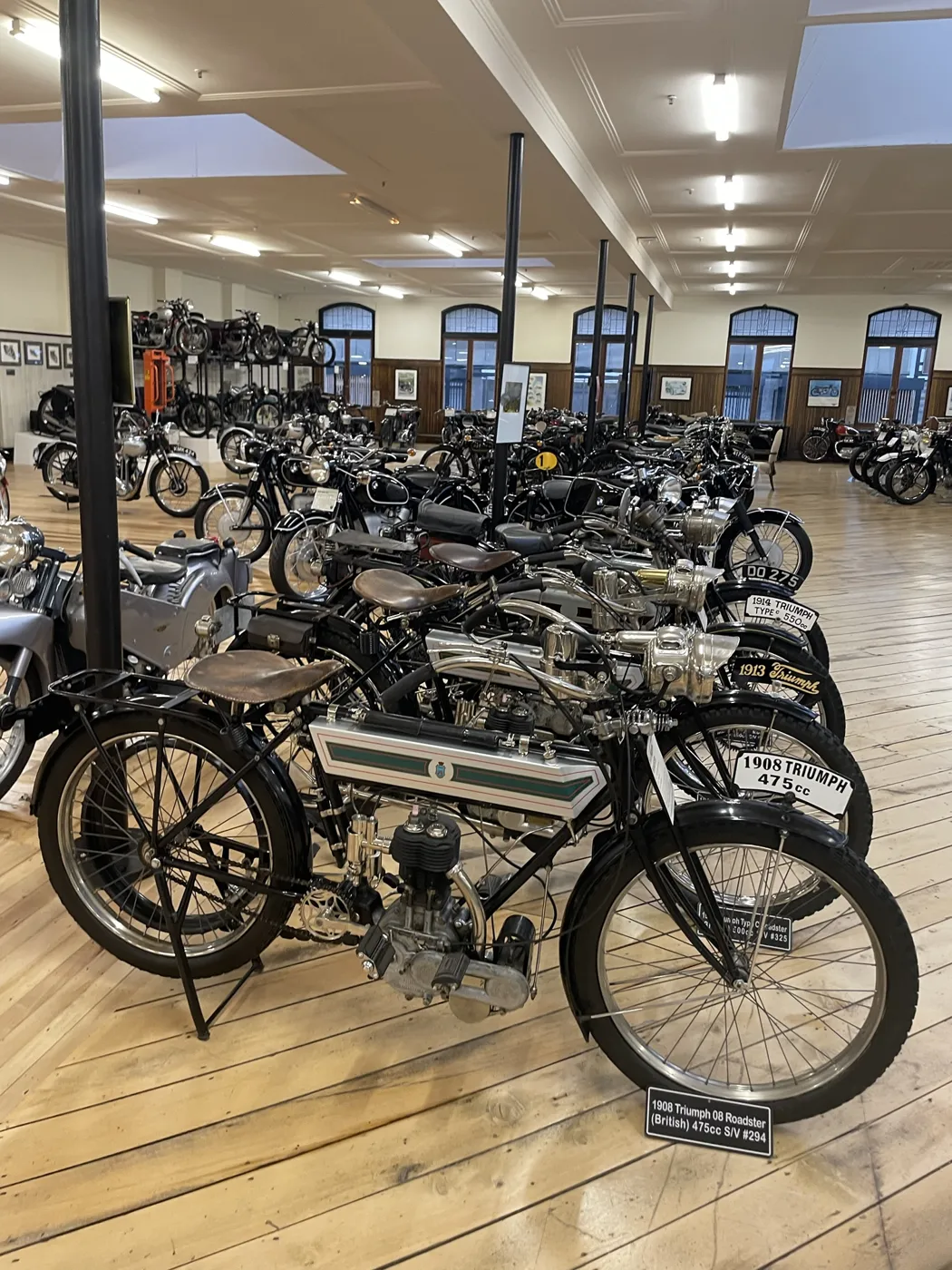
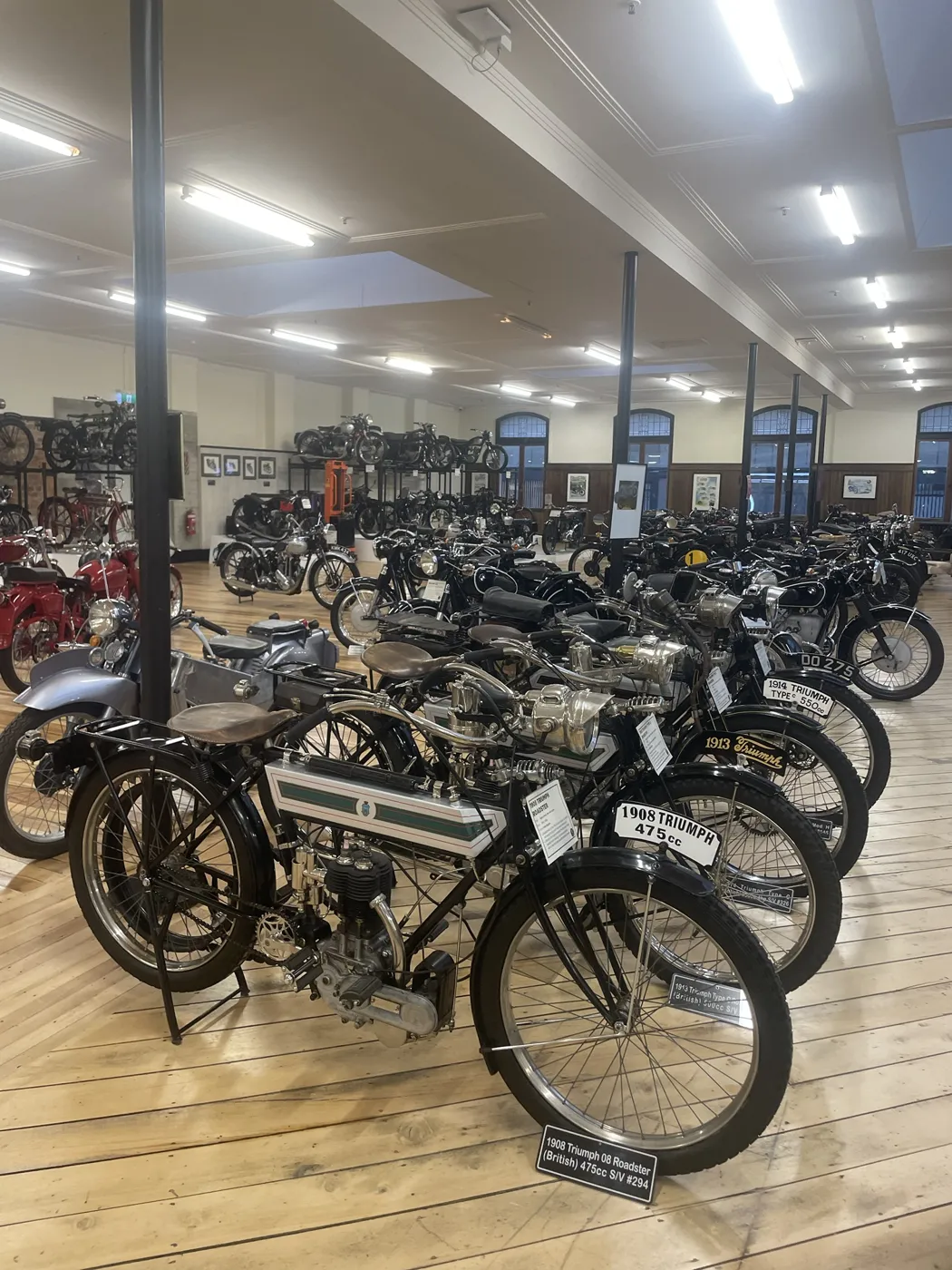
In Britain, Triumph took the same path. The 1908 Triumph Roadster has a 475 cc side-valve single sitting upright in a proper diamond frame, the fuel tank hung between the top tubes, and a belt to the rear wheel. Behind it a row of Triumphs to 1914 shows how quickly the design settled: bigger engines, better carburettors, sprung forks. Most commuter motorcycles today still have a single cylinder in roughly this position.
Both engines are simple four-strokes, and the basic cycle is the same one every petrol motorcycle still uses. How a motorcycle engine works follows it stroke by stroke, and the course chapter on history and systems explains why the compact engine, the pneumatic tyre and the roller chain had to arrive together before machines like these were possible.
Two cylinders in a V
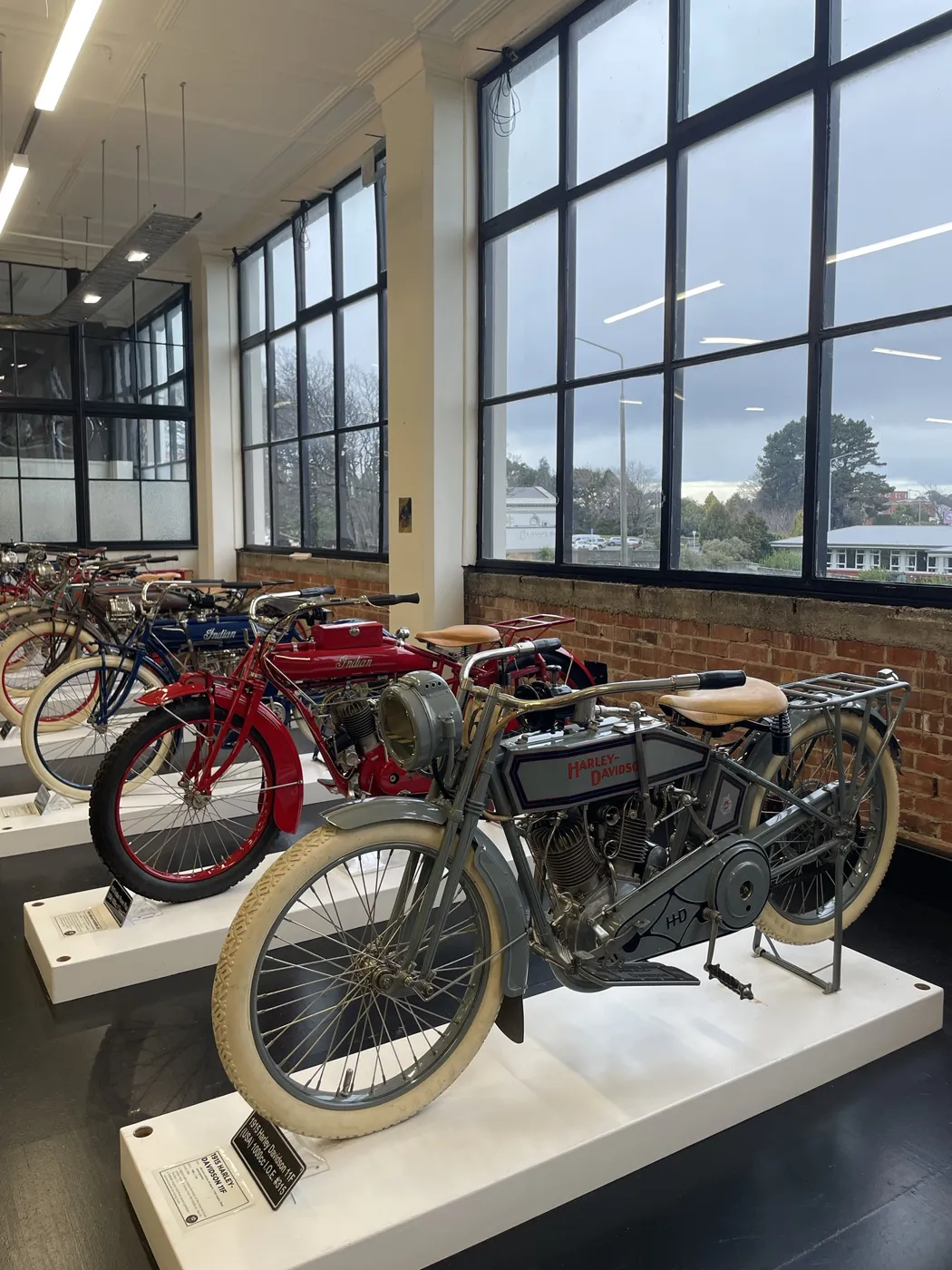
By the First World War the American makers had settled on the layout that still defines them: two cylinders set in a narrow V on one crankshaft. A V-twin doubles the capacity of a single without making the engine much longer or wider, and it fits neatly into a diamond frame. The row of red and blue Indians by the windows and the grey 1915 Harley-Davidson 11F are the two sides of that rivalry.
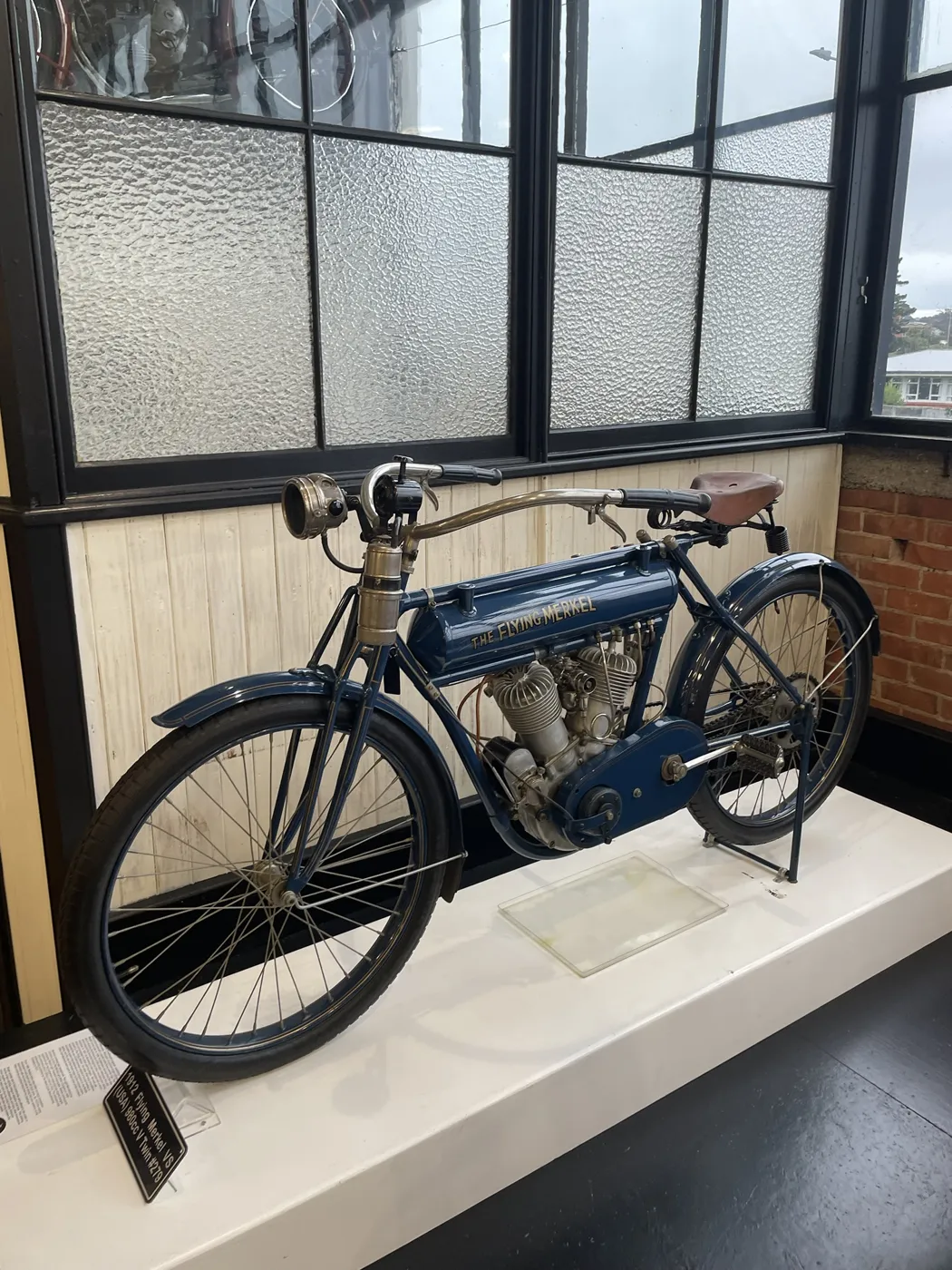
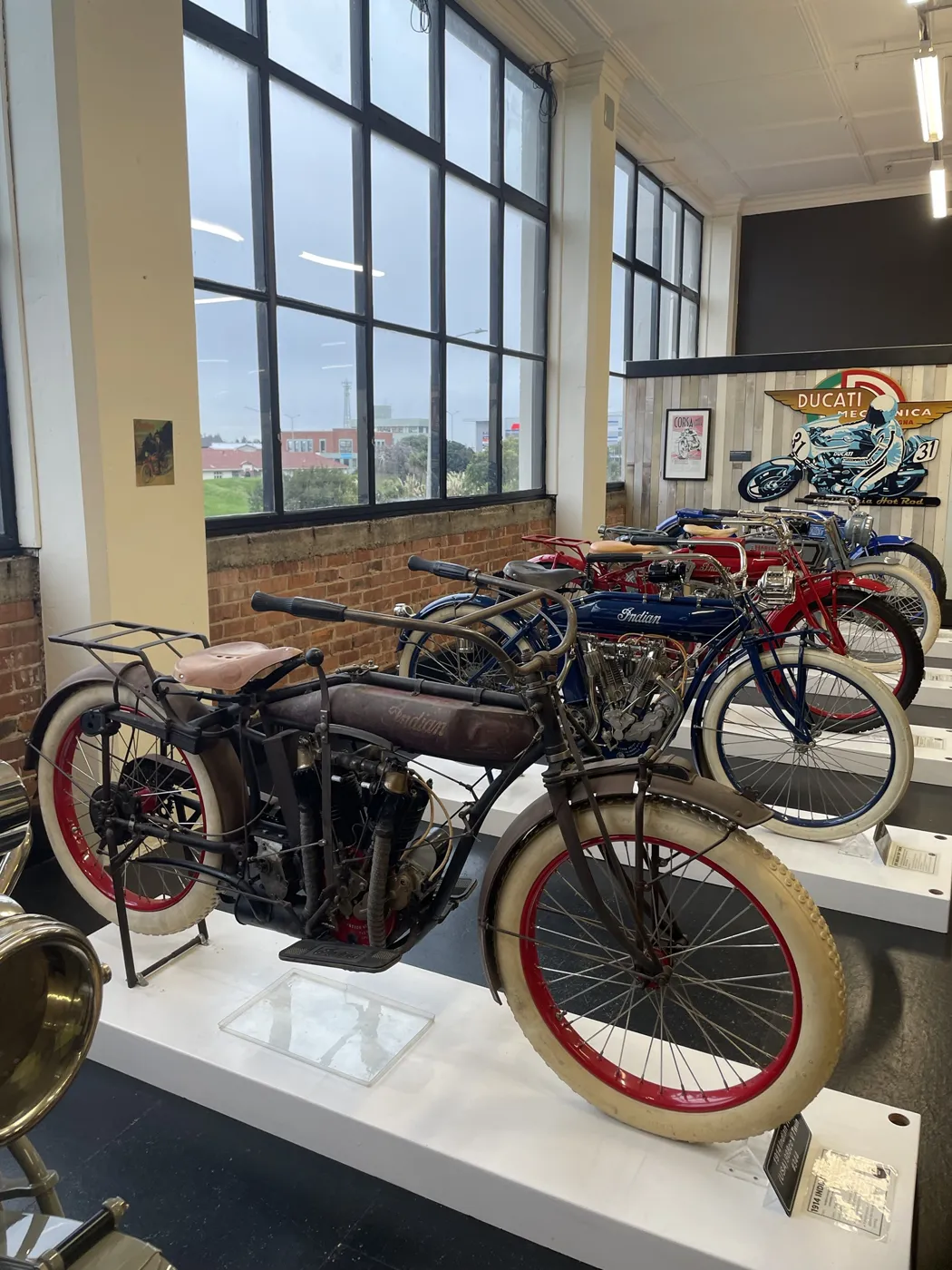
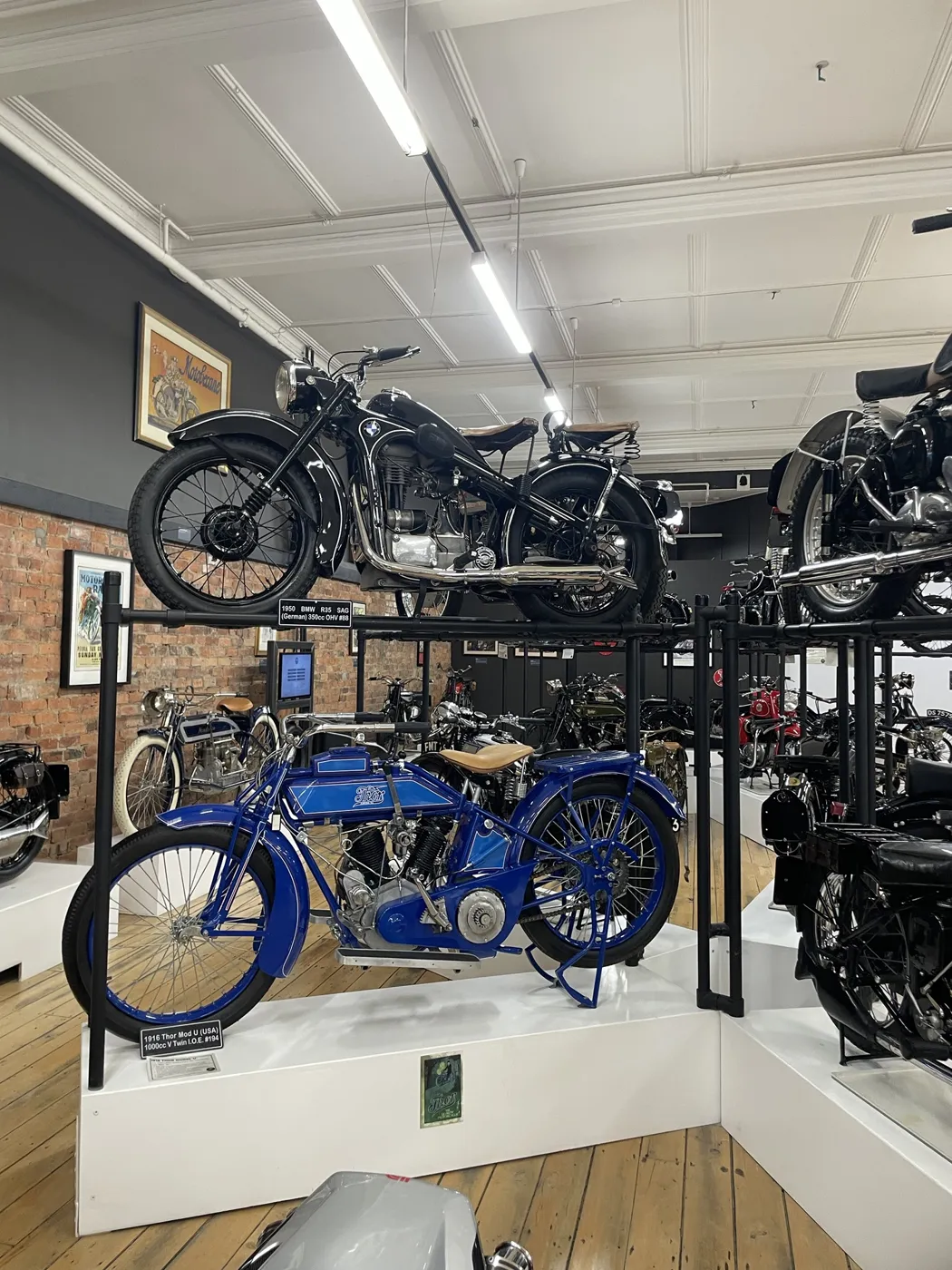
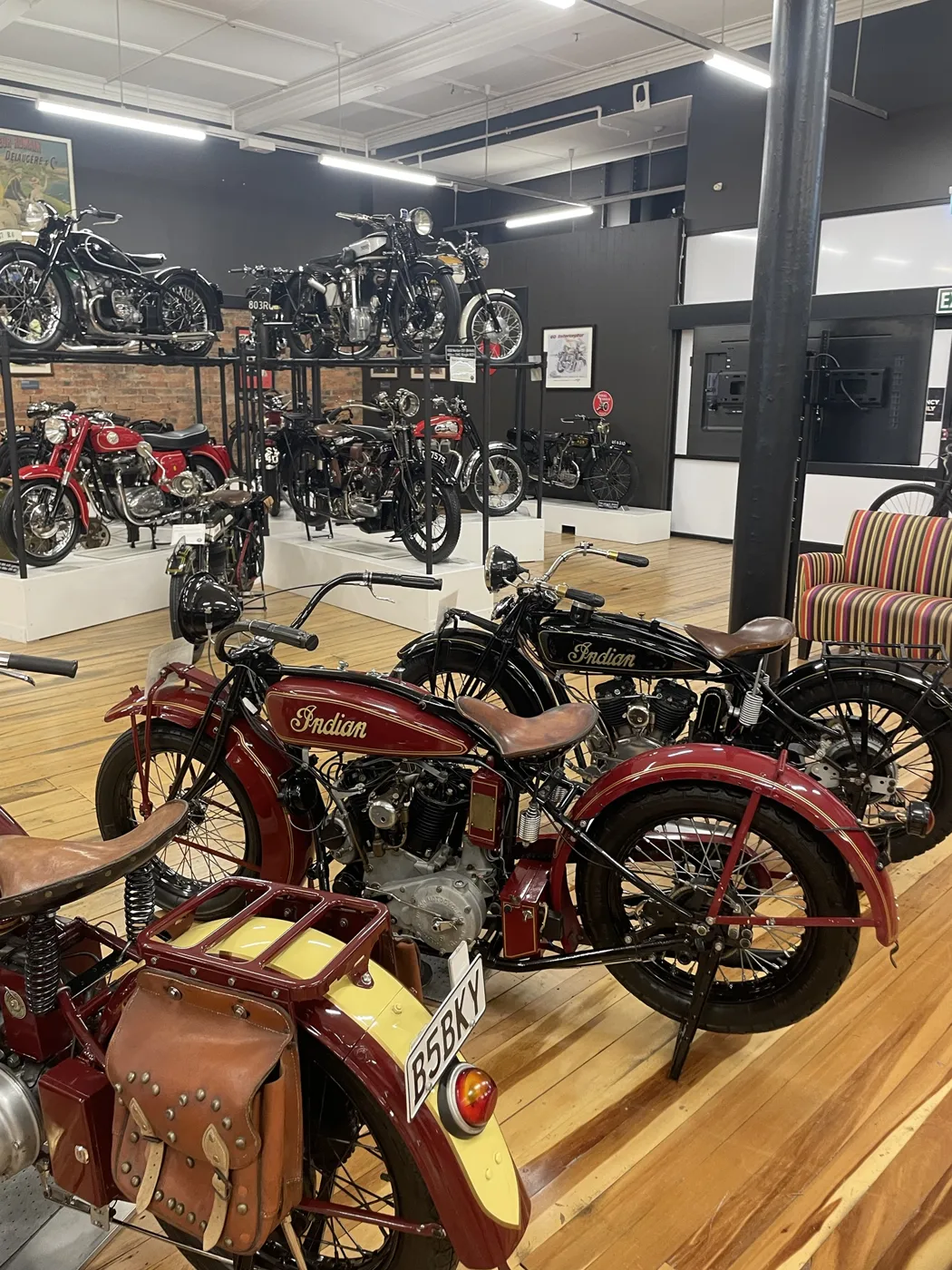
Look closely at the Harley, the blue 1916 Thor Model U and the 1912 Flying Merkel and you can see the valves at work. These are inlet-over-exhaust engines, often called F-heads: the exhaust valve sits in the side of the cylinder, worked from below, and the inlet valve sits above it in the head, worked by an exposed pushrod and rocker. Later engines moved both valves into the head, which lets the charge in and out more freely. The top end chapter and the valves in Under the Engine show the modern arrangement moving, and the inlet valve in the Overview lights up the part on a 3D bike. If you own anything with valves, the valve clearance job is the descendant of the adjustment these riders made by eye.
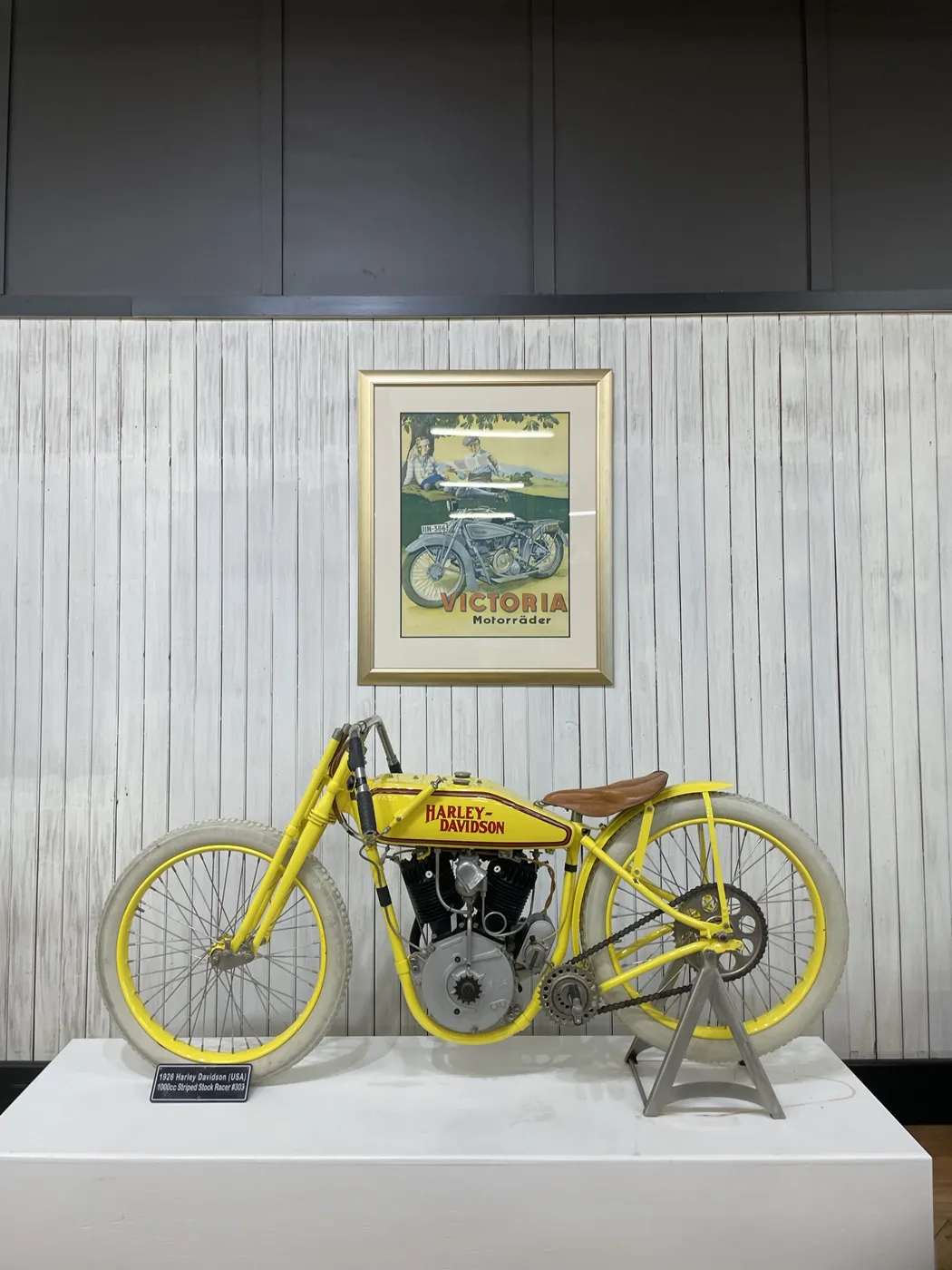
The yellow 1926 Harley-Davidson stock racer shows what the same V-twin became when it went racing. There are no mudguards, no lights and no front brake, and the chain runs straight from the engine to a large rear sprocket. Racers like this ran on dirt ovals and wooden board tracks. Changing the size of the rear sprocket was how a team suited the bike to the track, the same gearing choice you can try in the course's final drive chapter today.
Four in a row, in 1913
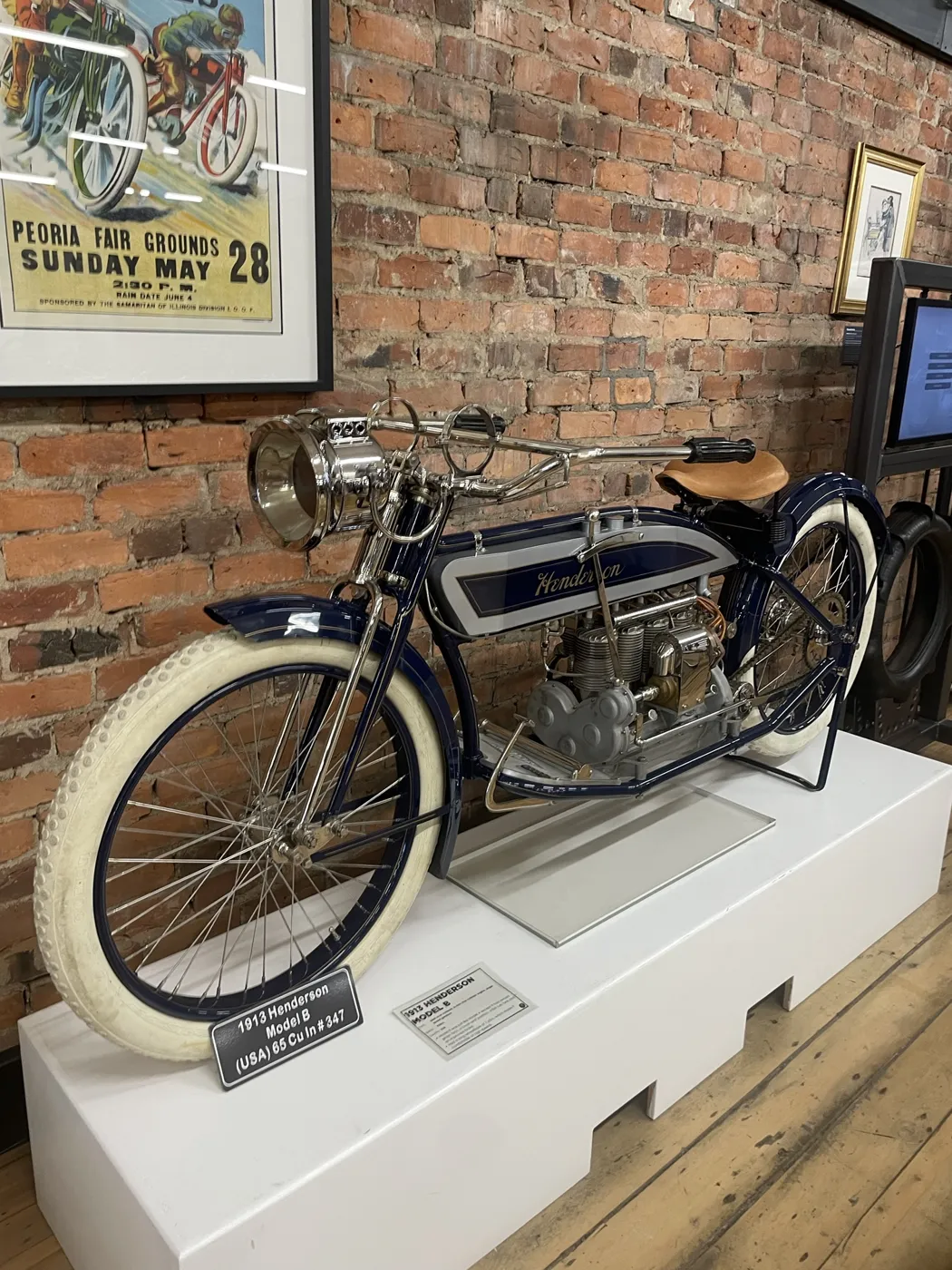
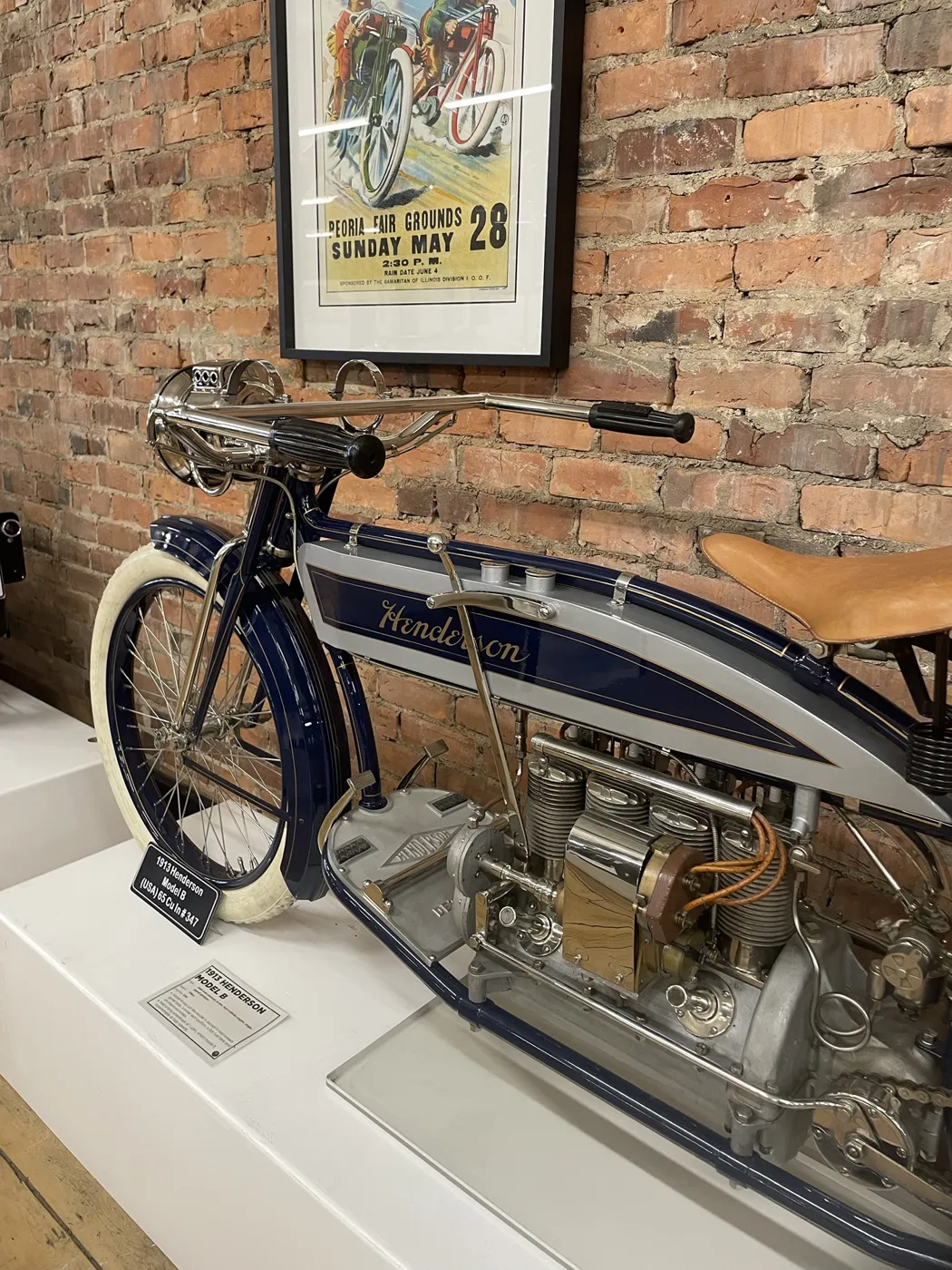
The bike that stops most visitors is the 1913 Henderson Model B. Its engine has four cylinders in a straight line, front to back, along the length of the frame. That makes the motorcycle very long, but it was smooth in a way no single or twin could be, because with four cylinders one is always on a power stroke. Henderson fours became popular with American police and long-distance riders.
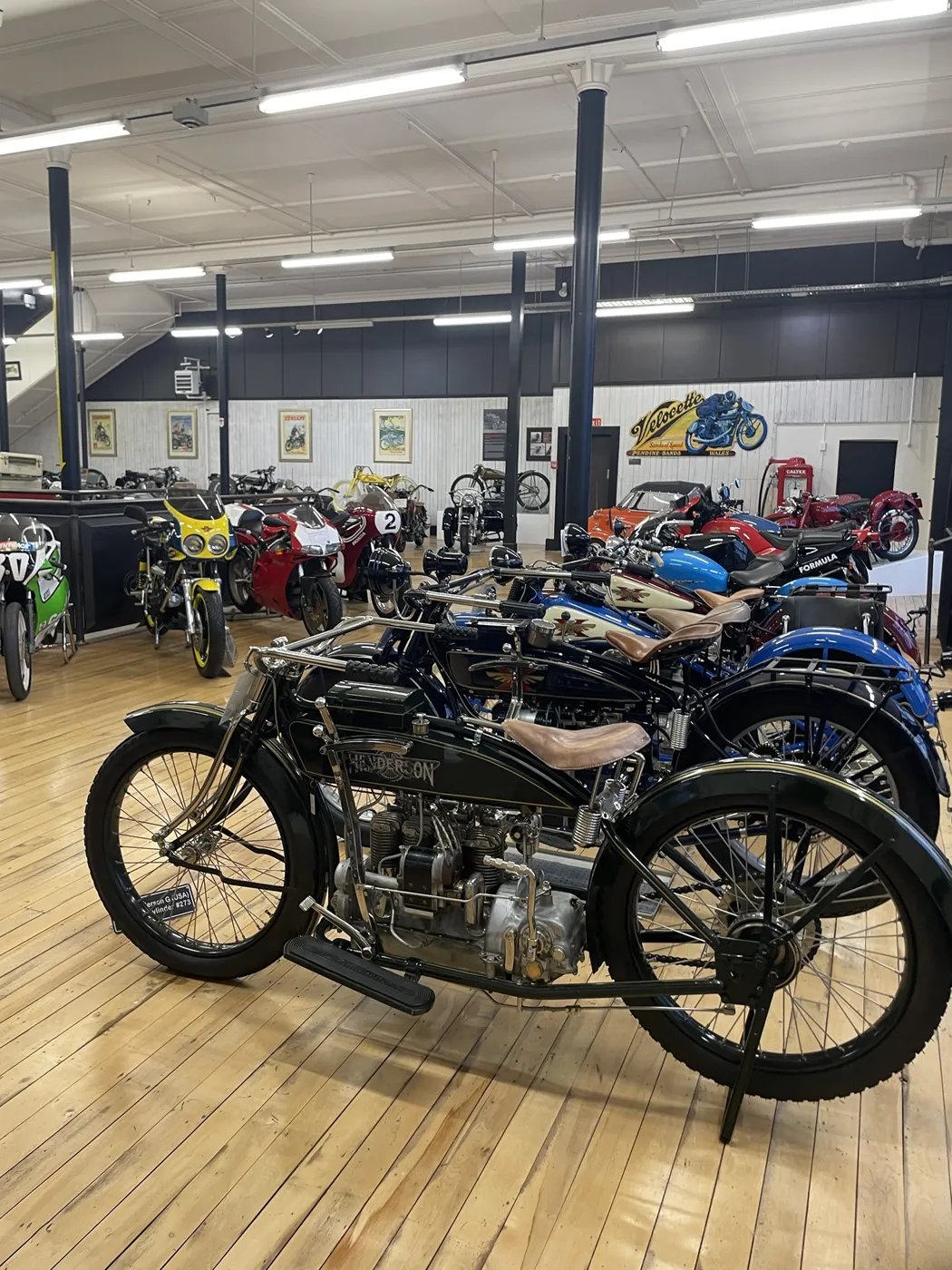
A later Henderson Model G leads a row of its successors. The layout stayed the same for years: four cylinders in line, a magneto in front, footboards instead of footrests, and a long, low frame built for distance rather than corners.
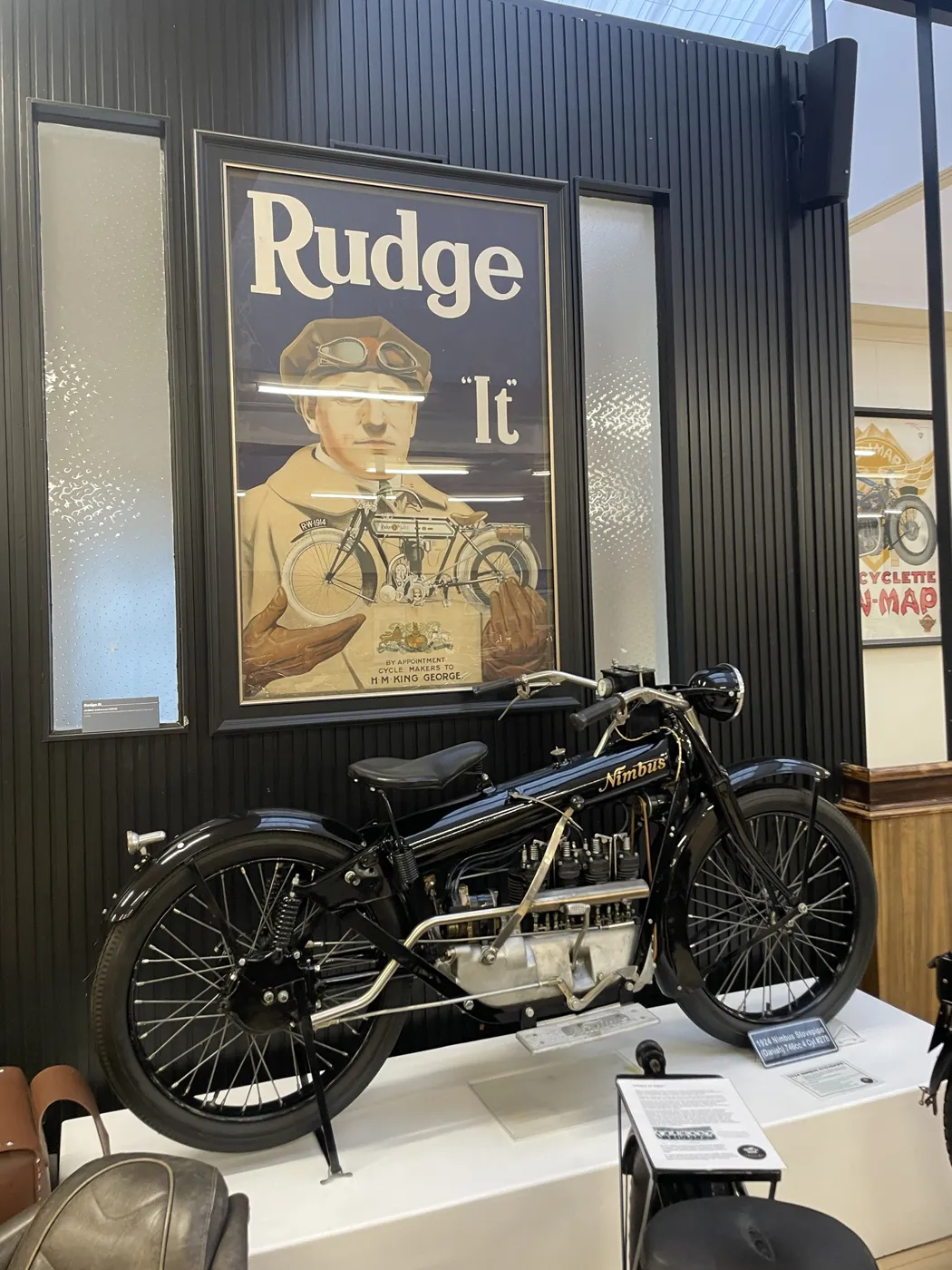
Denmark answered with the 1924 Nimbus, another inline four. Its nickname, Stovepipe, comes from the single large tube running from the steering head to the rear: it is both the backbone of the frame and the fuel tank. Using one part for two jobs saves weight and parts, an idea that returns again and again in motorcycle design.
The close-up shows how the spark was made before batteries were common: a magneto, the brass and chrome box in front of the cylinders, generates its own high-voltage pulse as the engine turns, and the four copper leads carry it to the plugs. There is no battery to go flat. The ignition chapter explains what replaced it, coils and electronic triggers, and How to read a spark plug shows what those plugs tell you about the engine.
The British single, and the overhead camshaft
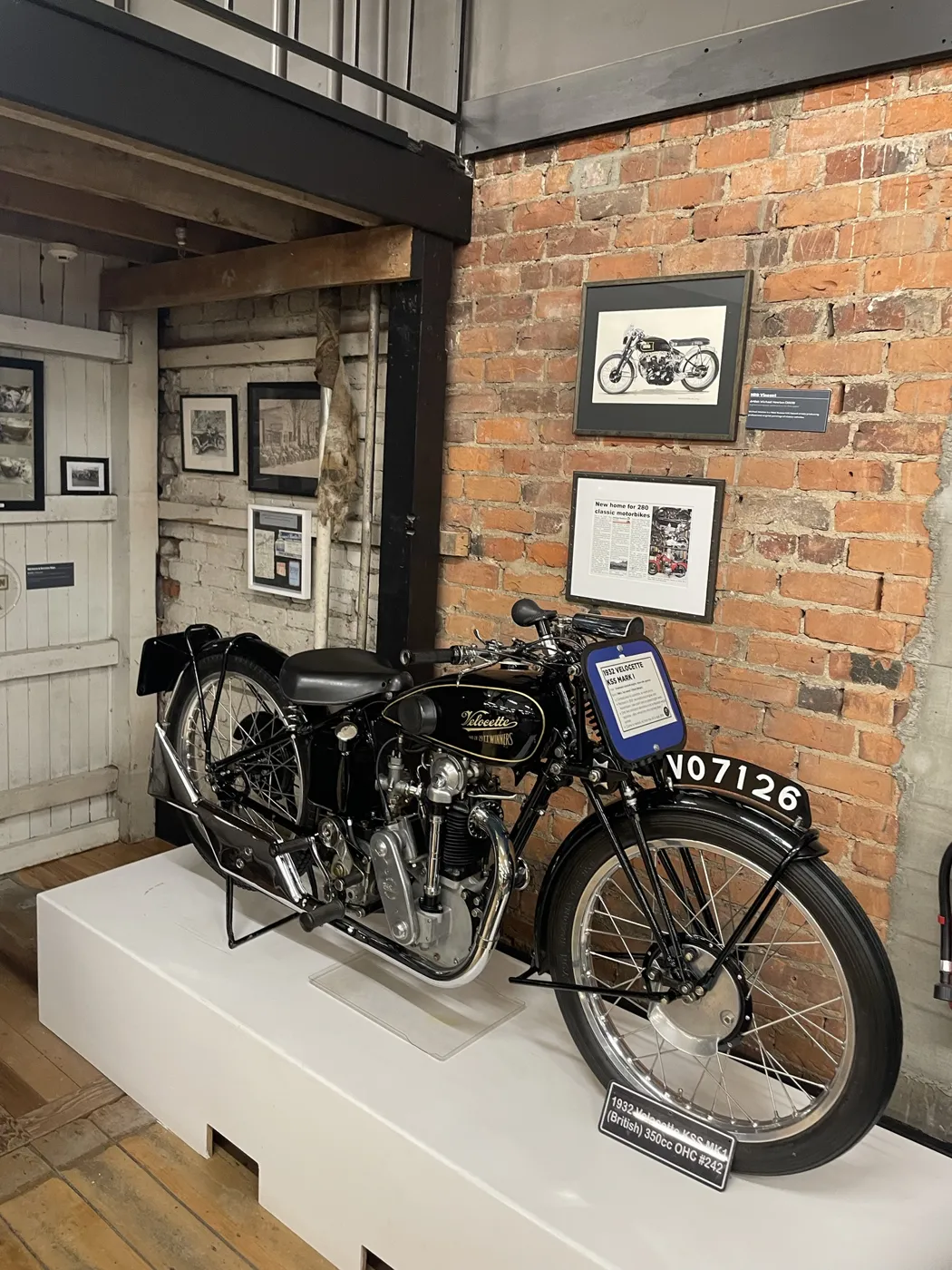
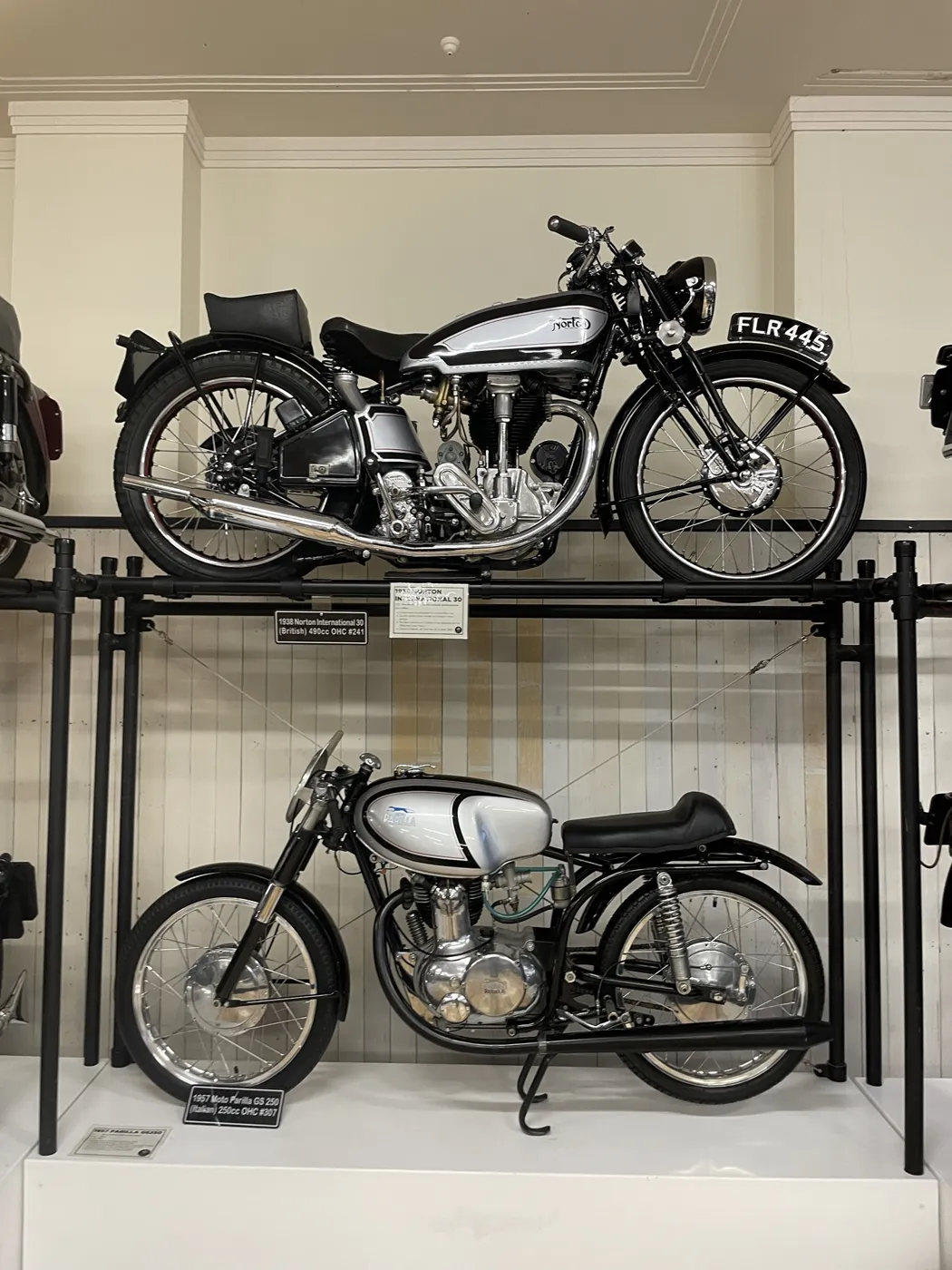
Between the wars, British factories built the motorcycle that won races and carried commuters: the big single. The 1932 Velocette KSS and the 1938 Norton International show its best form. Look for the vertical tube on the right of each cylinder: it carries a shaft with bevel gears at each end, turning an overhead camshaft right above the valves. Putting the camshaft in the head lets the valves follow the cam accurately at high revs, which is why nearly every modern engine does it, with a chain or belt instead of the shaft. The 1957 Moto Parilla GS 250 below the Norton is the same idea in a smaller Italian engine.
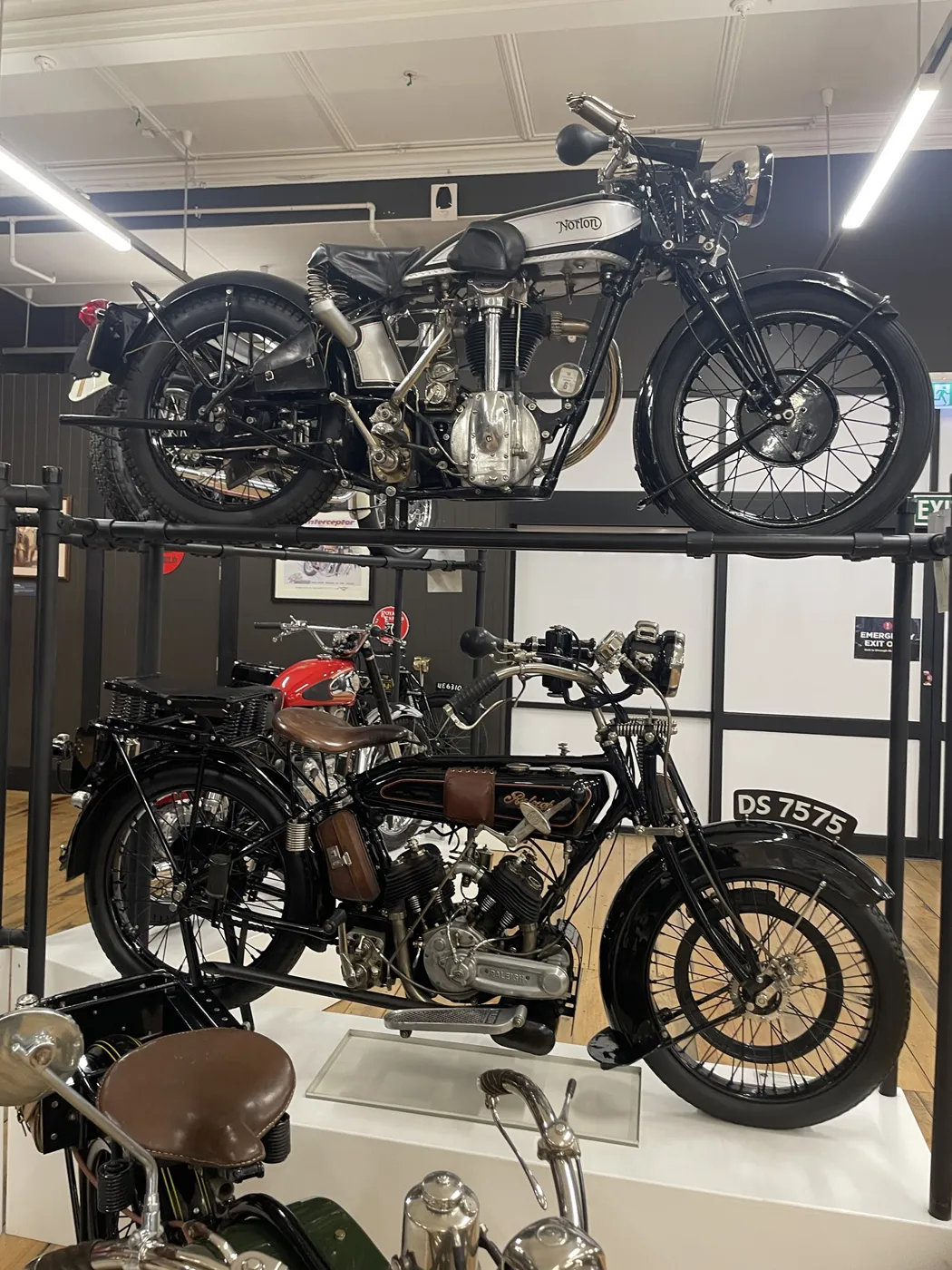
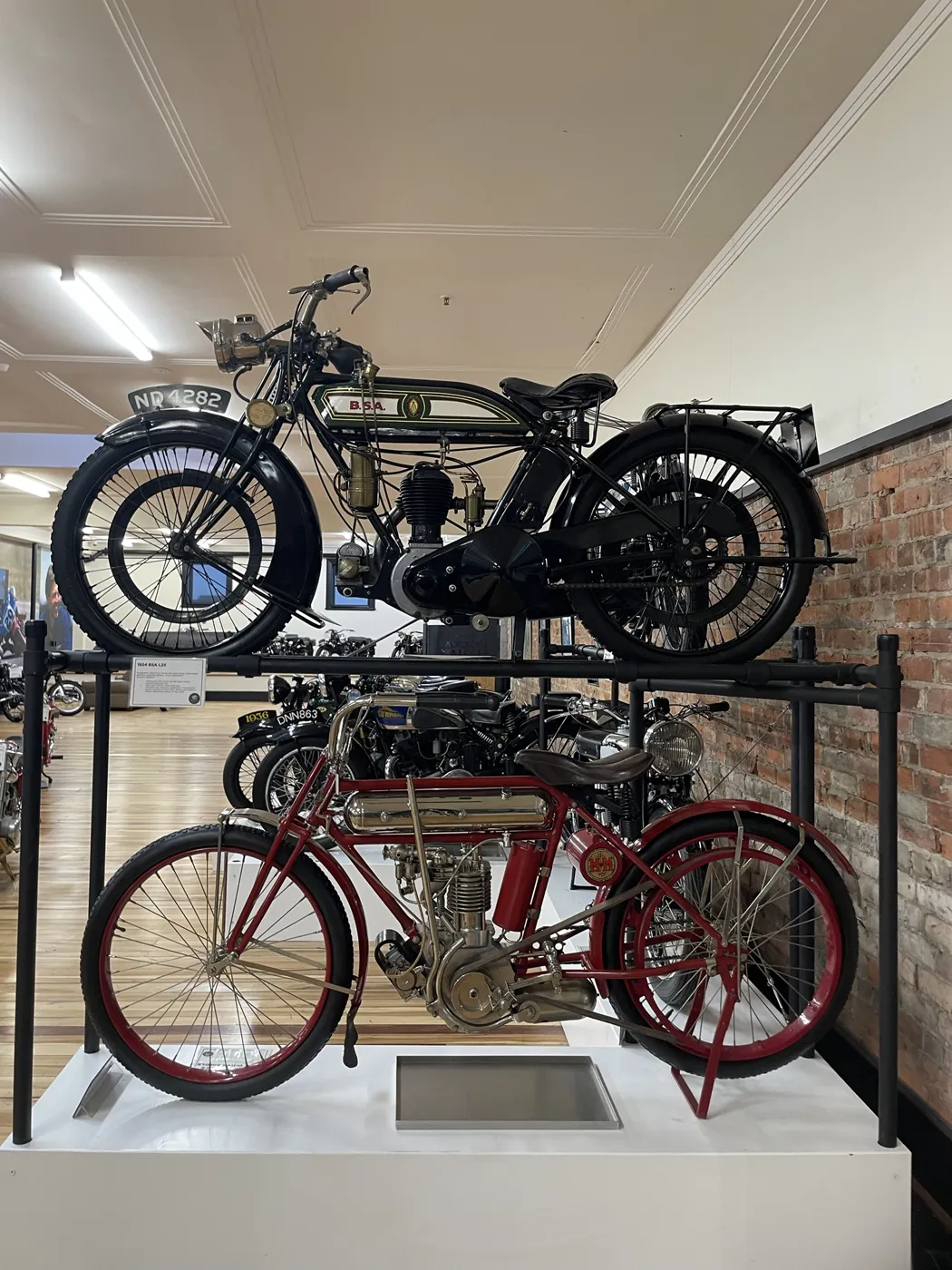
The rest of the British rooms fill in the story: Norton, Raleigh, BSA and many others, most with one cylinder, a chain to the back wheel and a hand or foot gear change. Compare them with the overhead-camshaft Velocette and you can see how much simpler the valve gear of most engines of the period was. The top end chapter and checking a cam chain follow the modern version.
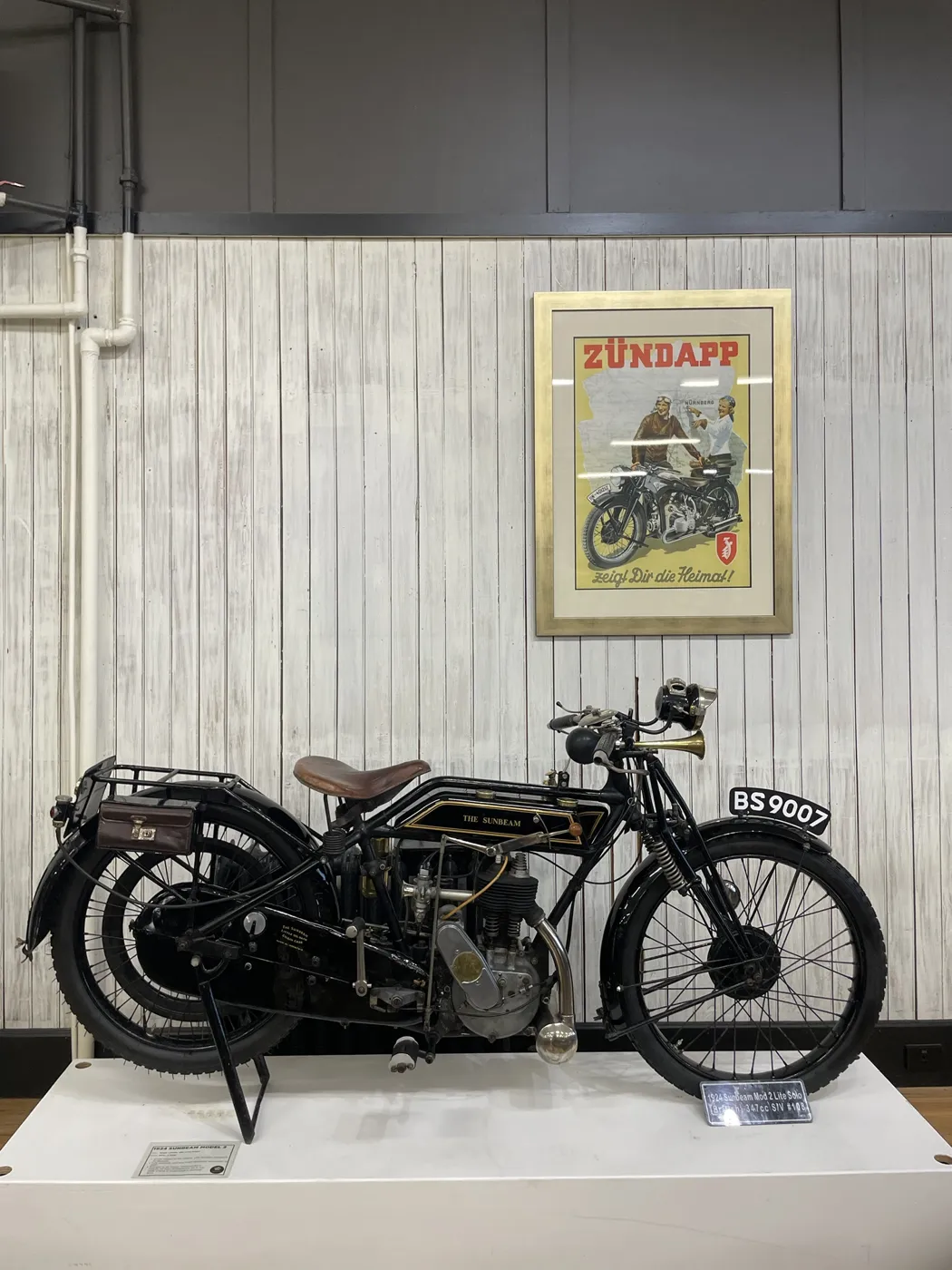
The 1924 Sunbeam Model 2 was known as one of the best-made British motorcycles of its day, and it shows why in one detail: the chain runs inside a sealed case filled with oil, the "Little Oil Bath" written on the side. An enclosed, oiled chain lasts many times longer than an open one, which is still true. Modern step-throughs and scooters often use the same idea. Motorcycle chain maintenance and adjusting chain slack cover the open chain that most bikes have now.
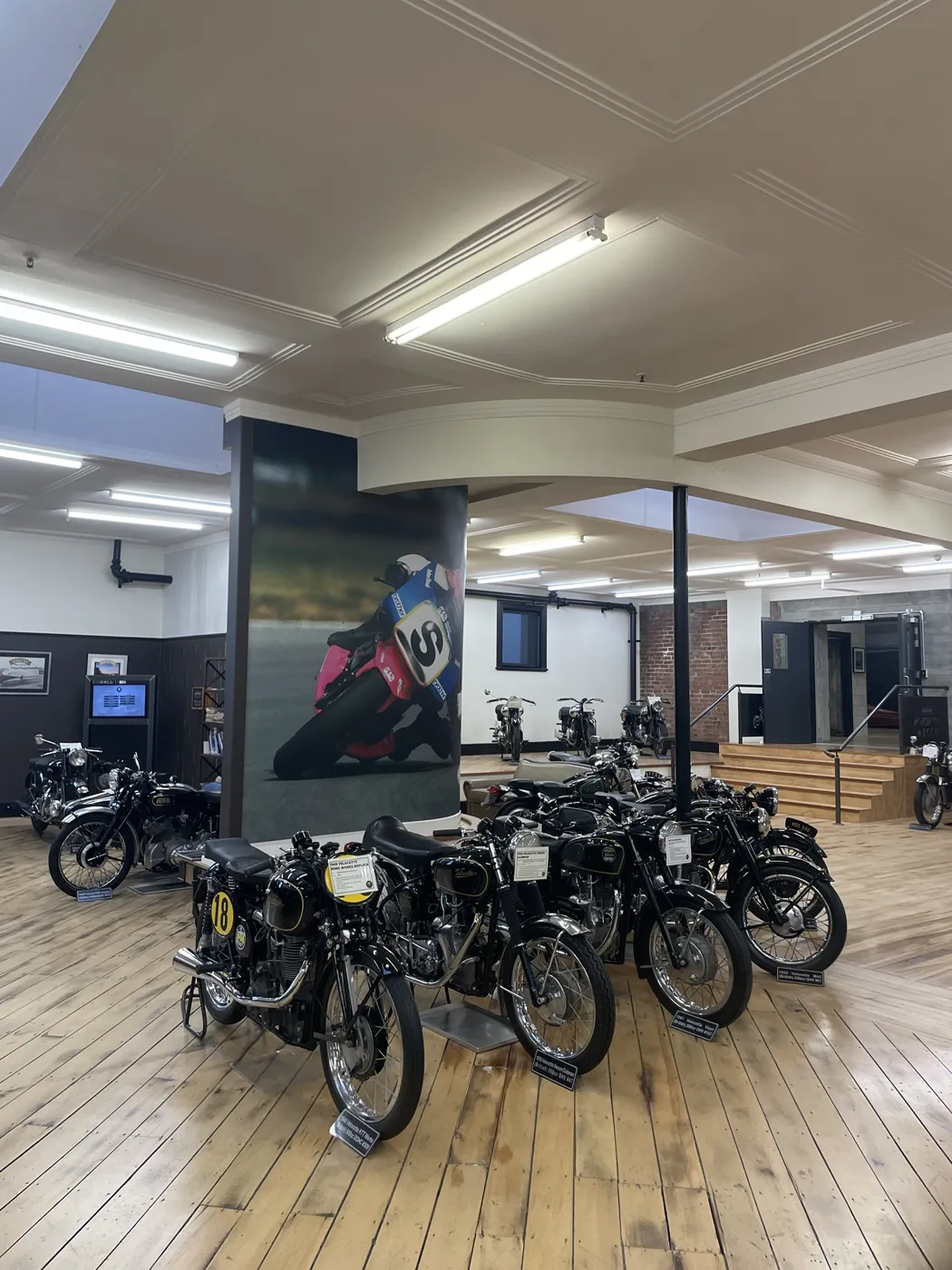
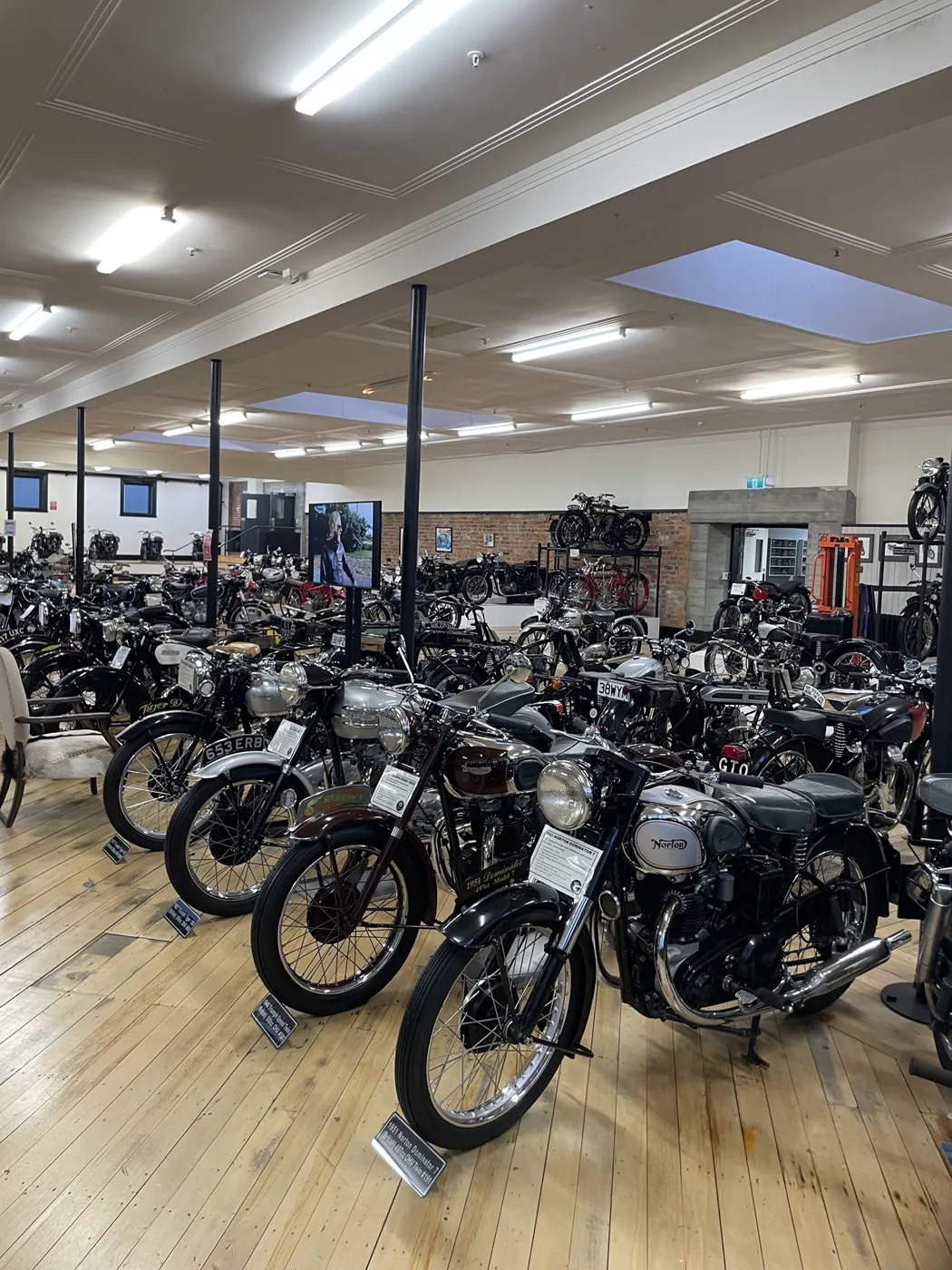
After the war the big single gave way to the parallel twin: two cylinders side by side, sharing one crankshaft. The 1951 Norton Dominator 7 at the head of this row is a 497 cc twin with overhead valves, and the Triumph twins behind it are the same layout. A twin of the same capacity is smoother and revs more freely than a single. It is the layout of the Laverda further on, and of many mid-size road bikes today.
The family car with one wheel at the side
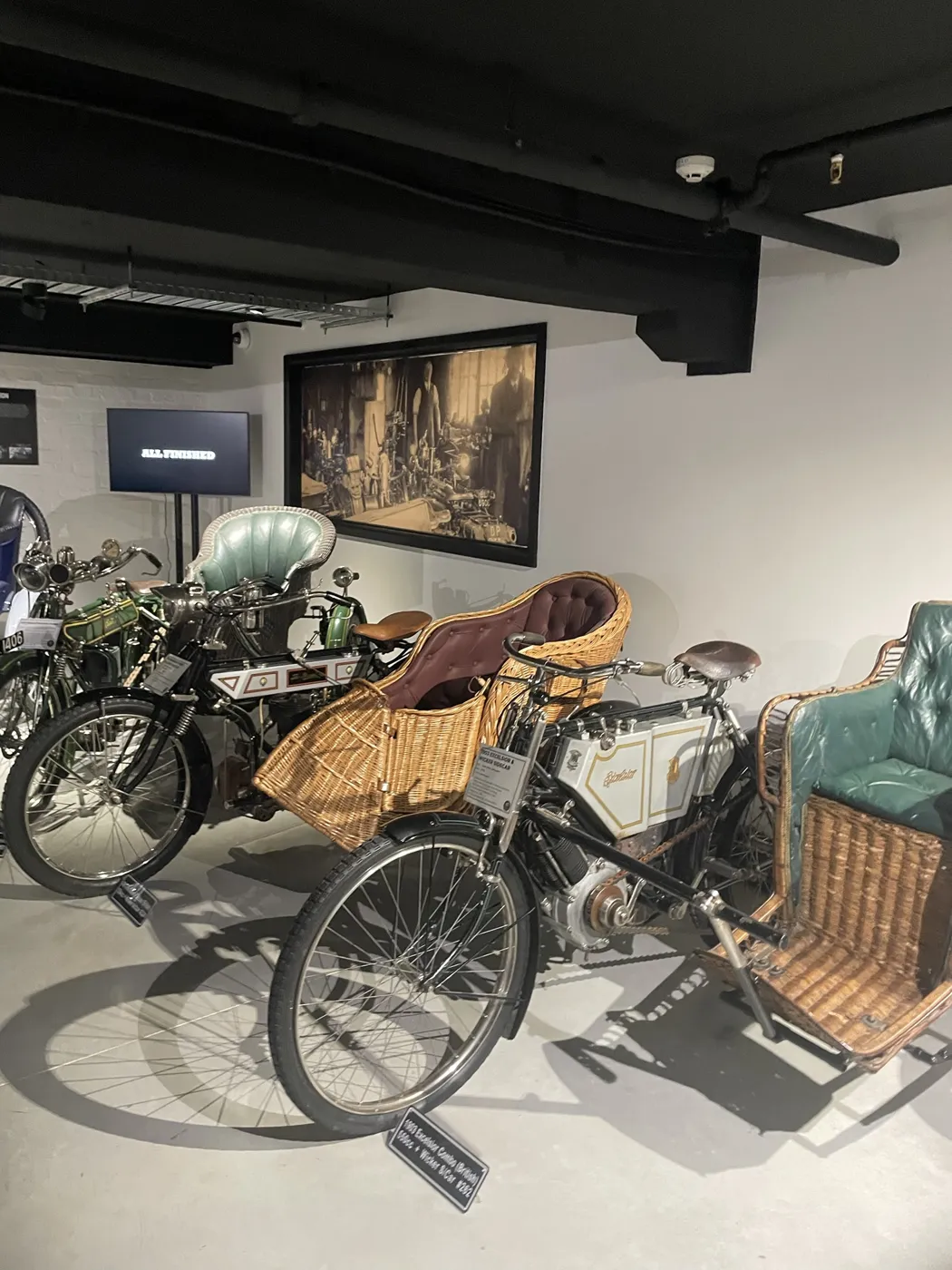
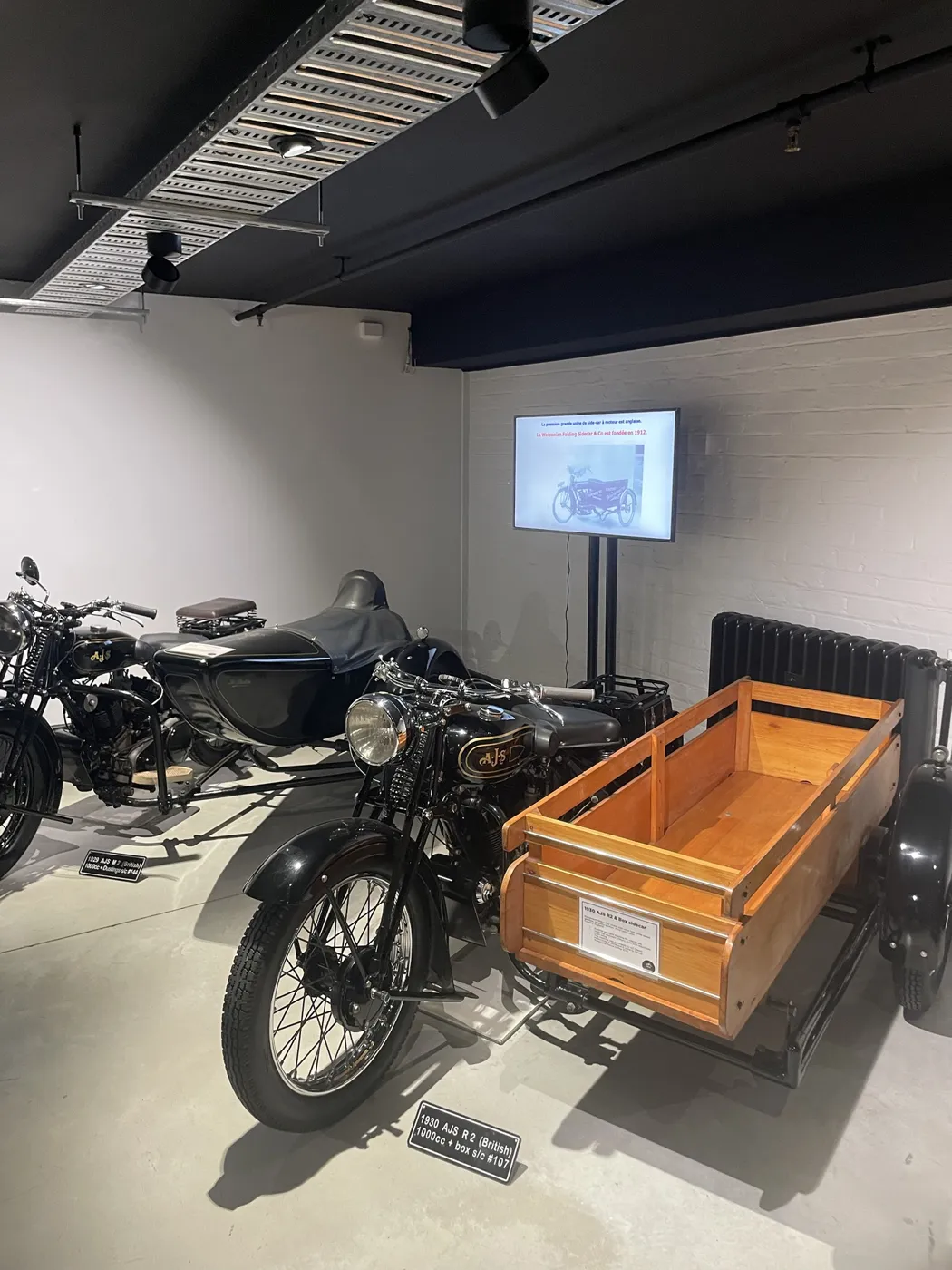
Before cheap cars, the sidecar outfit was how a family travelled and how a tradesman carried his tools. The 1903 Excelsior and its neighbours carry wicker chairs with buttoned leather seats. By 1930 the AJS V-twins had become workhorses: one carries a passenger body, the other a plain wooden box for goods.
A sidecar changes how a motorcycle steers. The outfit cannot lean, so it is steered like a car, and the sidecar wheel pulls the machine to one side under power and the other under braking. The frame and steering chapter explains trail and steering geometry, the ideas a sidecar fitter adjusts when setting up an outfit.
The big hall
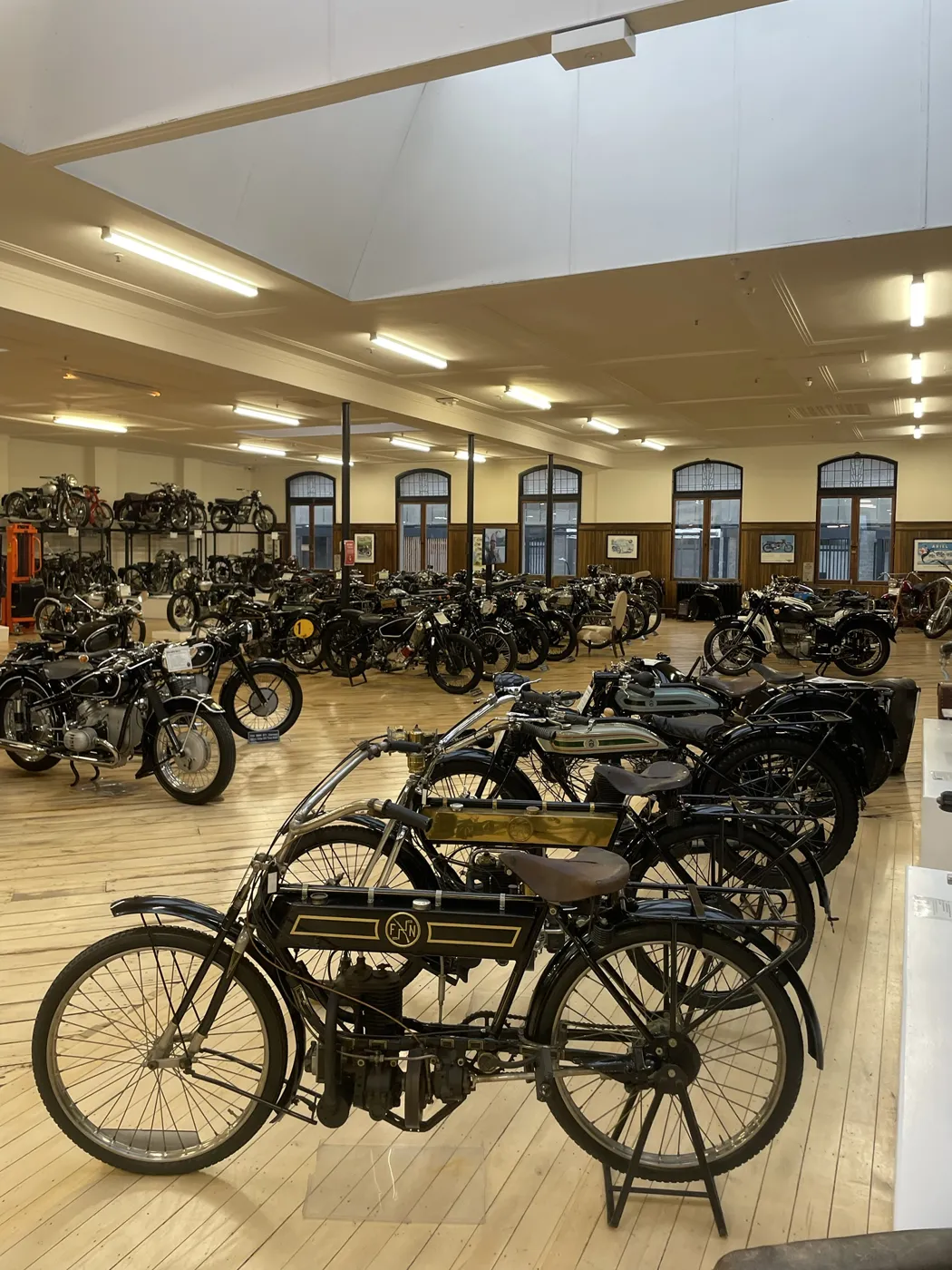
In the main hall the bikes stand in rows across a wooden floor under a skylight. At the front is an FN from Belgium, a maker better known for firearms that also built some of the most advanced early motorcycles, including shaft-driven fours. To the left stand BMW flat twins, with their cylinders sticking out into the cooling air on each side and a shaft instead of a chain to the rear wheel. Chain, belt and shaft drive are compared in the final drive chapter, and Motorcycle chain maintenance covers the one most riders live with.
The American heavyweight
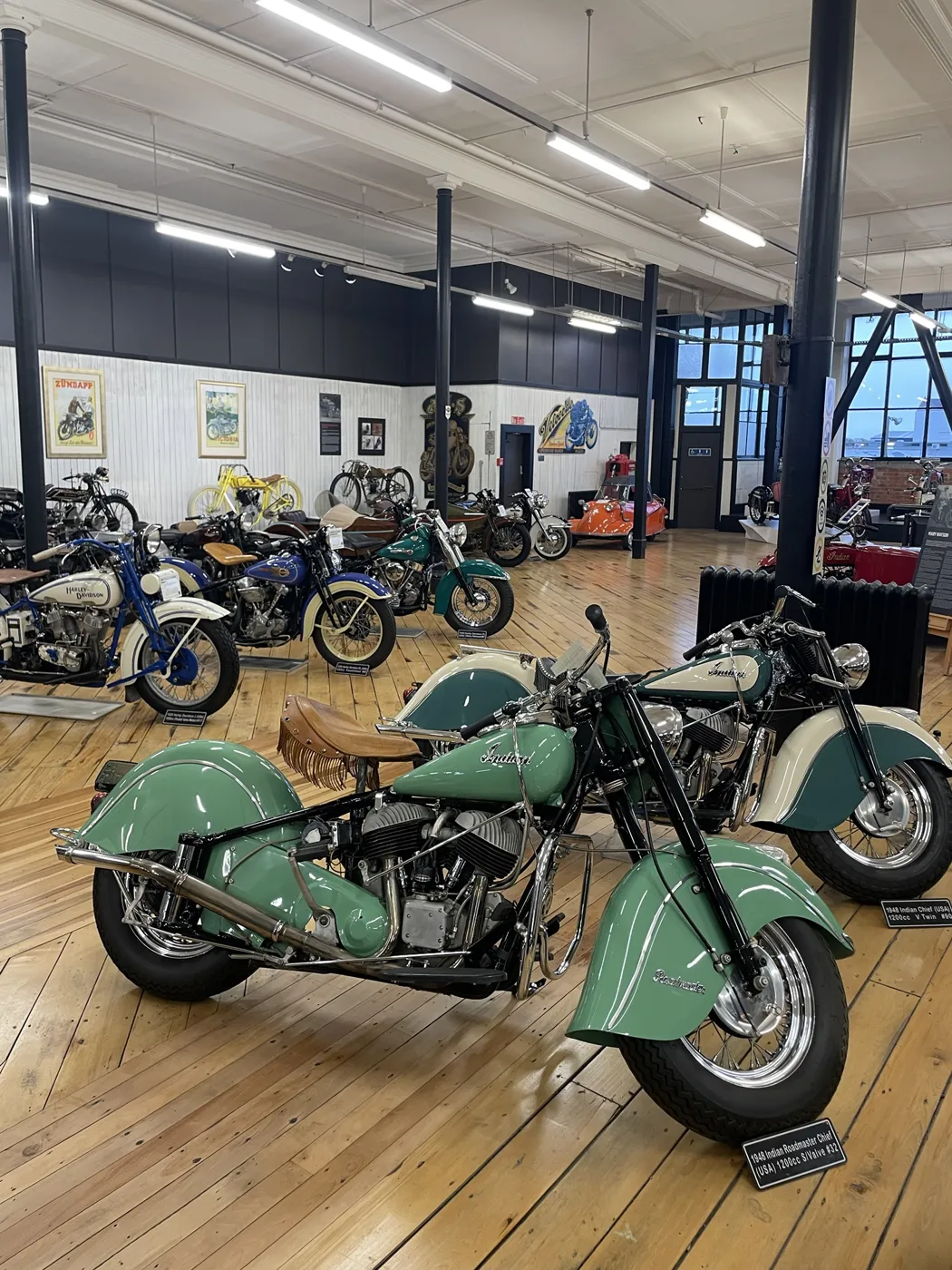
By 1948 the American V-twin had grown into the heavyweight cruiser. The Indian Roadmaster Chief has a 1,200 cc side-valve engine, with both valves beside the cylinder and no valve gear in the head at all, deep skirted mudguards and a sprung saddle. Side valves are simple, quiet and easy to maintain, but they cannot breathe as well as overhead valves, which is why the Chief makes its power slowly. The types of motorcycle article traces the cruiser from here to today.
Italian orange and red
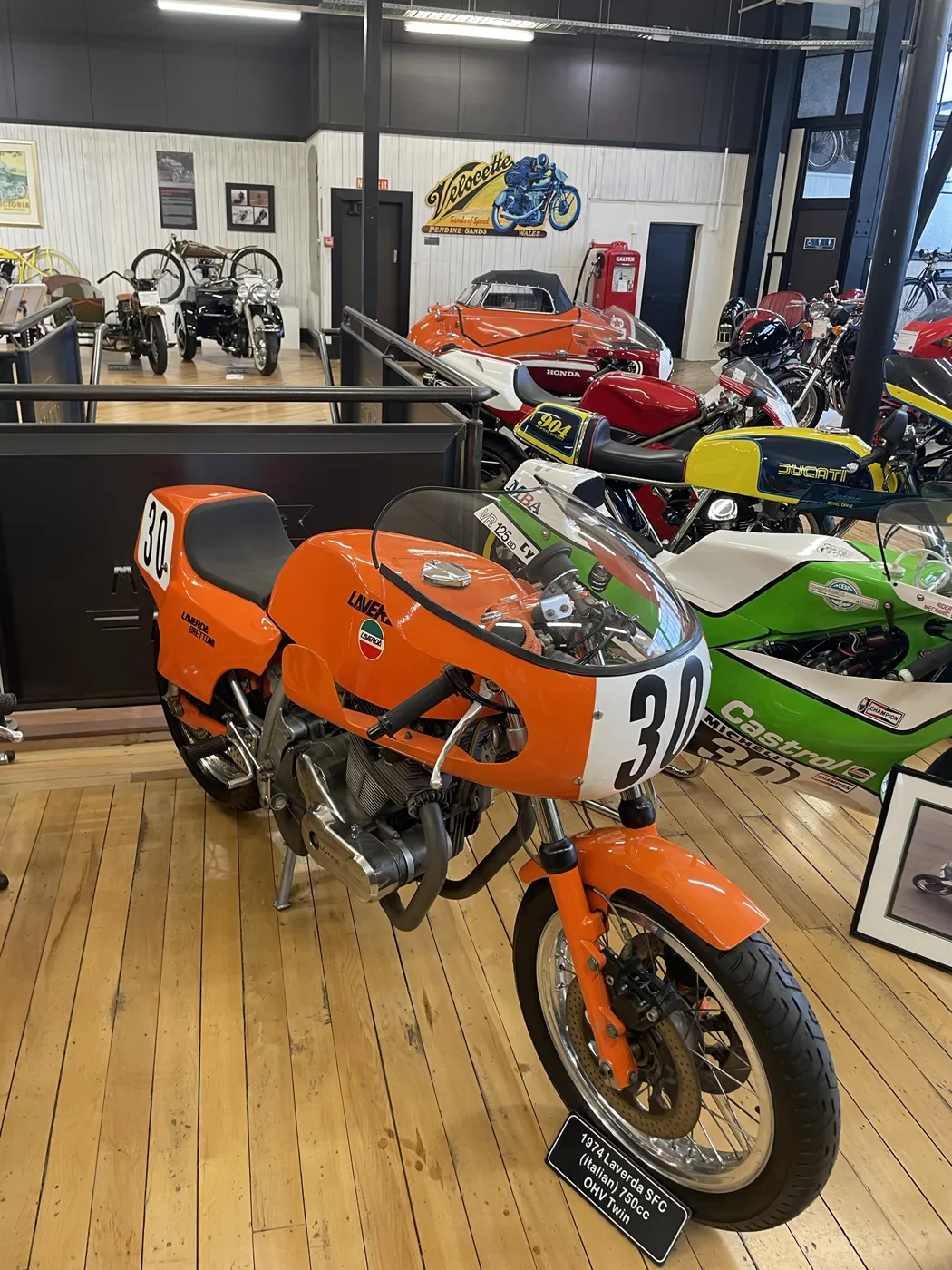
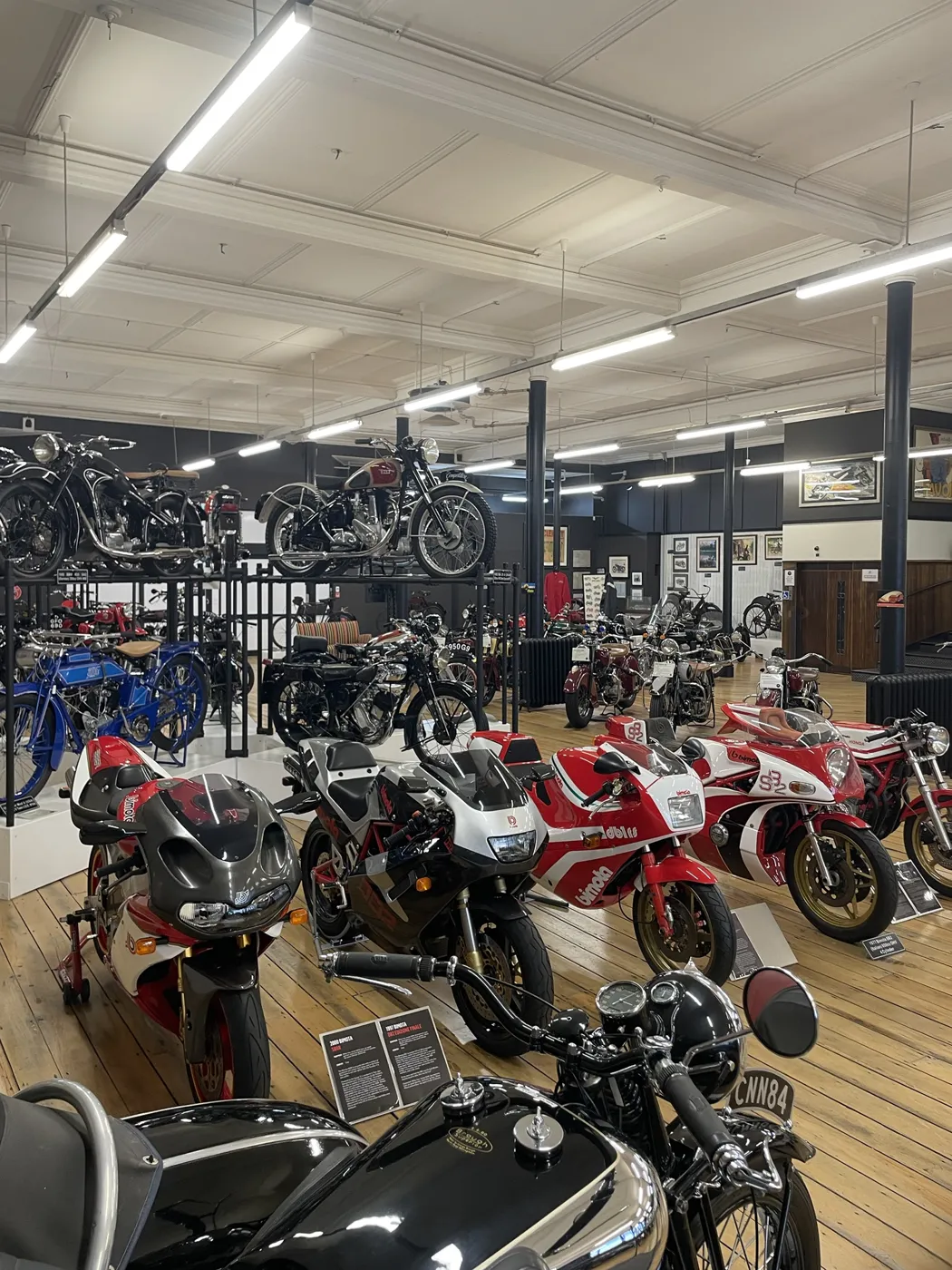
The modern rooms are louder in colour. The orange 1974 Laverda SFC was built in Breganze for endurance racing, and the letters stand for Super Freni Competizione, "super brakes, competition". It is a 750 cc parallel twin with its cylinders side by side across the frame, the layout most mid-size road bikes still use.
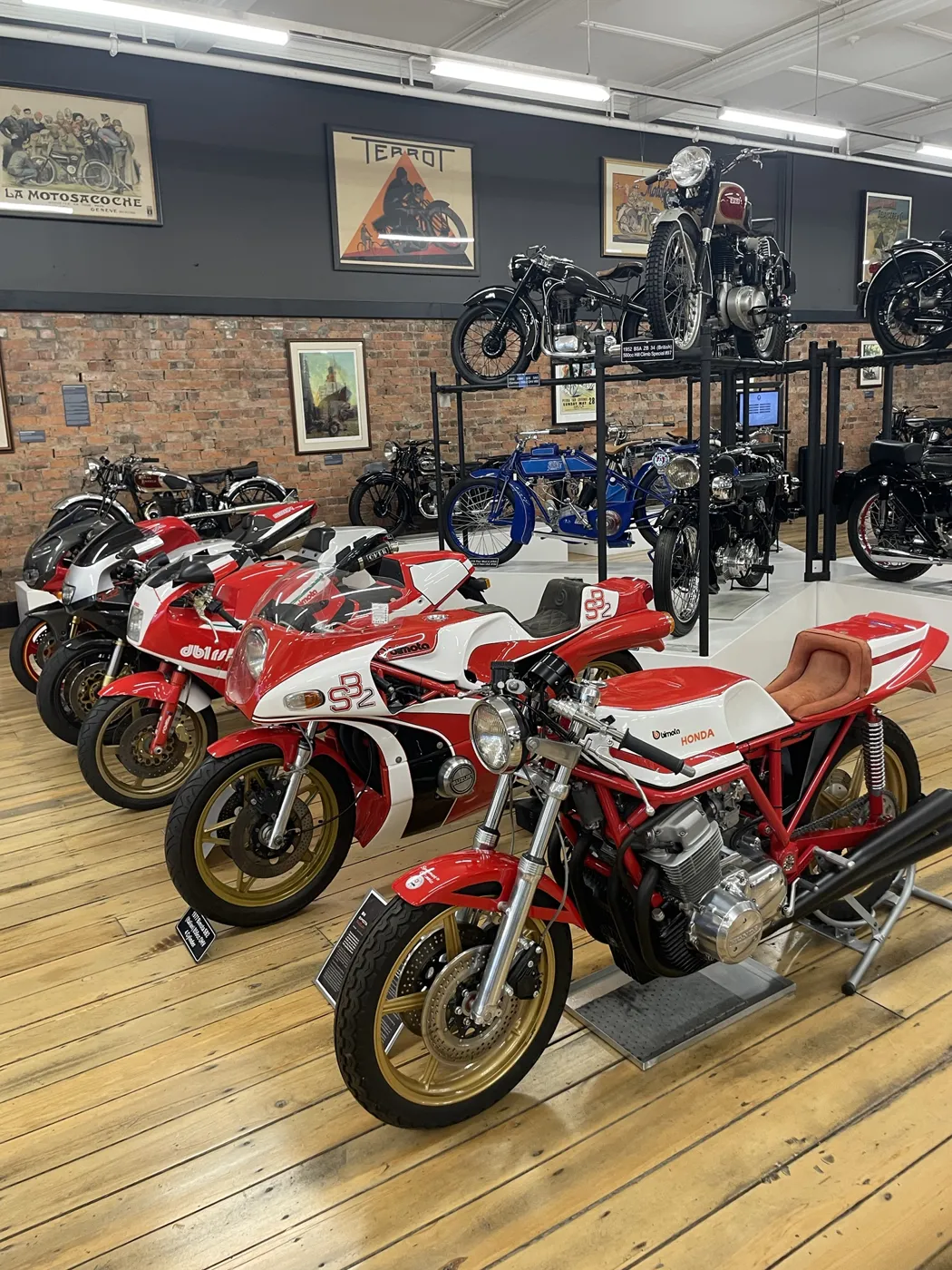
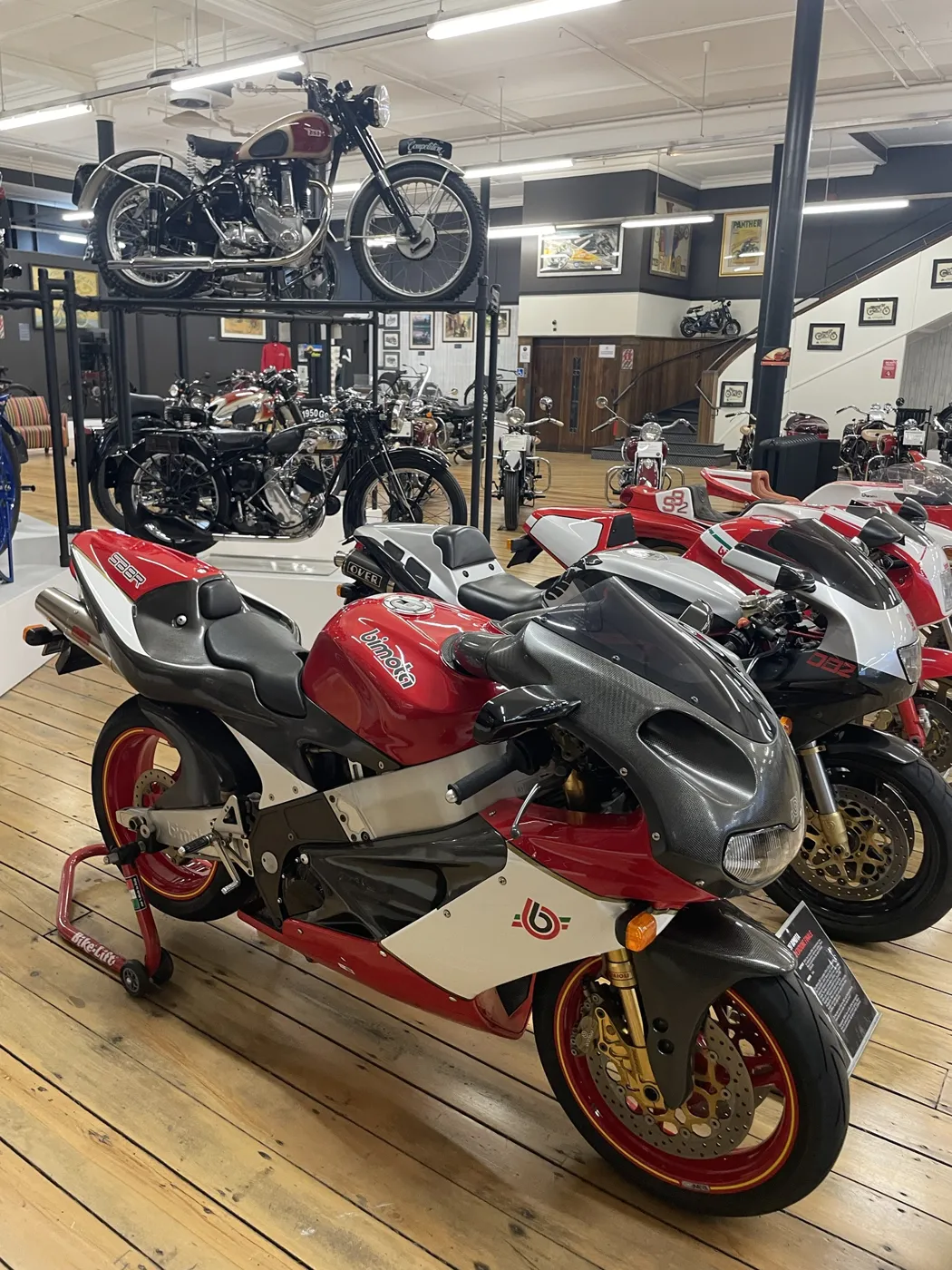
Next to it stands a whole row of Bimotas. Bimota, from Rimini, did not build engines. It took the engines of other makers, a Suzuki four in the 1977 SB2, Ducati twins in the DB models, a Suzuki V-twin in the 2000 SB8R, and built far stiffer, lighter frames and suspension around them. They are the best lesson in the collection that a motorcycle is a system: the same engine handles completely differently in a different chassis. The suspension chapter and the Bike builder, where you can swap parts between bikes and watch the numbers change, explore that idea.
Six cylinders, and a police four
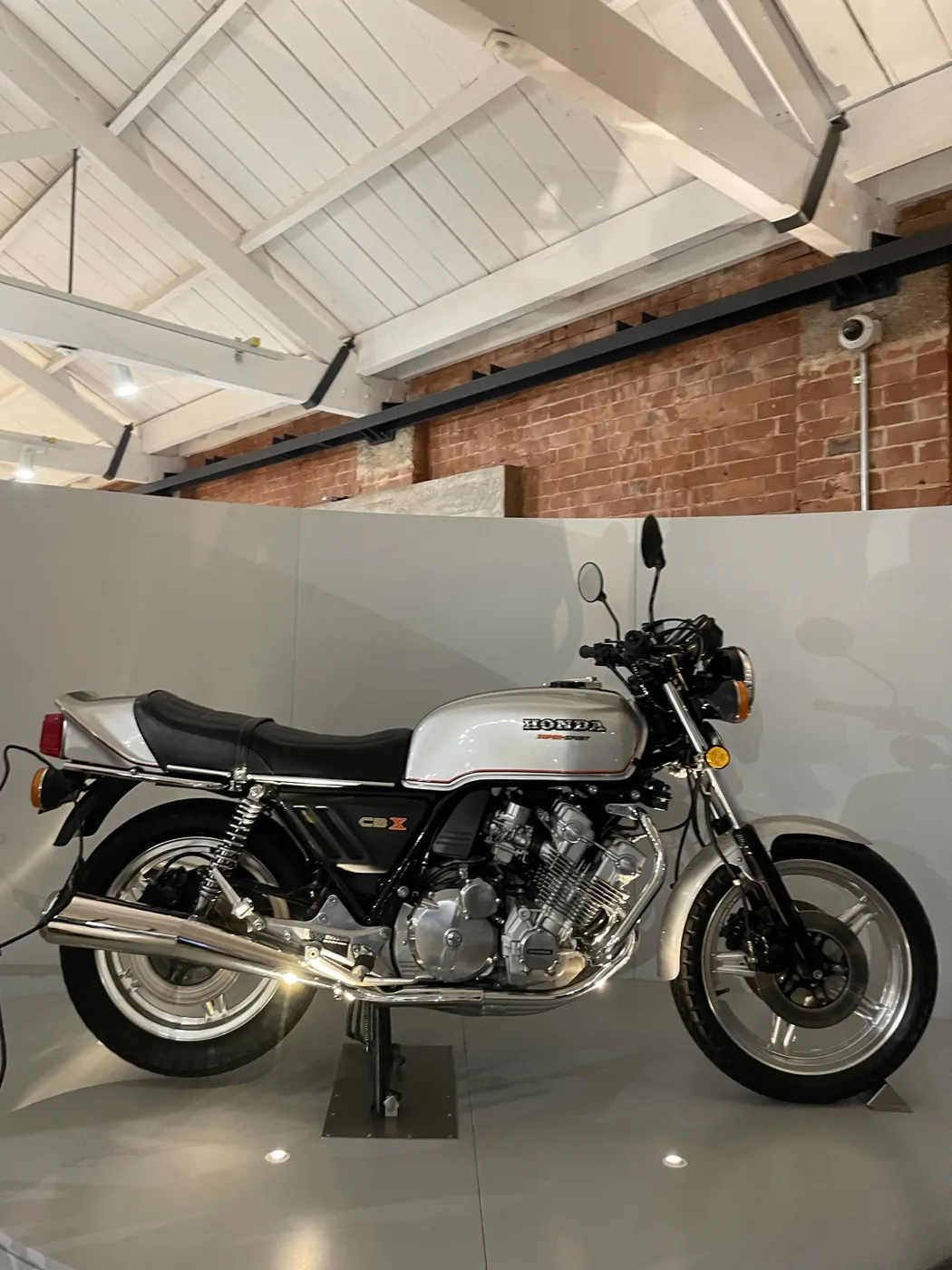
The Japanese makers took the Henderson's idea of many cylinders and turned the engine sideways, so that a four or even a six sits across the frame instead of along it. The silver Honda CBX of 1978 is the extreme: six cylinders in a row, two overhead camshafts and four valves per cylinder, 24 in all, in an engine about as wide as the rider's knees. More, smaller cylinders let an engine rev higher and make more power from the same capacity, at the cost of complexity. The engine fundamentals chapter shows why.
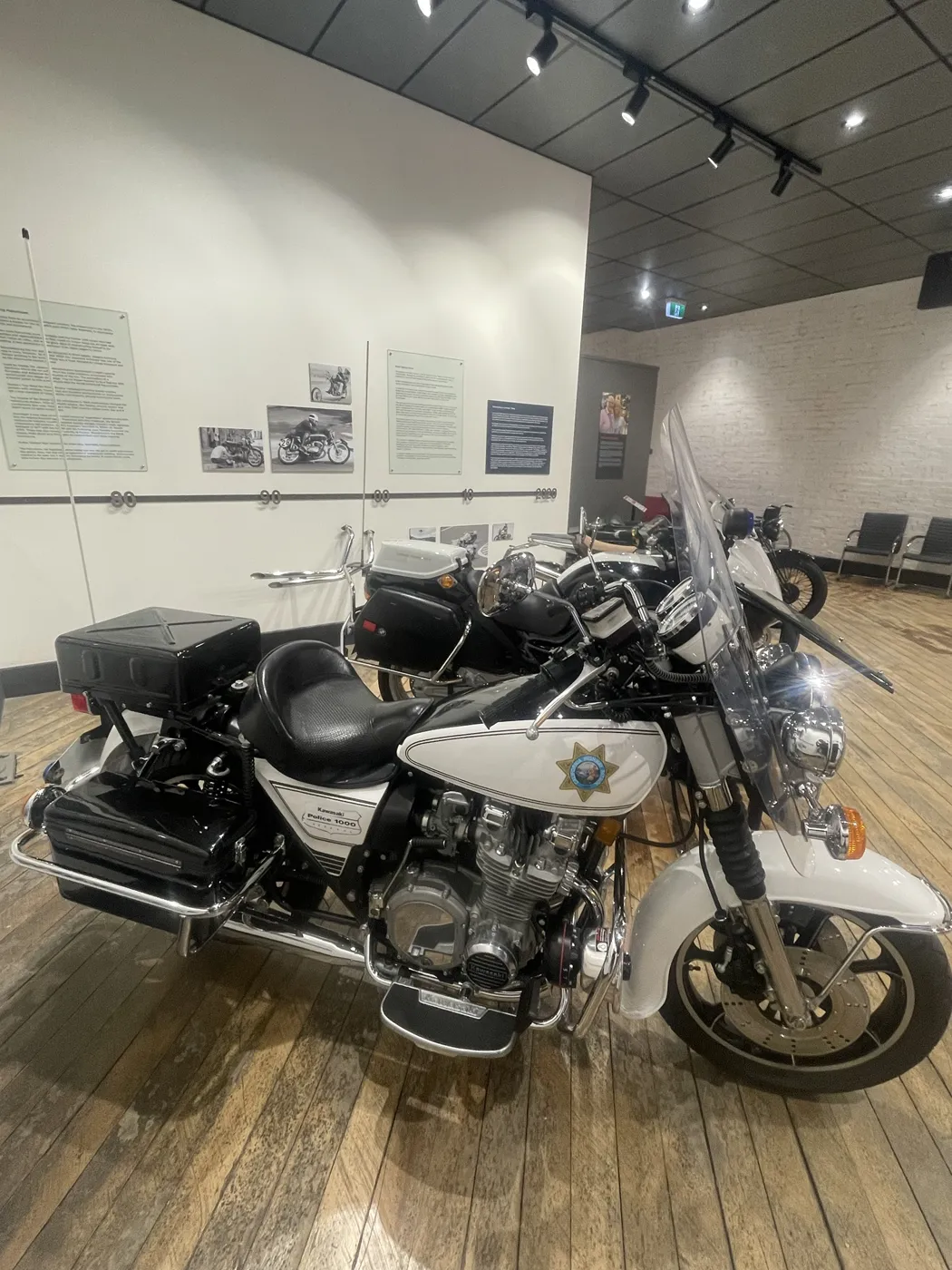
The white Kawasaki Police 1000 is the same inline-four idea in working clothes, with a screen, panniers and a radio box, in the livery of the California Highway Patrol made famous on television. Fleet bikes like this are why the course spends so much time on routine maintenance: a bike that works every day needs a schedule, not just a repair.
Spikes and no brakes
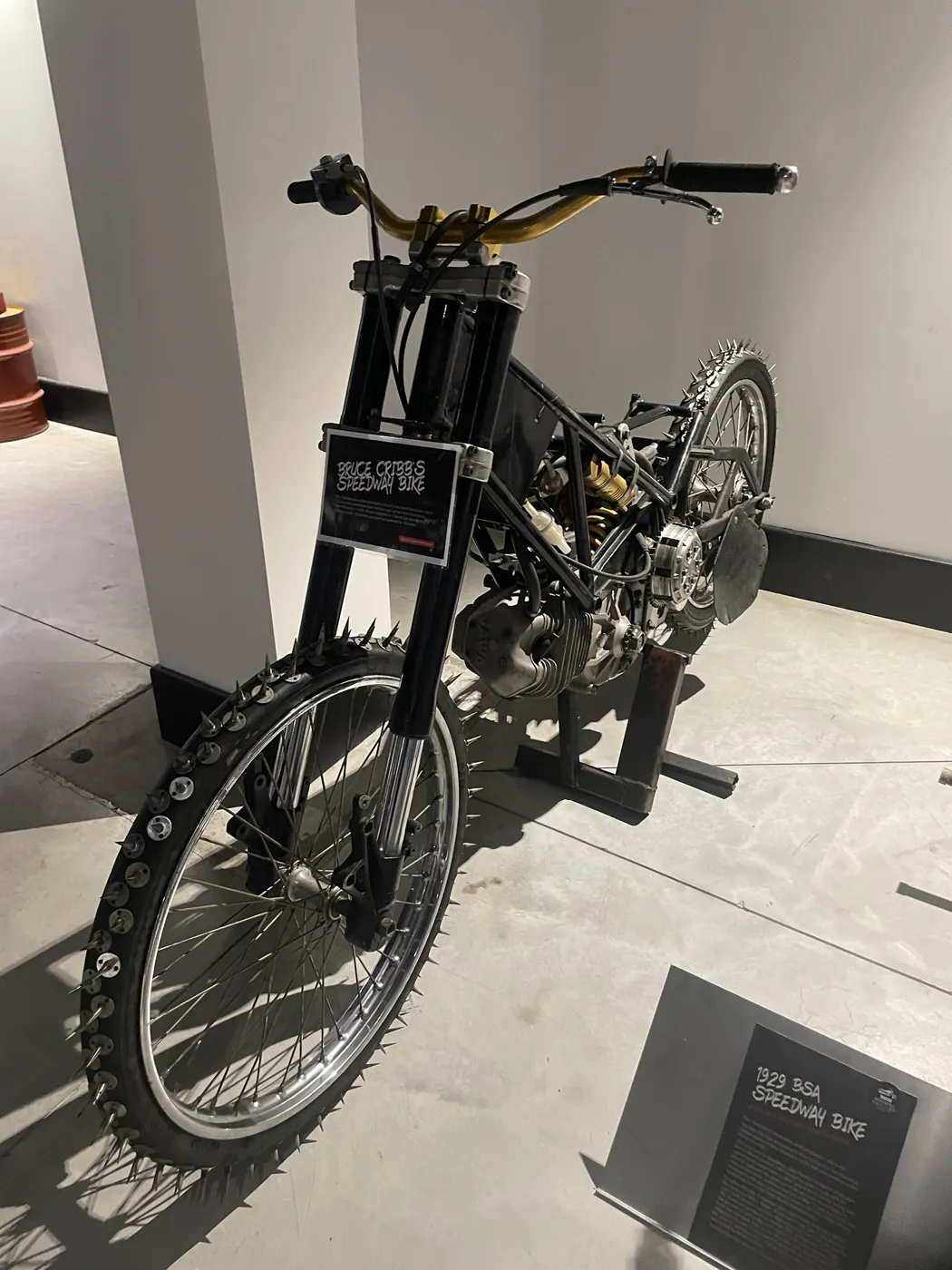
In a darker room is the most purposeful machine in the building: the speedway bike of New Zealand rider Bruce Cribb, with a Jawa engine and tyres bristling with steel spikes of the kind used for ice racing. A speedway bike has one gear, no brakes and a very short wheelbase. It is steered as much with the throttle and the rider's weight as with the bars, and everything that does not make it faster has been removed. Compare it with the types of motorcycle and it is clear how far a single purpose can reshape the same basic parts.
Scooters
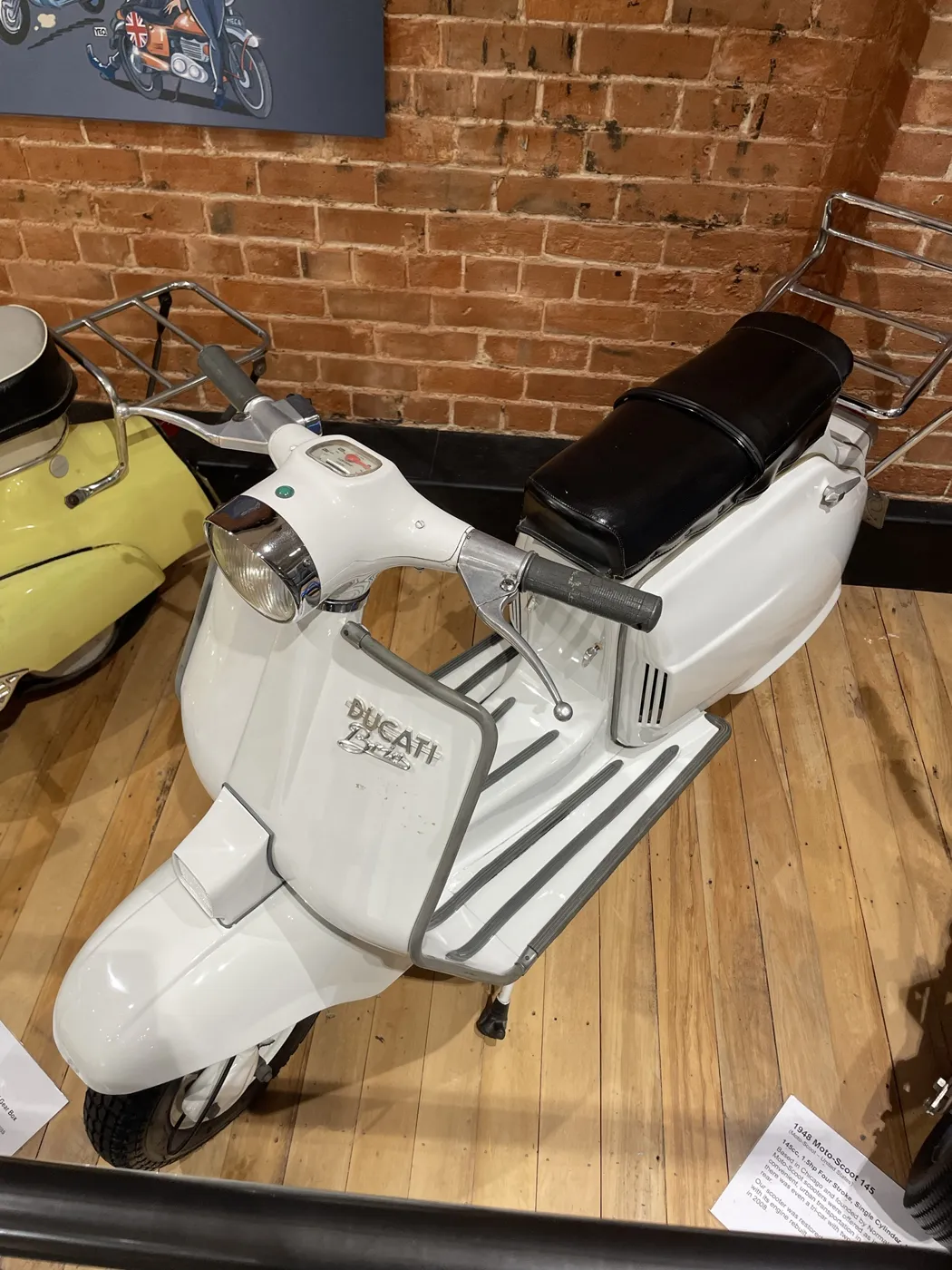
In the scooter corner a white Ducati Brio shows the other way to build a two-wheeler: a flat floor, a leg shield, small wheels and the engine hidden under the bodywork beside the rear wheel. Scooters were built for riders in ordinary clothes on city streets, and the layout has hardly changed. Most modern scooters add an automatic belt drive, the CVT, explained in the final drive chapter and the types of motorcycle article.
A New Zealand electric
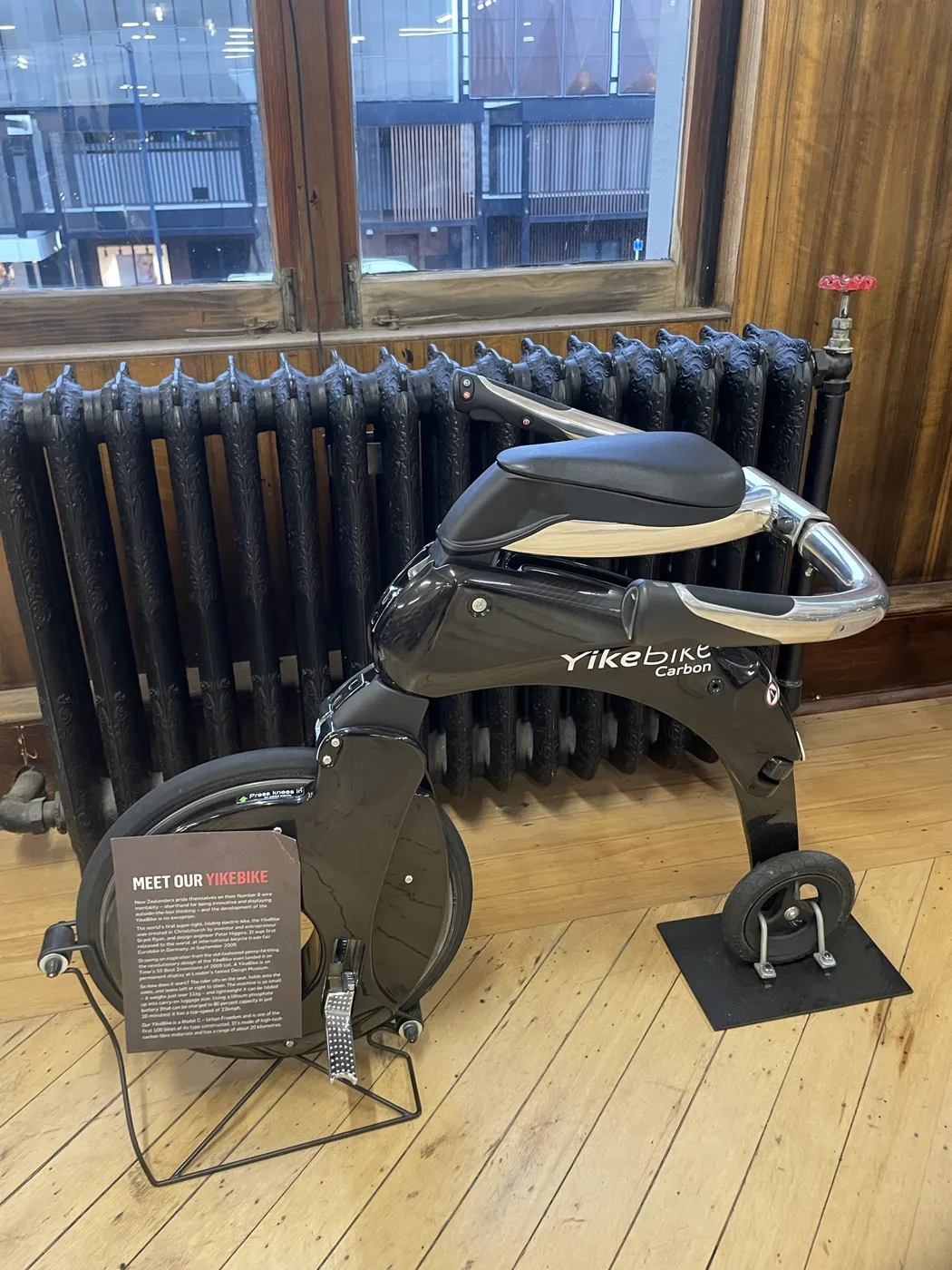
Not every machine in the collection burns petrol. The YikeBike, designed in Christchurch and launched at the Eurobike trade fair in 2009, is a folding electric vehicle that weighs about 11 kg. It turns the penny-farthing around: a large front wheel driven by a hub motor, a tiny rear wheel, and handlebars beside the rider's hips. Its museum label gives a lithium iron phosphate battery that charges to 80 % in about 20 minutes, a top speed of 23 km/h and a range of about 20 km. Small as it is, it has the same three main parts as any electric motorcycle: battery, controller and motor. How electric motorcycles work and module 6 explain each one.
Made in the USA, perfected in Southland
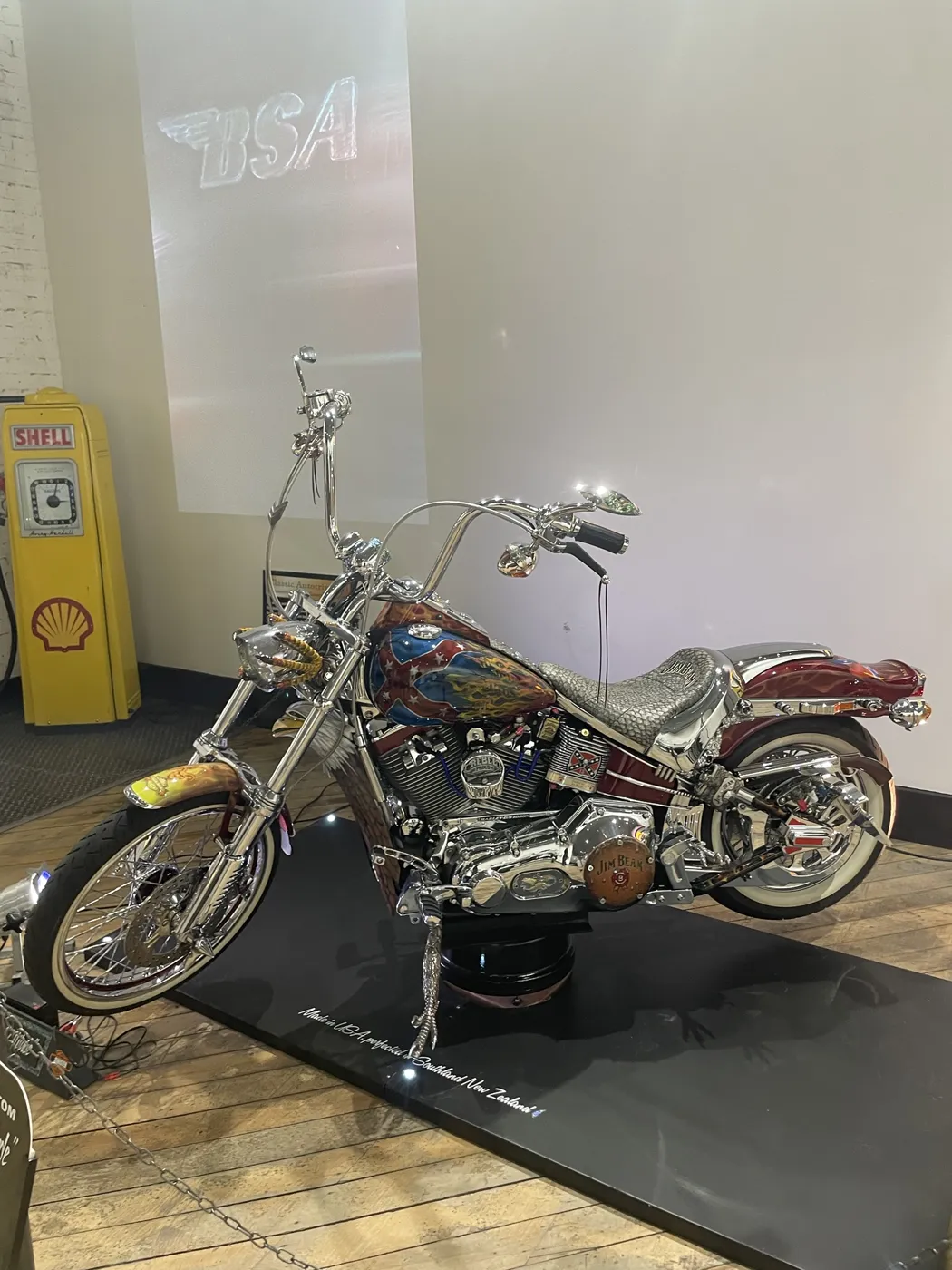
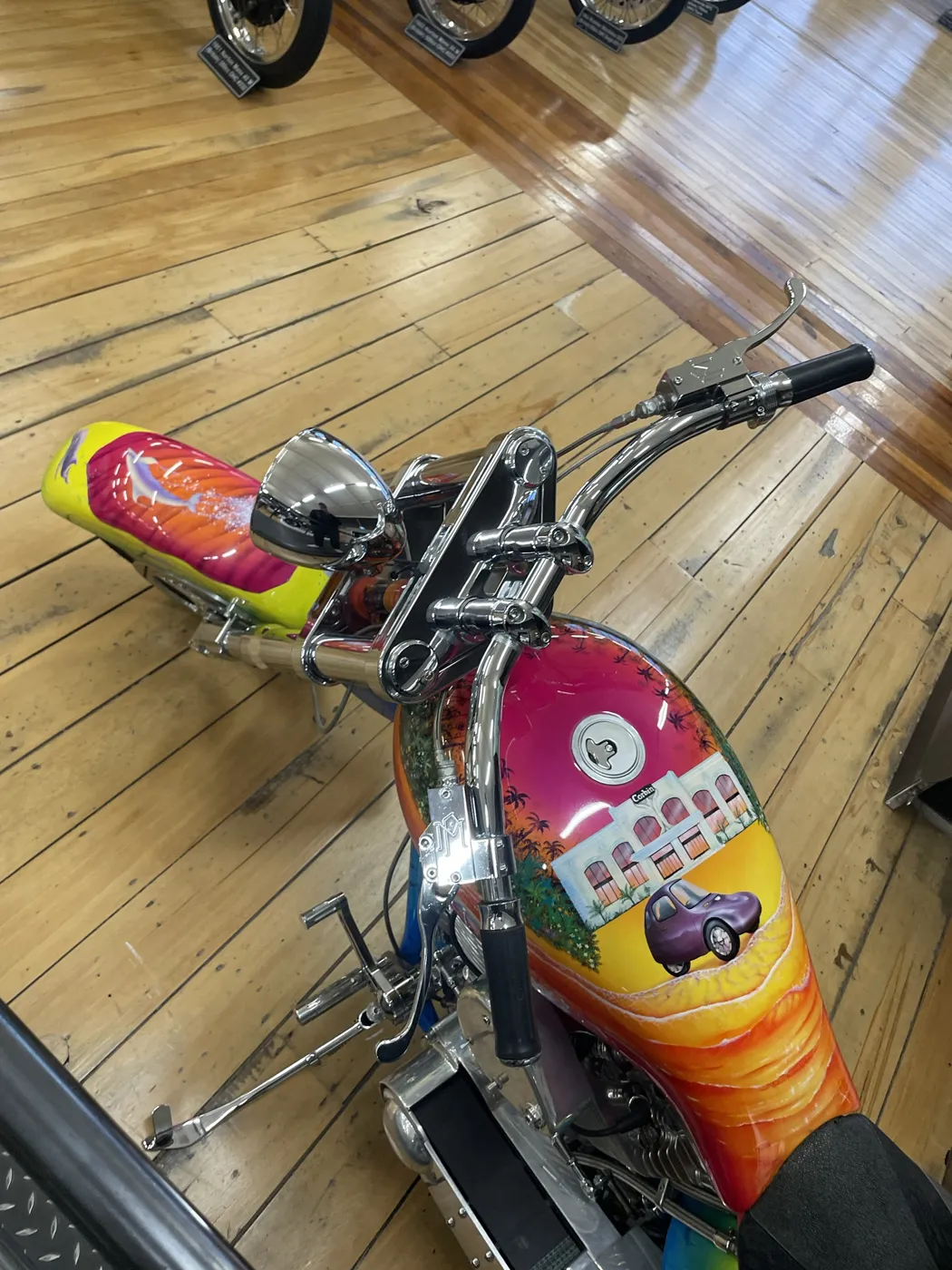
The last bike on the tour is a local one. A Harley-Davidson V-twin, the direct descendant of the grey 11F, has been rebuilt in Southland with tall chrome handlebars, airbrushed paint, whitewall tyres and polished covers. The plinth puts it simply: made in the USA, perfected in Southland, New Zealand. Under all the chrome the engine is still two cylinders in a V on one crankshaft, a century after the bikes by the windows.
What a museum teaches a mechanic
Walking from the Motosacoche to the CBX is a lesson in how few ideas a motorcycle is really built from. Every machine in the building has a frame, two wheels, an engine that turns fuel into rotation, a way to get that rotation to the back wheel, a spark, and a way to stop. What changes is how each problem is solved: belt, chain or shaft; one cylinder or six; magneto or battery and coil; a bicycle fork or modern suspension. Learn the idea once and you can work on any of them.
The World's Fastest Indian
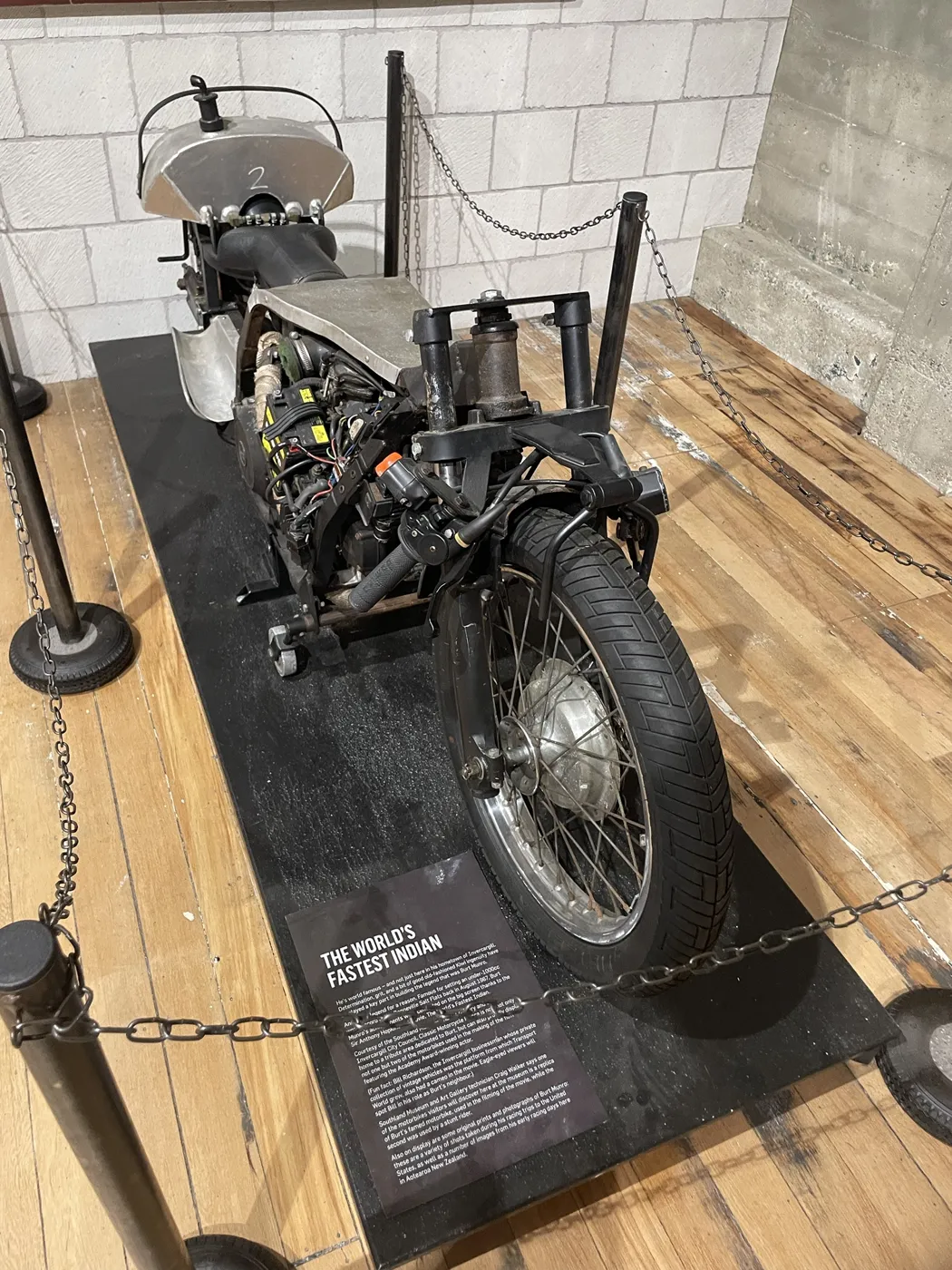
No visit to Invercargill is complete without Burt Munro, the local mechanic who rebuilt a 1920 Indian Scout in his shed and set an under-1,000 cc speed record on the Bonneville Salt Flats in 1967, at the age of 68. His story became the film The World's Fastest Indian. The museum shows motorcycles made for that film, and Burt's original machine is kept elsewhere in the town. He made many of his own parts, including pistons he cast himself, which is the best reminder in the building that a determined mechanic with simple tools can still teach the factories something.
Go deeper
- The history of the motorcycle, from the first engines to electric bikes
- Motorcycle types, from cruisers and customs to speedway and sports bikes
- Course chapter 1.1: history and the motorcycle as a system
- Under the Engine: every gear and valve moving, in 3D
- Two-stroke versus four-stroke engines
Frequently asked questions
Where is Classic Motorcycle Mecca?
In the centre of Invercargill, in Southland at the south of New Zealand's South Island. Check the museum's own website for opening hours and prices before you travel.
What is an inlet-over-exhaust (F-head) engine?
An engine with the exhaust valve in the side of the cylinder and the inlet valve above it in the head. It was common on American V-twins and fours before about 1930, when both valves moved into the head.
Why does the Henderson have such a long frame?
Its four cylinders sit in a line along the frame, front to back, so the engine is long. Later four-cylinder engines were turned sideways to make the motorcycle shorter.
What is a magneto?
A generator that makes its own high-voltage spark as the engine turns, so the ignition needs no battery. It was the standard ignition on early motorcycles and is still used on some small engines.
Why do speedway bikes have no brakes?
Speedway races are short, on a loose oval track, and riders slow down by sliding the bike and closing the throttle. Removing the brakes saves weight, and the rules do not allow them.
Written by Transitions Lab for the Motopedia open motorcycle course. Text and illustrations are licensed CC BY-SA 4.0. Figures and values come from the course modules; see sources and credits.