
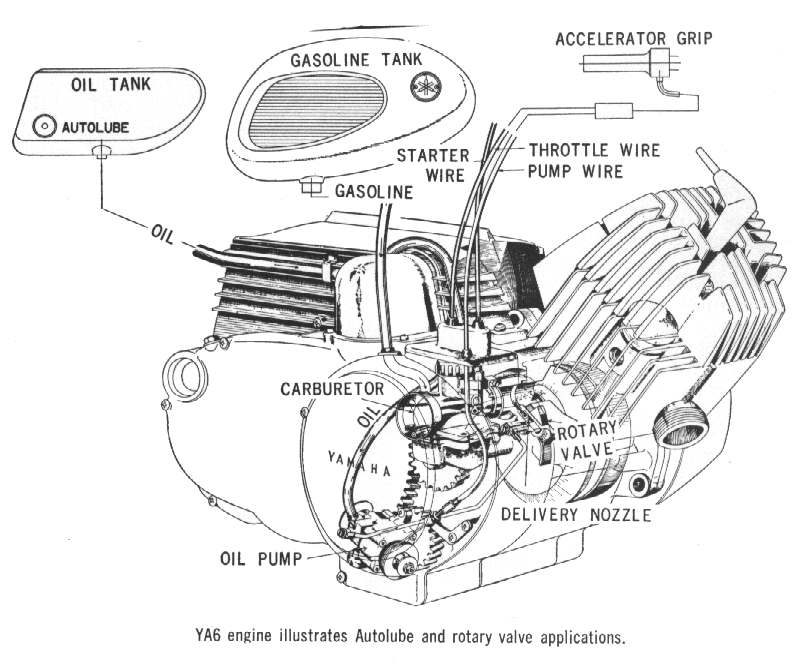
Some two-stroke engines are lubricated by oil mixed into the petrol. The mix is written as parts of petrol to one part of oil, for example 20 to 1.
Safety
- Petrol is flammable. Mix outdoors, away from flames, in a can made for fuel.
Choosing the ratio
- Use the oil and ratio the engine maker states. A maker's oil in the maker's engine at the maker's ratio is the safe choice.
- If you use a different brand of oil, or the ratio is unknown, a richer mix such as 20 to 1 is the safer side. Oils differ in thickness and additives, and the maker's ratio was set for their own oil.
- A richer mix can foul the spark plug and block the spark arrester or silencer with oily carbon. A mix that is too lean risks a seized piston.
- The carburettor jets are fixed. Oil is not petrol, so changing the ratio changes the air and fuel mixture slightly. A big change in ratio may need a jet change.
- A worn engine burns oil badly, and a worn crankshaft seal lets gearbox oil in. Both foul plugs. Check the seals before blaming the ratio.
How to work out the oil
Oil per litre of petrol, in millilitres, is 1000 divided by the ratio. For example:
| Ratio | Oil per litre of petrol |
|---|---|
| 20 to 1 | 50 ml |
| 25 to 1 | 40 ml |
| 40 to 1 | 25 ml |
| 50 to 1 | 20 ml |
A measuring cup with ratio marks makes this easy.
Reading a pre-mix chart
- A chart has the ratio down one side and the amount of petrol across the top. Find your ratio row, follow it to the column for your amount of petrol, and read the oil.
- Some charts give a percentage instead of a ratio. Percent is 100 divided by the ratio: 2 % is 50 to 1, 4 % is 25 to 1, 5 % is 20 to 1.
- Check the units. Charts from the United States use ounces and US gallons; metric charts use millilitres and litres. Do not mix them.
Steps
- Pour the right amount of oil into a clean fuel can.
- Add the petrol and shake the can to mix.
- Fill the tank with the mix. Do not store a mix for months.
Check your work
- The ratio on the can matches the manual.
- The plug is clean tan or brown after a ride.