
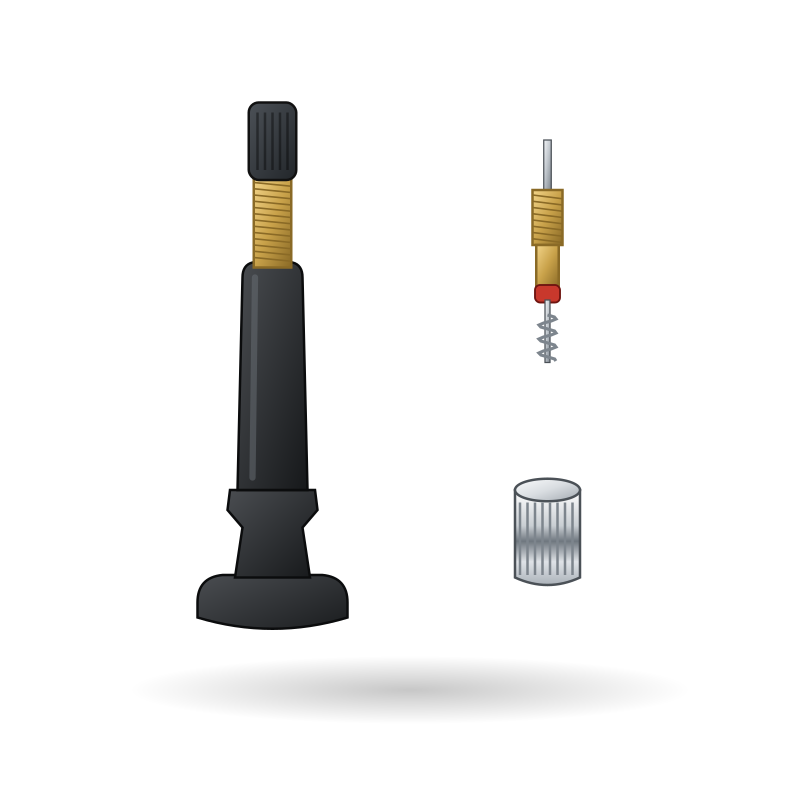
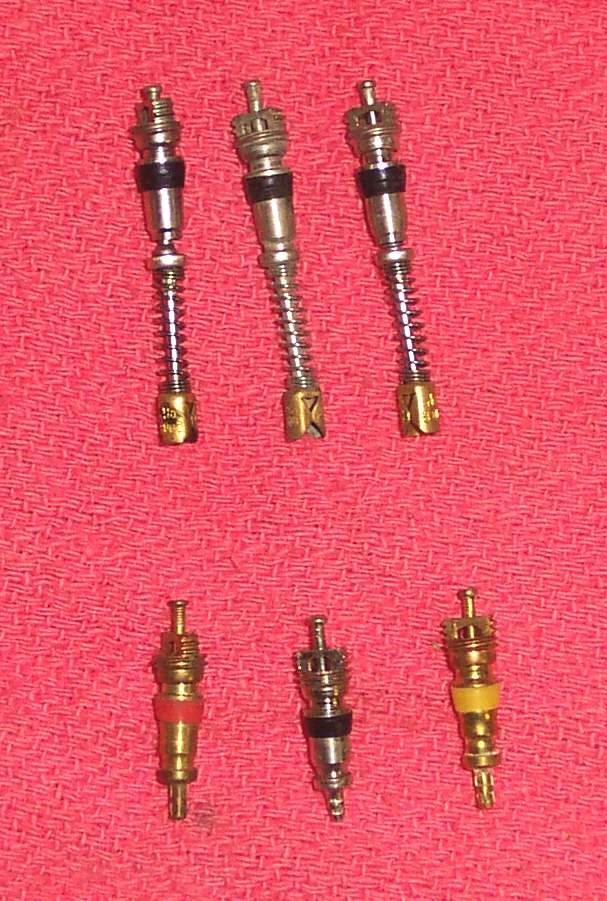
The tyre valve is where you add air. On tubeless wheels it is a rubber snap-in stem (or a metal bolt-in stem) fitted in the rim. On tube wheels the valve is part of the inner tube. Inside each valve is a small spring-loaded core, and a cap screws on top.
What it does
The core lets air in and stops it coming out. The cap keeps out dirt and water and is a second seal. Rubber snap-in stems age, crack and can be bent by the wheel spinning at speed. Dirt on the core seat makes it leak slowly.
Signs it is worn or failing
- Bubbles at the valve when wet with soapy water: Air leaking from the tyre valve.
- Slow air loss: Tyre slowly loses air.
- Cracked rubber at the base of the stem, or the valve leans over.
When to replace it
Replace the core if it leaks after cleaning; it is cheap. Replace a rubber tubeless stem whenever a new tyre is fitted, and any stem that is cracked or bent. Always refit a cap.
What to match when buying
- Tubeless rims: the stem type and rim hole size (snap-in rubber or bolt-in metal). Some bikes use angled stems for better access.
- Cores are a standard car and motorcycle type in most markets, but check.
- Buy stems from tyre shops or known brands; cheap rubber cracks fast in sun.
Fitting notes
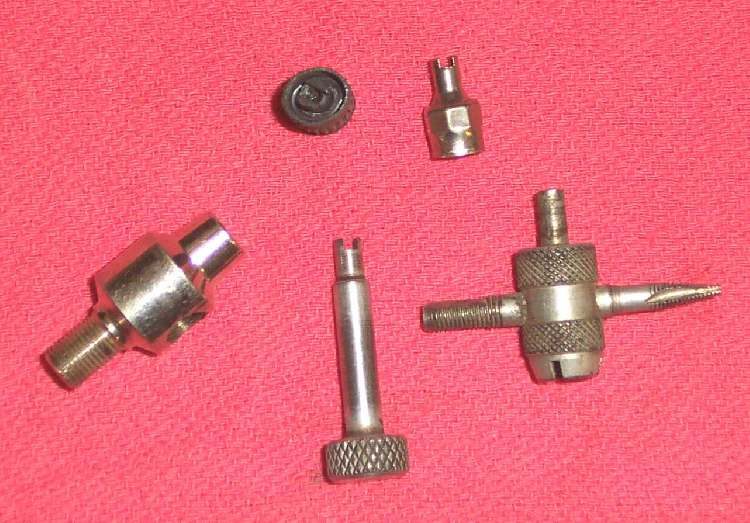
- A valve core tool removes and fits cores.
- Snap-in stems are pulled through the rim with a special tool, so the tyre bead must be off: workshop or tyre shop job.
- Line up the tyre's balance mark with the valve.
- See Check and replace a tyre valve.
- Put a little soapy water on the end of the stem each time the pressure is checked. Bubbles show a leaking core.
- A core that leaks in one stem may hold in another, so keep an old core that tested good. Tighten the valve nut on a tube only finger tight.
Reference (K-Light 125)
| Item | Value | PDF page |
|---|---|---|
| Valve, front and rear | Z2-01-1, tubeless | 130, 158 |
| Fitting | Tyre balance mark aligned with valve | 71 |