
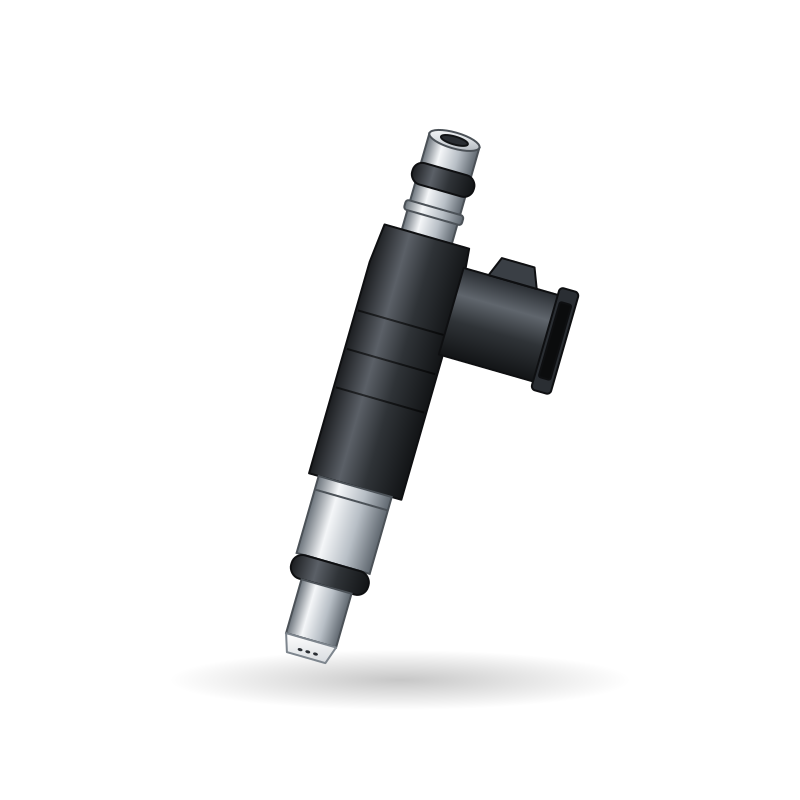
The injector is a small electric valve that sprays fuel into the intake, just before the inlet valve. It sits in the throttle body or intake manifold, with a fuel hose on one end and a two-pin plug on top. It seals with an O-ring at each end.
What it does
The ECU switches the injector on for a few thousandths of a second each cycle. A coil inside lifts a needle, and pressurised fuel sprays out as a fine mist through tiny holes. The longer it stays open, the more fuel goes in. Varnish from old fuel, dirt and water can block the holes or hold the needle slightly open.
Signs it is worn or failing
- Fuel injector suspected blocked or leaking.
- Blocked: hesitation, runs lean, low power.
- Leaking: runs rich, flooded engine, high fuel use.
- Engine warning light with an injector circuit code.
When to replace it
When the coil is open or shorted, or a workshop flow test shows a poor spray or a drip after cleaning. Many injectors can be cleaned on a bench; aerosol cleaners in the tank do little for a badly blocked one.
What to match when buying
- Match the part number on the injector body. Injectors differ in flow rate, spray pattern, resistance and length; a wrong one makes the engine run rich or lean all the time.
- Match the plug type and the O-ring sizes. Buy new O-rings and clips.
- Fakes and poor copies may have the right shape but the wrong flow. Buy from a dealer or a known injection parts maker.
Fitting notes
- Workshop job: Check the fuel injector.
- Battery negative off and fuel pressure released before removal. Fuel sprays and burns.
- Lubricate new O-rings lightly, fit in the original direction, do not twist it while pushing on the plug, then check for leaks with the key on before starting.
Reference (K-Light 125)
| Item | Value | PDF page |
|---|---|---|
| Coil resistance | about 10 Ω; open circuit means replace | 258 |