
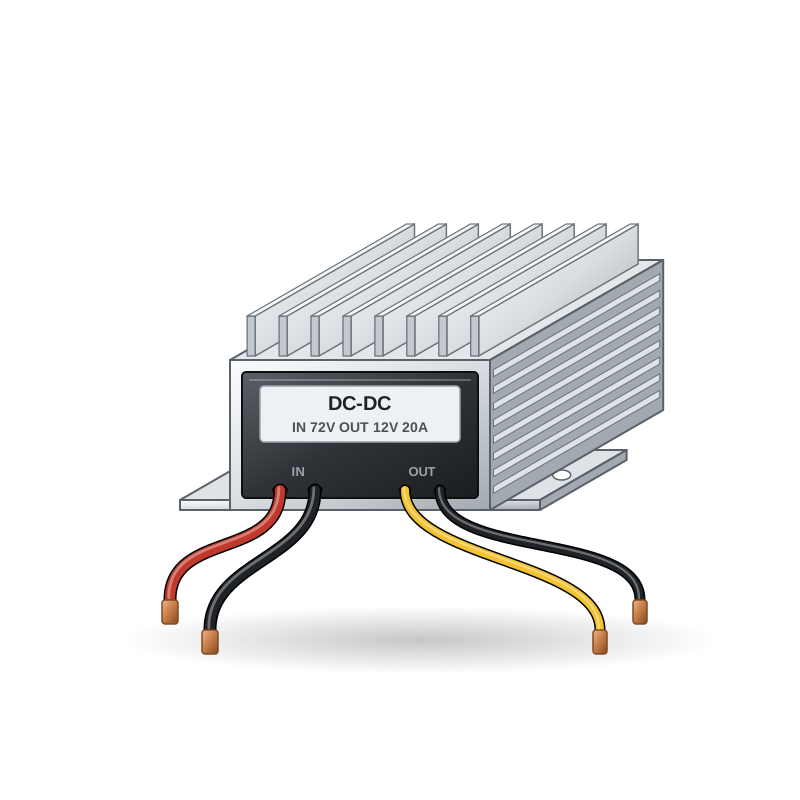
The DC-DC converter is a small sealed box, often with fins, near the controller or battery. It takes power from the high-voltage traction battery and turns it down to about 12 V.
What it does
An electric bike has no alternator. The DC-DC converter does that job: it powers the lights, horn, dashboard and control electronics and keeps the 12 V auxiliary battery charged while the bike is on. In good designs the high-voltage side is isolated from the 12 V side inside the box. If it fails, the bike runs on the 12 V battery alone until that goes flat, and then lights, dash and the ready system stop.
Signs it is worn or failing
- Small battery keeps going flat: Small 12 V battery is flat.
- Lights dim, dashboard resets or warnings flicker while riding.
- Bike dies and will not go to ready: Will not go to ready, Dashboard is dark.
- These signs can look like a traction battery fault; test before replacing parts.
When to replace it
After testing confirms the 12 V output is missing or wrong with the bike on and the inputs and fuses are good. Check its fuse and connectors first.
What to match when buying
- Exact part for your bike: input voltage range, output voltage and current, connectors and mounting.
- A generic converter may not be isolated or may not suit the pack voltage. Buy through the maker or dealer.
Fitting notes
- Its input side is high voltage: Make an electric motorcycle safe to work on.
- Test: Check the 12 V auxiliary system.