
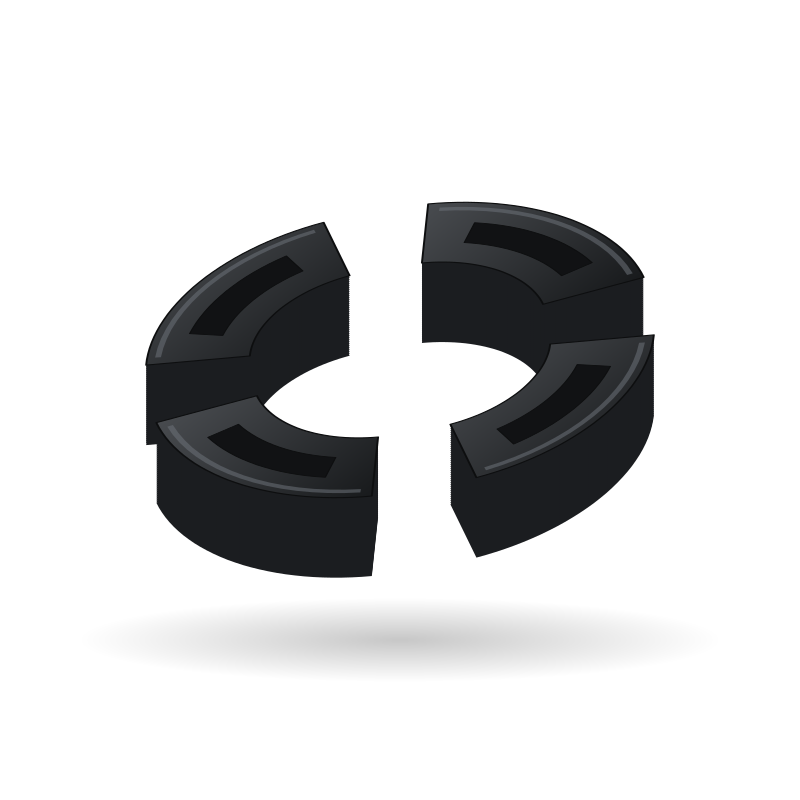
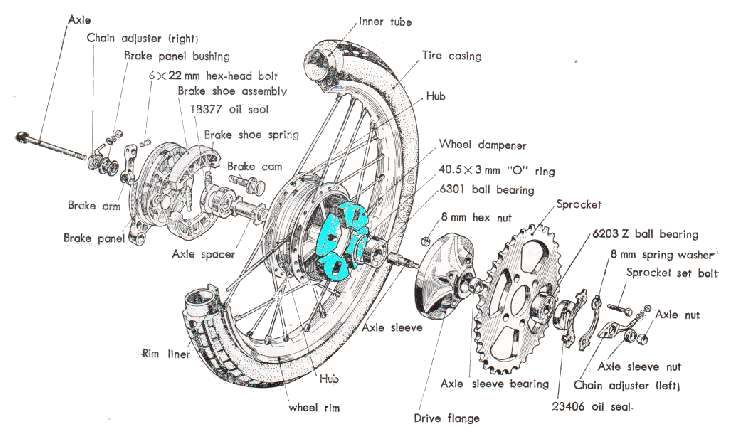
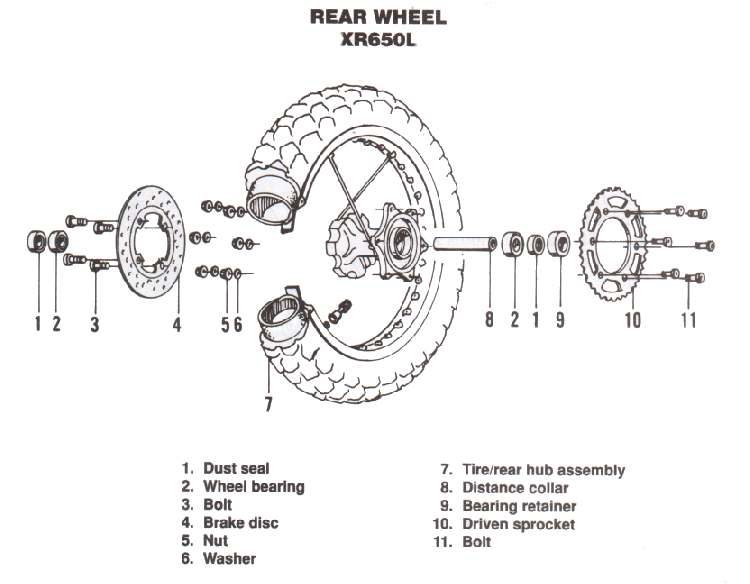
Cush drive rubbers are rubber blocks inside the left side of the rear wheel hub. The sprocket carrier sits on top of them, so the drive passes from the sprocket through the rubbers into the wheel.
What it does
The rubbers soften the shock each time you open or close the throttle or change gear. This protects the chain, sprockets and gearbox and makes the ride smoother. Over time the rubber hardens, cracks and shrinks, leaving a gap. Then the carrier knocks against the hub with every throttle change.
Signs it is worn or failing
- Clunk or snatch from the rear when you open and close the throttle: Cush drive clunk.
- The rear sprocket can be turned back and forth by hand while the wheel is held still.
- Chain feels jerky at low speed even with correct slack.
When to replace it
Replace the rubbers when they are cracked, hard, crumbling or loose in their pockets, or when there is clear free movement at the sprocket with the wheel held. Replace the full set, not single blocks.
What to match when buying
- Make, model and year, front or rear wheel type (cast or spoked).
- Shape and number of blocks must match the hub pockets. Count them before ordering.
- Some bikes use one moulded rubber ring; others use separate blocks.
- Cheap rubbers can be too soft or the wrong size. A good set fits snugly and needs a little push to seat.
Fitting notes
- Remove the rear wheel first: Remove and refit the rear wheel.
- A little rubber-safe grease or soapy water helps the carrier slide in. Do not use oil.
- See Check the cush drive rubbers.
Reference (K-Light 125)
| Item | Value | PDF page |
|---|---|---|
| Layout | Sprocket carrier with studs on cush rubbers in left hub, held by a large circlip | 158, 174 |