
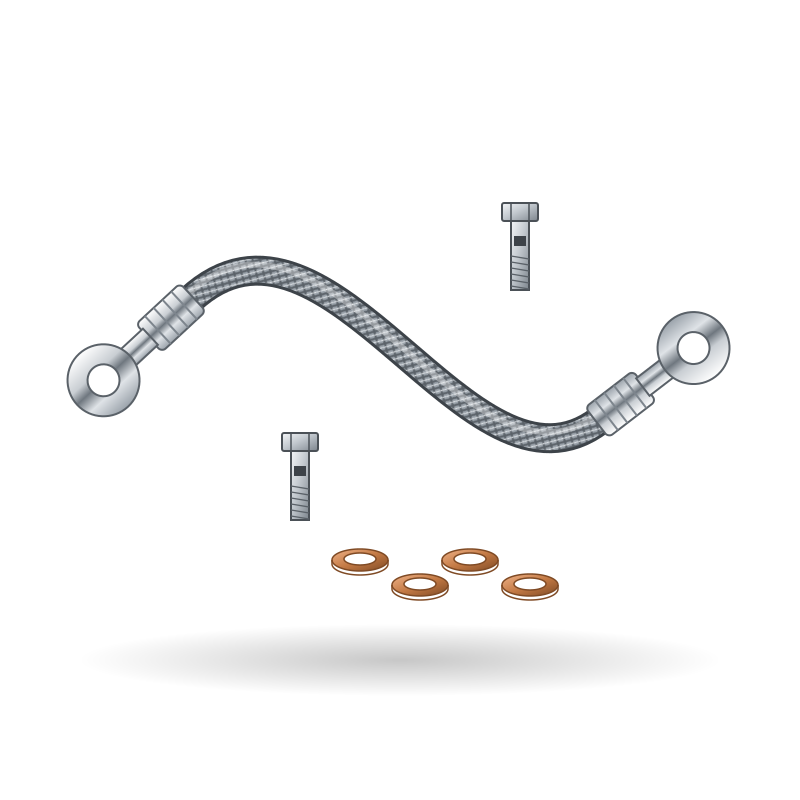
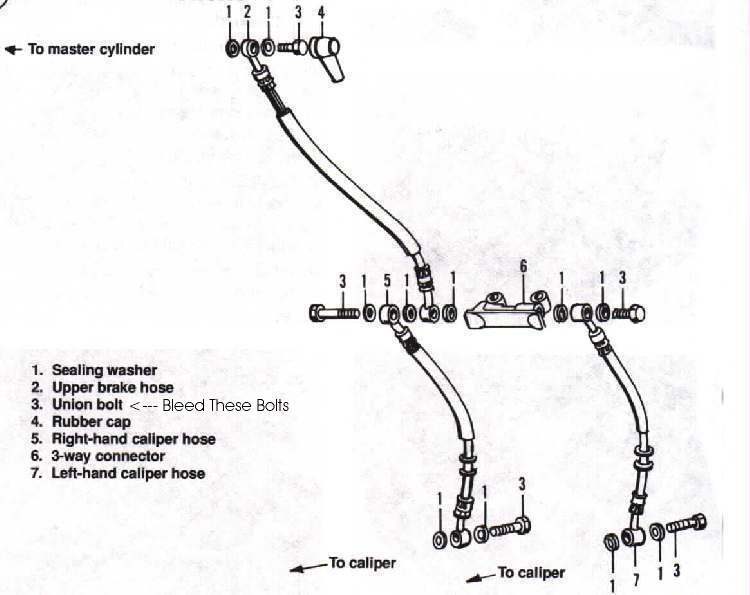
The brake hose carries brake fluid from the master cylinder to the caliper. It is a reinforced rubber or braided hose with a metal fitting at each end, usually a banjo fitting held by a hollow banjo bolt and two sealing washers. Bikes with linked brakes also have rigid metal pipes.
What it does
The hose must hold high pressure without swelling. Rubber hoses age: they crack on the outside, swell inside and can bulge under pressure, which makes the lever soft. Hoses that rub on the fork or tyre, or get twisted when the bars turn, wear through.
Signs it is worn or failing
- Cracks, bulges, wet spots or rubbing marks: Brake fluid leak.
- Spongy lever that does not improve after bleeding: Spongy brake.
- Weeping at the banjo bolt: Brake fluid leak. Stop riding if fluid is dripping.
When to replace it
Replace any hose that is cracked, bulging, kinked, chafed or leaking at the crimp. Replace old rubber hoses at the interval in your manual. Always fit new sealing washers on both sides of a banjo bolt.
What to match when buying
- Make, model, year and position (front, rear, or which CBS line). Length and fitting angles must match so the hose does not stretch or rub at full lock and full suspension travel.
- Banjo size and bolt thread (K-Light 125 example: M10×1.25).
- Buy hoses marked with a DOT or SAE standard and the maker's name. Avoid hoses with no markings or crimps that look loose.
- Braided hoses are fine if made for your bike, but must have a protective cover where they touch paint.
Fitting notes
- Bend and twist the hose gently to find cracks. Turn the bars lock to lock to check it never pulls or rubs.
- Keep the hose end raised when disconnected to limit fluid loss, and protect paint.
- Bleed the system after fitting: Replace brake fluid and bleed the brakes.
- Check: Check brake hoses and banjo bolts.
Reference (K-Light 125)
| Item | Value | PDF page |
|---|---|---|
| Banjo bolt | M10×1.25, 30 N·m, new sealing washers both sides | 64, 108, 115 |