
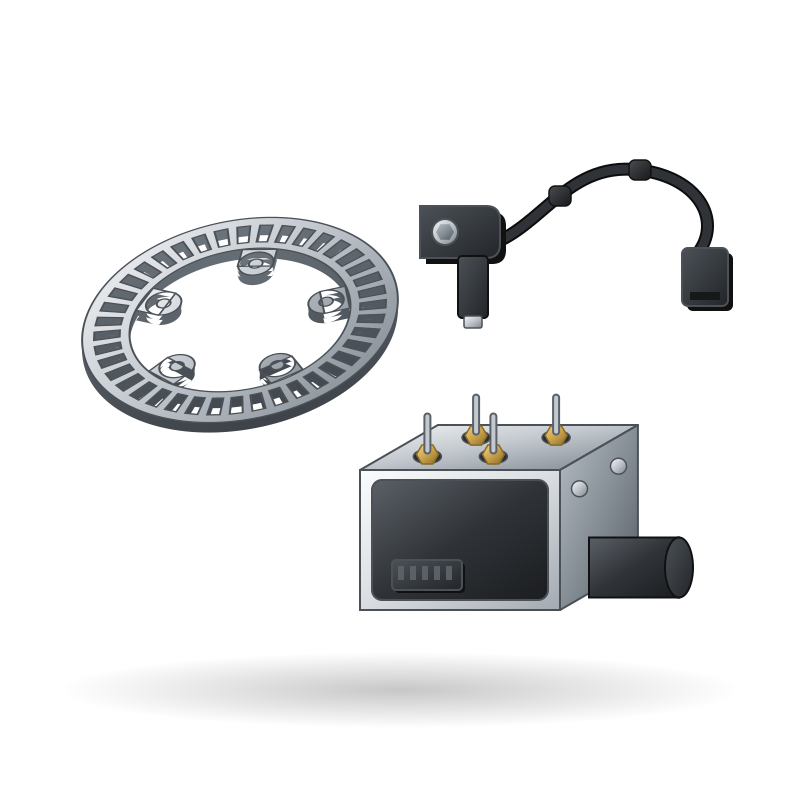
ABS (anti-lock braking) has three main parts: a toothed ring on each wheel (the tone ring), a speed sensor next to each ring, and a hydraulic unit with its own control electronics, usually under the seat or near the battery. Some commuter bikes have ABS on the front wheel only (single channel).
What it does
The sensor reads the ring's teeth as the wheel turns and sends pulses to the control unit. If one wheel slows much faster than the bike, it is about to lock. The unit then briefly lowers brake pressure to that wheel and reapplies it, many times a second, so the tyre keeps grip. You feel this as fast pulsing at the lever. ABS cannot help if the tyres or pads are worn.
Signs it is worn or failing
- ABS warning light stays on after moving off: ABS warning light is on. Normal brakes usually still work, but without anti-lock. Ride gently.
- Pulsing at the lever on a smooth road at low speed can mean a dirty or damaged tone ring: Brakes pulse or judder.
- Sensor wire cut or plug wet after washing or a crash.
When to replace it
Clean the tone ring and sensor tip first; mud and metal dust cause many faults. Replace a sensor with a damaged tip or wire, or a ring with cracked or bent teeth. The hydraulic unit is replaced only after a diagnostic tool confirms the fault.
What to match when buying
- Exact part number for your bike and wheel. Rings differ in tooth count and sensors differ in plug and length.
- Hydraulic units are model and software specific; a used unit may need coding.
- Avoid unbranded sensors; a wrong signal can disable ABS.
Fitting notes
- The gap between sensor and ring matters; refit with the original shims and check the manual.
- Bleeding brakes with ABS may need a diagnostic tool to run the pump. Workshop job.
- See Diagnose an ABS warning light.