
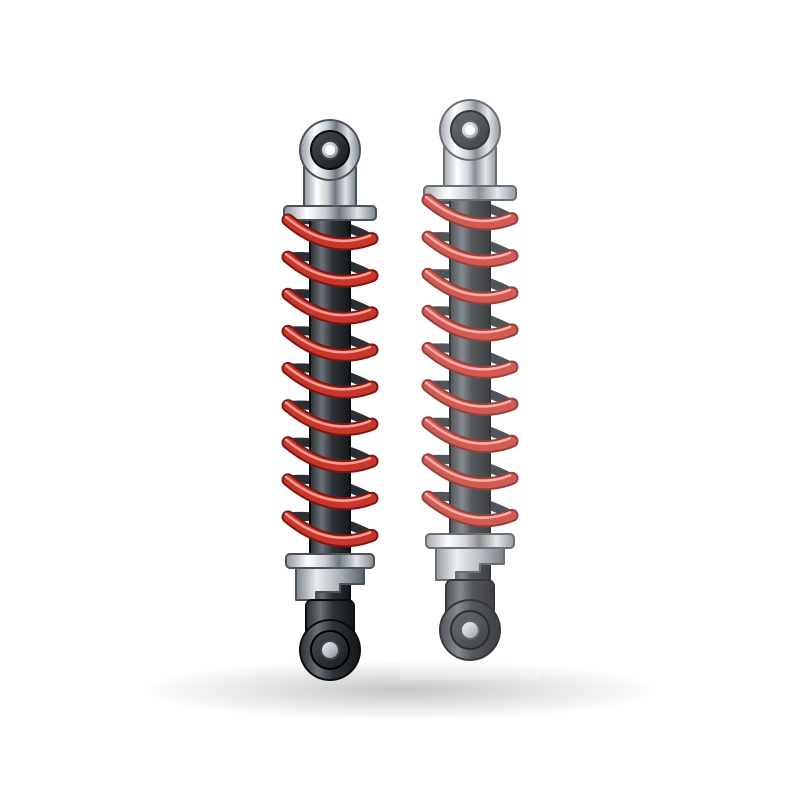
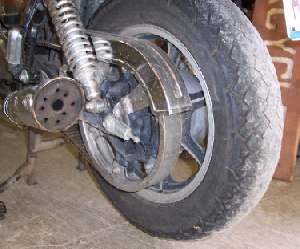
Rear shock absorbers connect the swingarm (or scooter engine) to the frame. Most commuter bikes have two, one each side; some have a single shock (monoshock) under the seat. Each one is a coil spring around a sealed oil damper.
What it does
The spring holds the bike up and soaks up bumps. The damper slows the spring down so the bike does not keep bouncing. Many shocks have a preload adjuster (a stepped collar) to set the spring for a passenger or load. Over time the damper oil leaks or wears out and the spring sags.
Signs it is worn or failing
- Rear keeps bouncing after a bump: Rear bounces.
- Rear sits low: Rear sits too low.
- Harsh ride: Rear suspension feels harsh.
- Oil on the shock body: Oil leaking from a rear shock.
- Clunk: Clunk from the rear suspension. Check the mounting bushes.
When to replace it
Most commuter shocks are sealed and cannot be rebuilt. Replace a shock that leaks, has a bent rod, a broken spring or no damping. Replace twin shocks as a pair.
What to match when buying
- Make, model and year. Eye-to-eye length (centre of top mount to centre of bottom mount), mount type (eye or stud) and eye bore size.
- Spring rate should suit the bike and load. A longer shock raises the seat and changes steering.
- Check the mounting rubbers or bushes are included.
- Very cheap shocks often have little damping. Check reviews and the maker's name.
Fitting notes
- Support the bike so the rear wheel is just off the ground before removing shocks.
- Set both preload adjusters to the same step: Adjust rear spring preload.
- See Check the rear shock absorbers.
Reference (K-Light 125)
| Item | Value | PDF page |
|---|---|---|
| Service | Replace unit if rod bent or spring fatigued; no rebuild | 167 |
| Lower mounting bolt | 22 to 29 N·m | 106, 168 |