
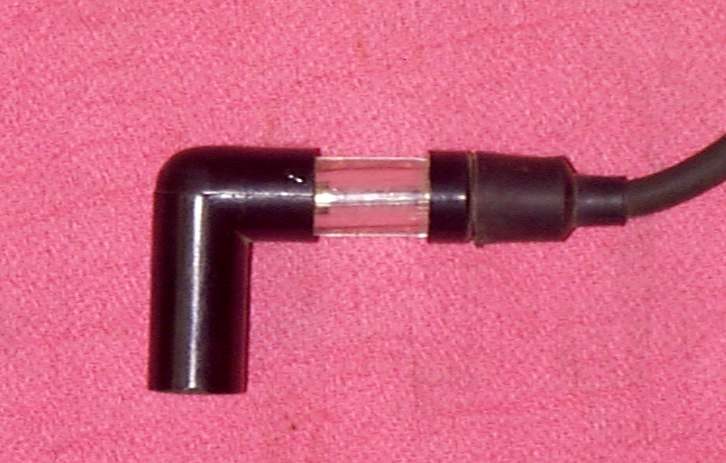
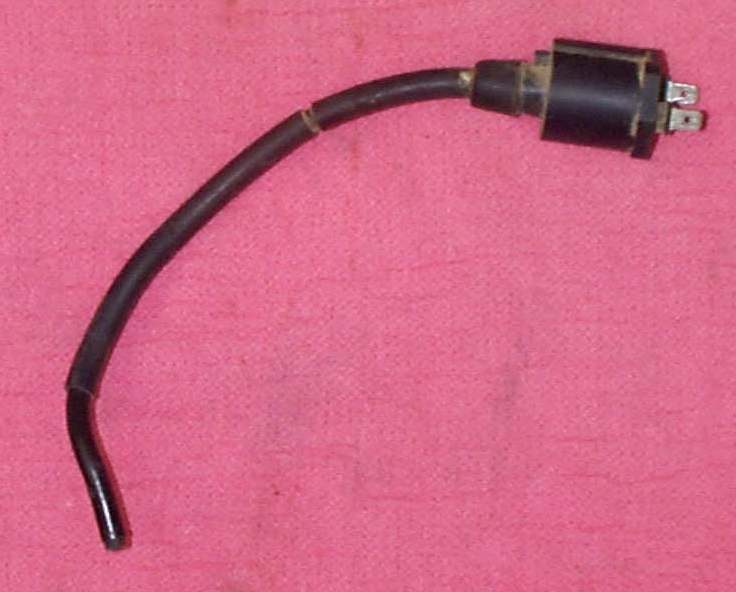
The HT (high tension) lead is the thick insulated wire from the ignition coil to the spark plug. The cap is the rubber or plastic end that pushes onto the plug. On many bikes the cap is a separate part that screws or clips onto the lead, and some contain a resistor to cut radio noise. Some coils have the lead fixed in; on others the lead can be replaced.
What it does
It carries the coil's very high voltage to the plug and keeps it from leaking to the frame. The voltage can be tens of thousands of volts, so a cracked cap or worn lead can send the spark to earth instead of across the plug gap.
Signs it is worn or failing
- Misfire in rain or after washing, or a visible spark jumping from the cap: Will not start after rain or washing.
- Weak spark that looks thin or orange: Weak, thin or orange spark.
- Cap loose on the plug, corroded inside, or lead cracked, hard or chafed.
- Misfire, hesitation or power loss only at some revs: Misfires only at high revs.
- Spark present at the coil end but not at the plug.
When to replace it
Replace a cracked cap, a corroded cap or a lead with damaged insulation. A cap with a resistor can be checked with a meter against the value in your bike's manual. Clean a dirty cap first and check that it grips the plug.
What to match when buying
- Whether the cap screws into the lead, clips on or is moulded on.
- Plug terminal type: the plug top and the cap must match.
- Resistor or no resistor. Some electronic ignitions need a resistor cap; a wrong one can cause misfires or radio noise.
- Lead length and thickness for your coil.
Fitting notes
- Never pull the cap off while the engine runs. The voltage must go somewhere and can damage the ignition.
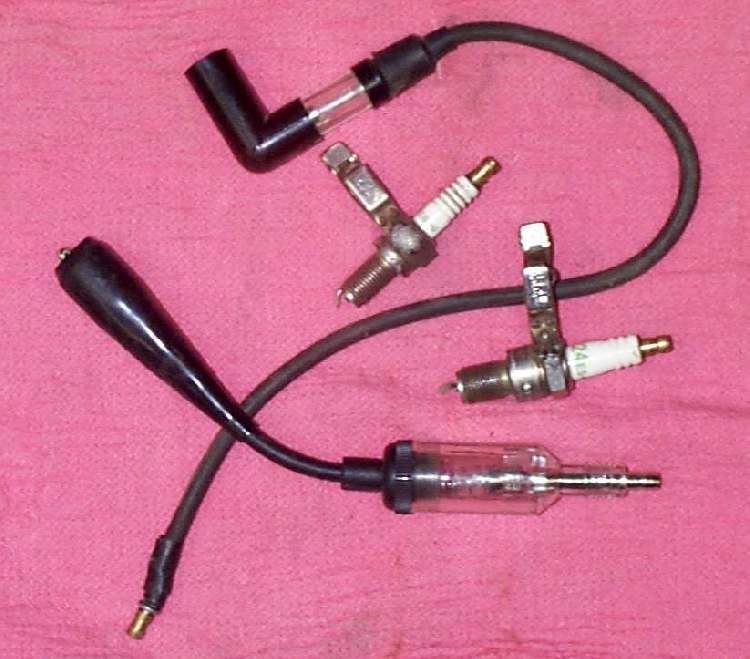
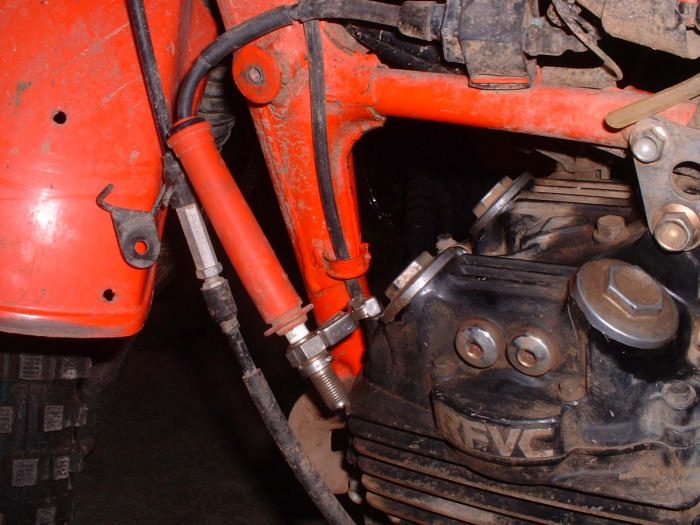
- To check spark, ground the plug in its cap on the cylinder head, away from fuel, and crank. See Check for spark at the spark plug and Make a simple spark tester.
- Push the cap on until it clicks or seats. Keep the lead away from the exhaust and the moving parts.