
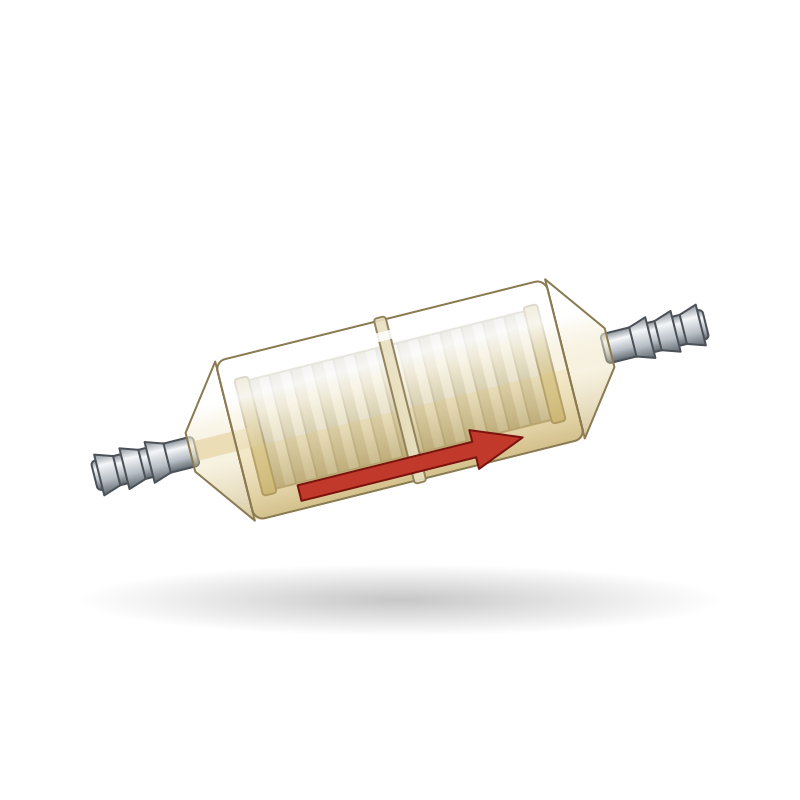
A fuel filter stops dirt and rust reaching the carburettor or injector. On carburettor bikes it is usually a strainer on the fuel tap plus, on many bikes, a small see-through inline filter in the hose. On fuel injection there is a strainer sock on the in-tank fuel pump and often a fine filter in the pump unit; the K-Light 125 has a petrol filter in the tank assembly.
What it does
Fine dirt blocks carburettor jets and sticks injector needles. The filter catches it first. As it fills, flow drops: the engine runs fine at idle but starves at full throttle or up hills. Injection systems also lose fuel pressure.
Signs it is worn or failing
- Engine stops and only runs on reserve or after a rest.
- Bogs down at full throttle and sudden power loss.
- Visible dirt or water in a clear filter: Water or dirt in the fuel.
- Fuel pump whines loudly.
When to replace it
At the interval in your bike's manual, and at once after rust or dirt has been found in the tank. The K-Light schedule replaces the petrol filter at 12000 km; its EFI chapter gives two different intervals, so follow the schedule for your bike.
What to match when buying
- Inline filters: match hose size and use a filter rated for petrol and, on injection, for system pressure. A cheap carburettor filter can burst on an injection line.
- In-tank filters: match the pump unit part number.
- Check the flow arrow. Poor filters have weak plastic and loose paper.
Fitting notes
- Home job: Replace the fuel filter.
- Work cold, outside, with no flames. On injection, release pressure as the manual describes before opening any line.
- Fit with the arrow toward the engine, use new clips, and check for leaks with the key on before starting.
Reference (K-Light 125)
| Item | Value | PDF page |
|---|---|---|
| Petrol filter | inspect at 300 km, inspect at 6000 km, replace at 12000 km | 51 |