
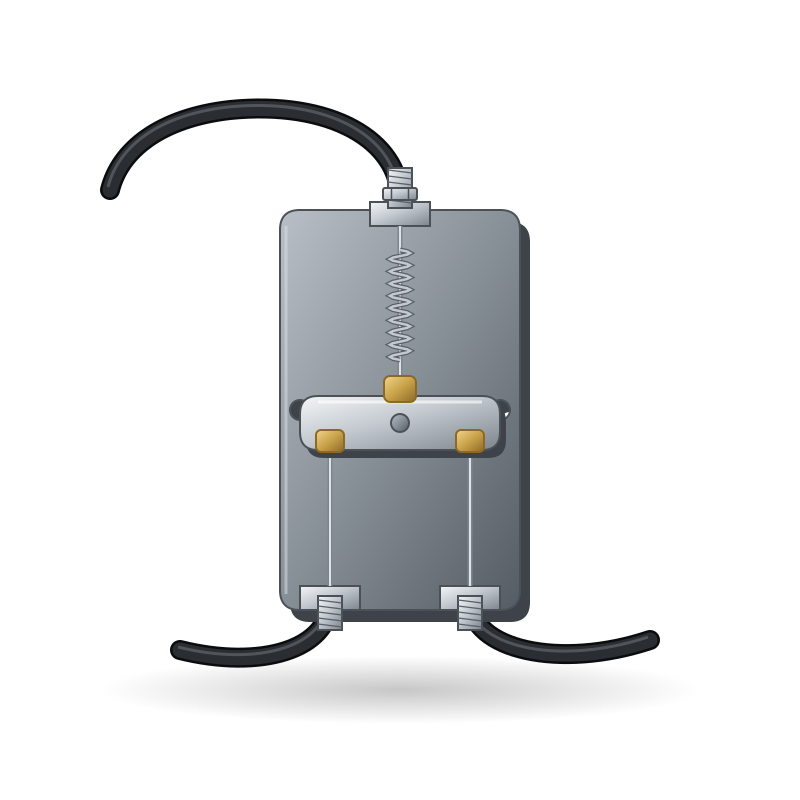
A combined braking system (CBS) links the rear brake control to part of the front brake, so one control brakes both wheels. On hydraulic systems there is a CBS valve or secondary master cylinder near the frame, with its own small reservoir and extra pipes. On scooters with drum brakes, CBS is often a mechanical equaliser bar between two cables.
What it does
When the rider presses the rear brake, the CBS unit sends some pressure (or pull) to the front brake, often to one piston of a three-piston caliper. This helps new riders who use only the rear brake. The unit has seals and a plunger that can leak inside, and mechanical linkages can seize or go out of adjustment.
Signs it is worn or failing
- Rear brake no longer applies the front, or brakes feel unbalanced: CBS does not work as it should.
- Soft pedal: Spongy brake, Rear brake pedal travels too far.
- Front or rear drags after using the pedal: Brake drag.
- Fluid on the CBS unit or pipes: Brake fluid leak.
When to replace it
A unit that leaks inside or outside is replaced or rebuilt by a workshop using the exact model procedure. Do not bypass or remove CBS.
What to match when buying
- The exact part number for your bike: CBS units are model-specific.
- Seal kits, plunger assemblies and pipes must be for the same unit.
- Mechanical scooter systems need the correct equaliser and cables.
Fitting notes
- The bleed order for CBS is not the same as for a normal brake. A normal bleed will leave air in the CBS circuit. Workshop job.
- See Check a combined braking system (CBS).
Reference (K-Light 125)
| Item | Value | PDF page |
|---|---|---|
| Layout | Pedal to rear master cylinder, rear caliper and CBS unit; CBS unit to middle piston of front caliper | 107 |
| Reservoirs | Rear and CBS 15 cm³ each | 107 |
| Internal leak check | Adjusting bolt turns by hand with pedal held = internal leak (workshop test) | 66 |