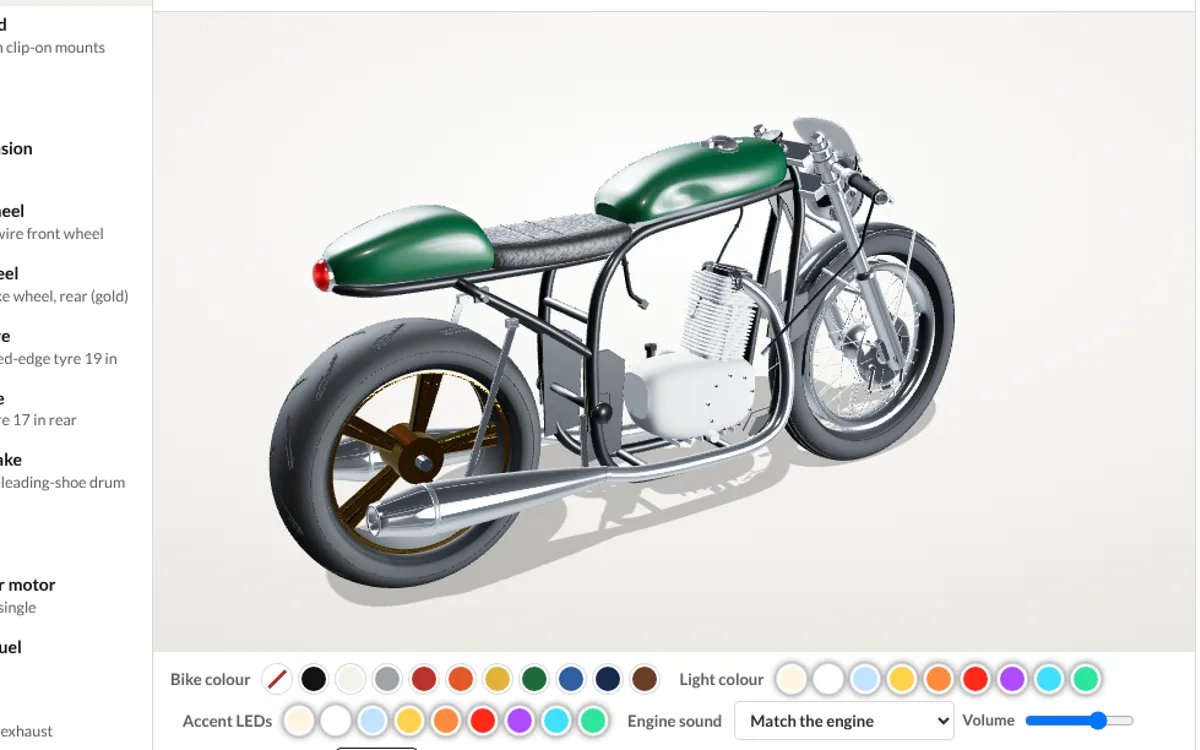
Hundreds of real parts
Frames, forks, wheels, engines, exhausts, fairings, tanks, seats, lights and luggage, each with price, weight and fitting time.


Pick from hundreds of 3D parts, from 1890s pioneer engines to 150 kW fours and electric drives. Bike Builder checks that every part fits, works out the bike's real performance with vehicle physics, and lets you ride it, print its blueprint and share it.
Frames, forks, wheels, engines, exhausts, fairings, tanks, seats, lights and luggage, each with price, weight and fitting time.
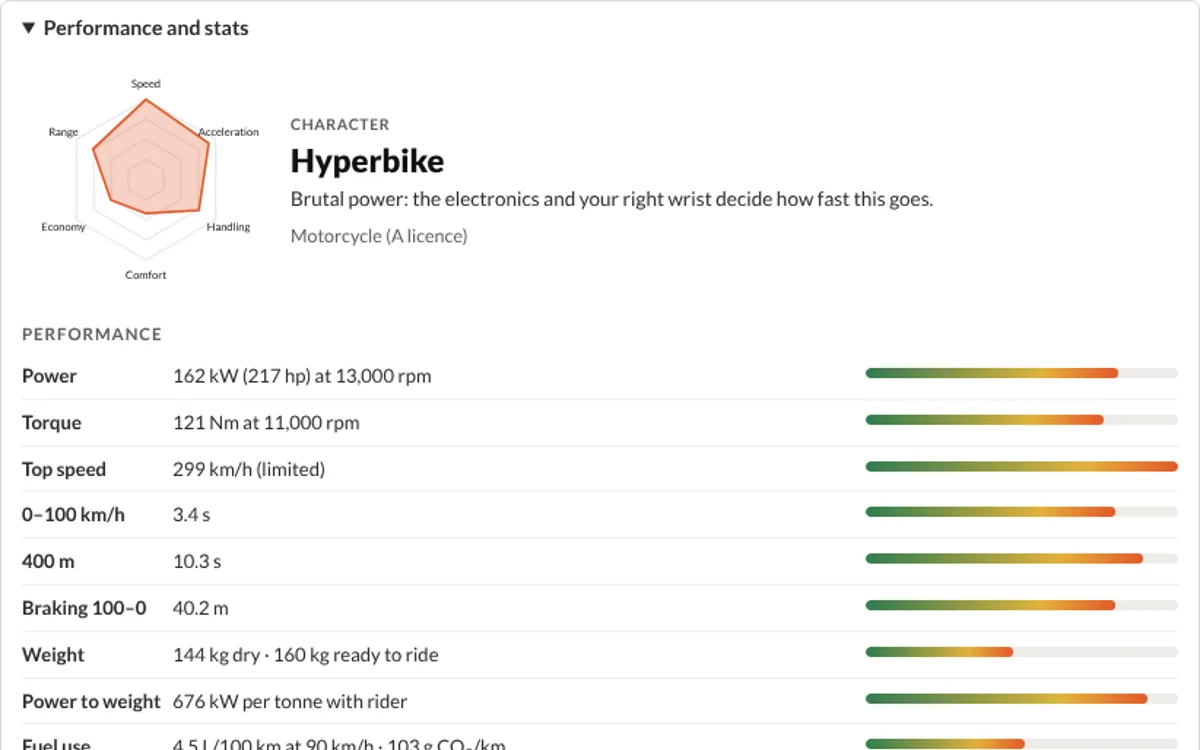
Power, torque, top speed, 0–100, braking, fuel or energy use, range and the 12 V budget, worked out from the parts you choose.

Take it into a city with traffic lights and traffic. Chase, orbit, cockpit and side cameras, real dials, and the engine sound you picked.
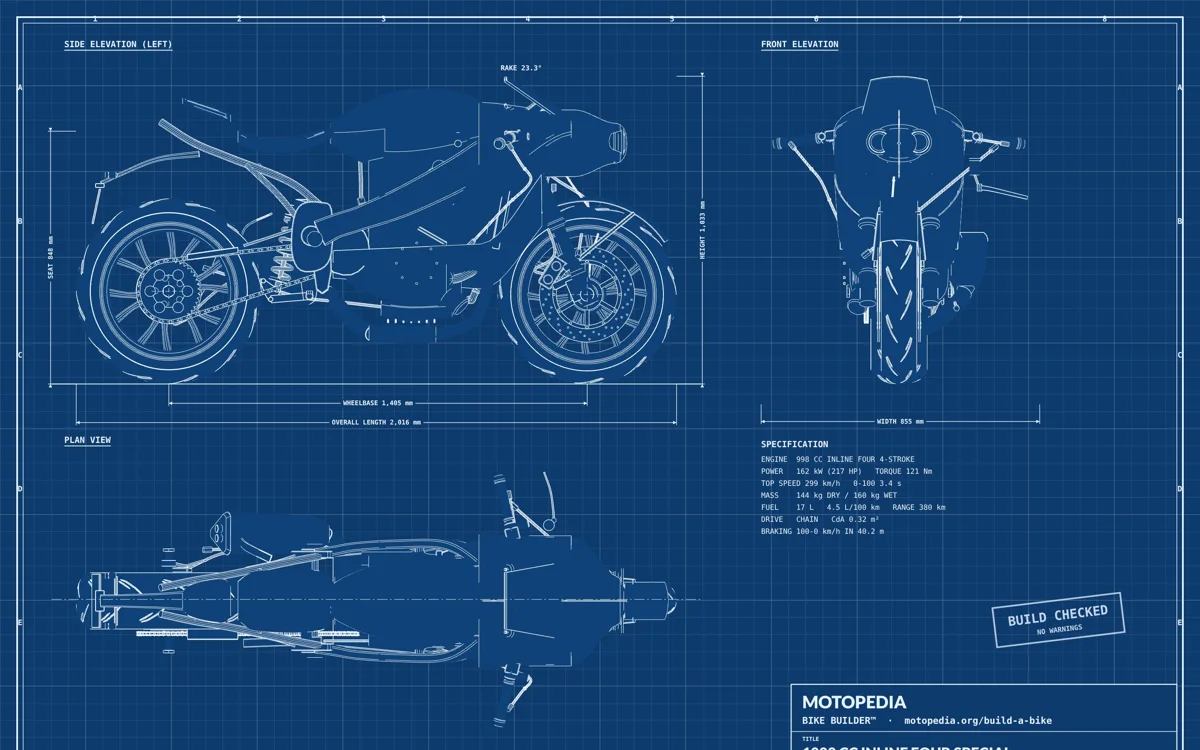
Side, front and plan views at one scale with real dimensions, and a two-page PDF with a showroom render, an exploded view and the parts list.
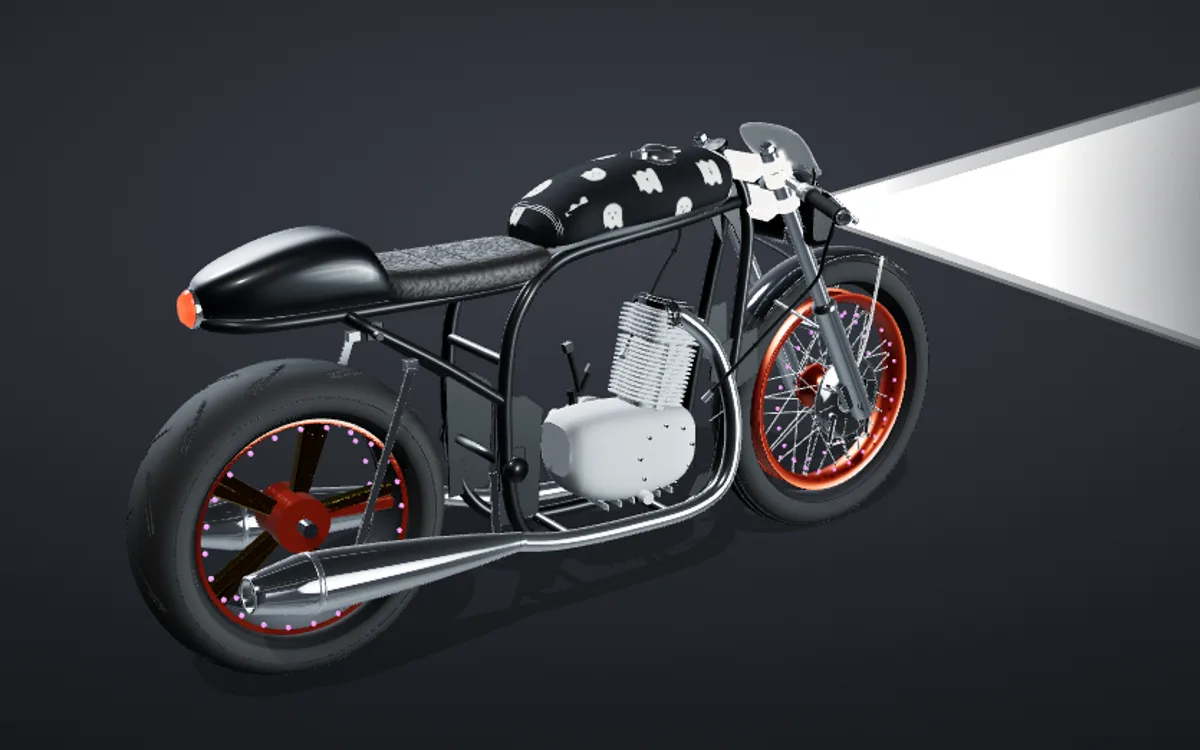
Any colour on any part, seven finishes, 74 stencils (yes, Halloween ghosts too), number plates, headlight beams and LED accents.
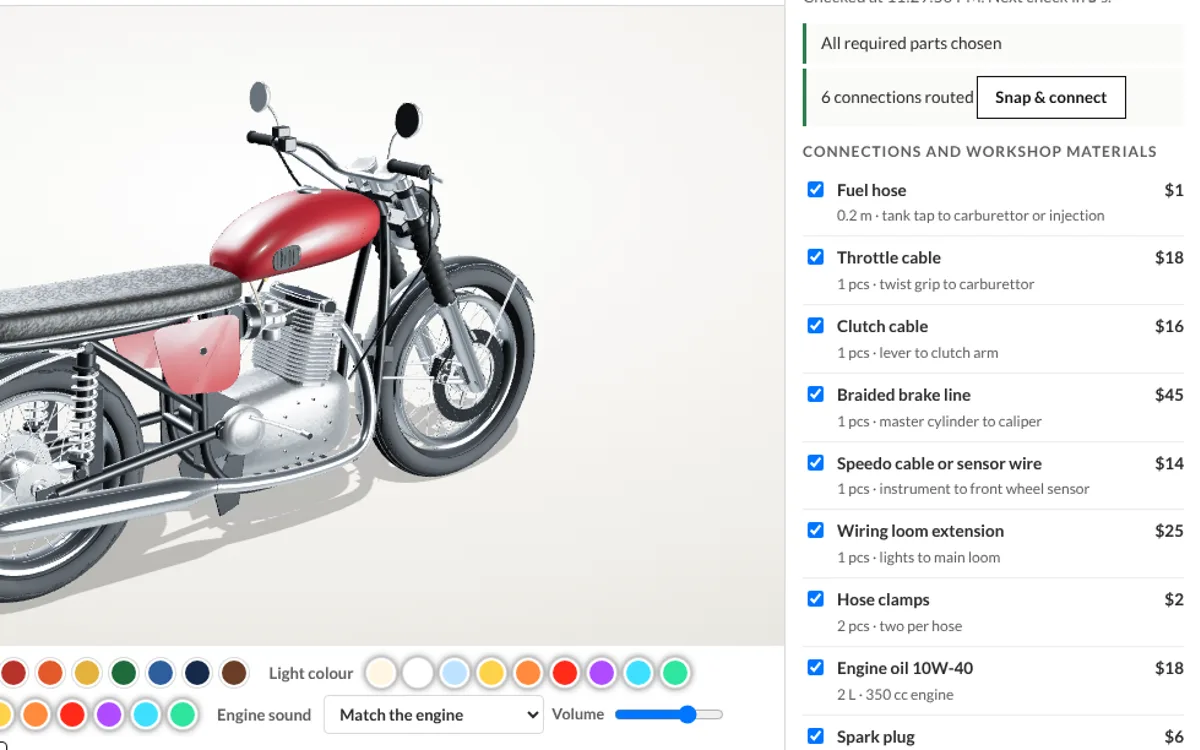
Fuel lines, cables, brake lines and wiring are routed for you. The final check lists every connection and workshop item to buy.
Every figure comes from textbook vehicle physics and the specification of each part, with an 80 kg rider. Change one part and the numbers change with it.
η·P = ½ρCdA·v³ + Crr·m·g·vd = v² / 2a, with the deceleration of drums, single discs or twin discs and the tyre's gripYes. It runs in your browser on a phone, tablet or computer. Sign in (free) to keep up to five bikes in your garage.
They are modelled on real types of parts, with realistic prices, weights and fitting times. Fit rules follow how frames, forks, wheels and engines really connect.
Use it to plan: the fit check, the connections list and the shopping list help. Always follow the manufacturer's data and a qualified mechanic for real work.
Yes, we are looking for parts makers and workshops to feature. Work with us or brand a bike.
